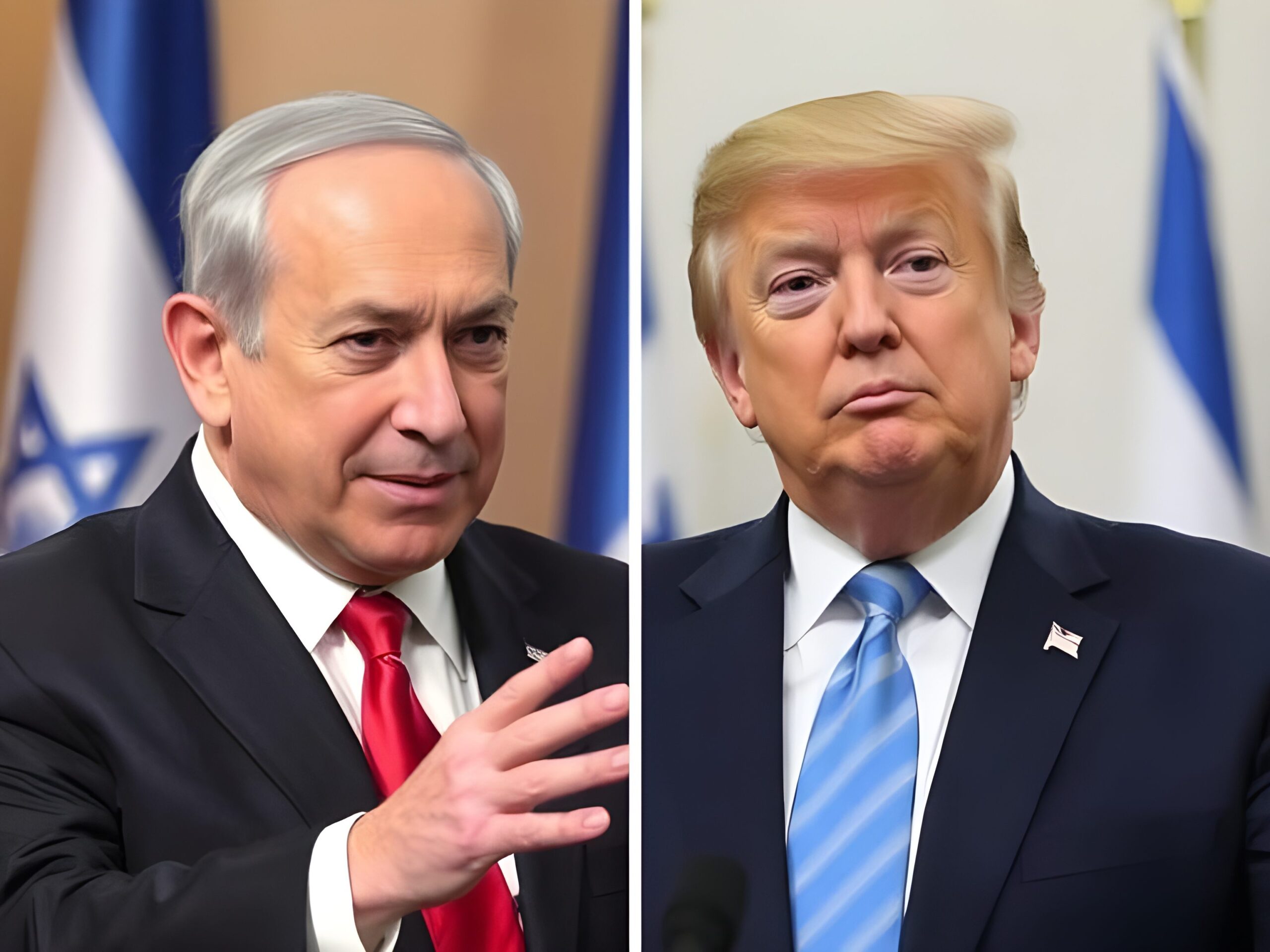
Recent events in the Middle East have revived debates around Iran, Israel, and the United States, with tensions escalating to dangerous levels. Central to this dilemma are former Israeli Prime Minister Benjamin Netanyahu and former U.S. President Donald Trump. Speculation has arisen about whether Netanyahu manipulated Trump to pursue a course of action that intensified regional instability, particularly about Iran’s nuclear program. From the abandonment of the 2015 Iran nuclear deal to heightened military tensions, the question remains: Did Netanyahu set a trap for Trump?
This blog will explore the historical relationships, alleged “trap,” and long-term repercussions of the decisions made under Trump’s administration.
A Fragile Alliance: Trump and Netanyahu
The working relationship between Netanyahu and Trump was marked by an alignment on one issue above all others: Iran. Netanyahu has long portrayed Iran as an existential threat to Israel, repeatedly asserting that Tehran was on the cusp of obtaining nuclear weapons. For over three decades, Netanyahu sounded the alarm, although international agencies like the International Atomic Energy Agency (IAEA) often failed to corroborate his claims. Even some Israeli intelligence officials questioned the immediacy of Netanyahu’s warnings.
Nevertheless, Netanyahu’s vocal opposition to the Iran nuclear deal, also known as the Joint Comprehensive Plan of Action (JCPOA), strongly influenced Trump’s decision-making. The JCPOA, established in 2015 under the Obama administration, was designed to curb Iran’s nuclear ambitions in exchange for sanctions relief. Trump, however, withdrew from this agreement in 2018, essentially parroting Netanyahu’s warnings of Iran’s so-called imminent nuclear threat.
The Alleged Trap
Many critics argue Netanyahu laid a calculated trap for Trump, leading him to a course of action that ultimately bolstered Netanyahu’s agenda while undermining U.S. foreign policy. Trump’s withdrawal from the JCPOA effectively removed restrictions on Iran’s nuclear activities, allowing them to progress again.
Adding to the damage was the administration’s military aggression, including targeted bombings. These actions, while dramatic, failed to eliminate Iran’s ability or expertise to pursue nuclear aspirations if they chose to do so. Experts have pointed out that bombing infrastructure does not erase knowledge nor resolve long-standing geopolitical hostilities. Instead, such actions escalate tensions, making the prospect of Iran acquiring a nuclear weapon more plausible.
What Netanyahu gained from Trump’s actions, it seems, was further consolidation of his hard-line approach while deflecting criticism away from Israel’s unilateral strikes and long-standing regional behaviour.
The Consequences of Trump’s Decisions
Trump’s decisions, heavily influenced by Netanyahu’s narrative, have left the Middle East more unstable than before. Here are three significant consequences:
1. Escalating Regional Instability
The Persian Gulf and its neighbouring regions became high-risk zones after Trump’s moves. U.S. bases housing nearly 40,000 American troops in Bahrain, Iraq, and Jordan became likely targets for Iranian retaliation. Furthermore, Tehran threatened to disrupt vital shipping lanes, such as the Strait of Hormuz, laying bare the potential economic ramifications.
2. Global Economic and Diplomatic Fallout
Disruptions in global oil supply chains heightened fears of an economic shock. U.S. relations with European allies, many of whom had backed the JCPOA, were strained as they scrambled to salvage the agreement and keep diplomatic channels open with Iran.
3. Iran’s Defiance and Retaliation
Far from capitulating, Iran doubled its resolve to resist external pressure. Iran resumed nuclear enrichment activities above pre-JCPOA levels, claimed retaliatory missile launches, and signalled willingness to abandon the Nuclear Non-Proliferation Treaty (NPT). Tehran also openly rejected diplomatic overtures from leaders like British Prime Minister Keir Starmer, signalling a steep decline in trust.
Netanyahu’s History of Exaggeration
One can’t ignore the key role Netanyahu’s rhetoric has played throughout this saga. For years, Netanyahu claimed Iran had a nuclear weapon pointed at Israel “just around the corner.” Yet, these claims often lacked empirical support. International bodies like the IAEA repeatedly found no evidence that Iran was weaponizing its nuclear capabilities. This pattern of exaggeration underscores Netanyahu’s motives. Was his alarmism a tactic to garner support for ulterior objectives, such as bolstering his political standing domestically and justifying military aggression abroad?
Trump’s Missteps in the Middle East
Unlike prior U.S. leaders who approached Iranian relations with careful diplomacy, Trump’s hasty actions suggest a limited understanding of Middle Eastern complexities. His decision to retreat from the JCPOA discarded years of multilateral efforts led by not only the Obama administration but also key European and Asian allies.
Trump’s rhetoric similarly destabilized the region. By branding his actions “spectacular” and threatening further aggression, he alienated not just Tehran but global stakeholders. Critics have characterized Trump’s approach as lacking a coherent strategy, an “exit plan,” and basic protocols to prevent escalation.
Frequently Asked Questions
What was the Iran nuclear deal (JCPOA)?
The JCPOA was a landmark deal between Iran, the U.S., the EU, China, Russia, and other global powers, which sought to avoid nuclear proliferation by limiting Iran’s nuclear activities in exchange for sanctions relief.
Why did Trump withdraw from the nuclear deal?
Trump cited Netanyahu’s claims that Iran remained on the verge of creating nuclear weapons, even though international evidence unsubstantiated these claims.
How has Iran retaliated since the U.S. withdrawal?
Iran expanded its uranium enrichment program and issued warnings about abandoning international agreements like the NPT. Additionally, it engaged in proxy warfare and missile launches targeting U.S. allies.
What are Netanyahu’s views on Iran’s aspirations?
Netanyahu frequently portrays Iran as an existential threat to Israel, often claiming Tehran is seeking nuclear weapons specifically to target Israel.
How have Trump’s actions affected U.S. relations in the region?
Trump’s policies alienated key global allies, exacerbated tensions in the Middle East, and resulted in significant economic and diplomatic repercussions worldwide.
The Reckoning Ahead
The decisions made by Trump, influenced by Netanyahu’s long-standing narrative, have intensified instability in the Middle East. Far from securing the region, these actions seem to have brought us closer to the brink of devastation. Iran, wounded but resolute, persists in its defiance. Meanwhile, the risk of a new nuclear arms race is larger than ever.
If there’s a lesson to learn, it’s that this so-called “trap” carries consequences for everyone involved. Walking back from the precipice will require not bombs but diplomacy, strategy, and genuine efforts toward mutual understanding.
The question remains whether global leaders will rise to this challenge or continue to fall victim to cycles of conflict and fear.