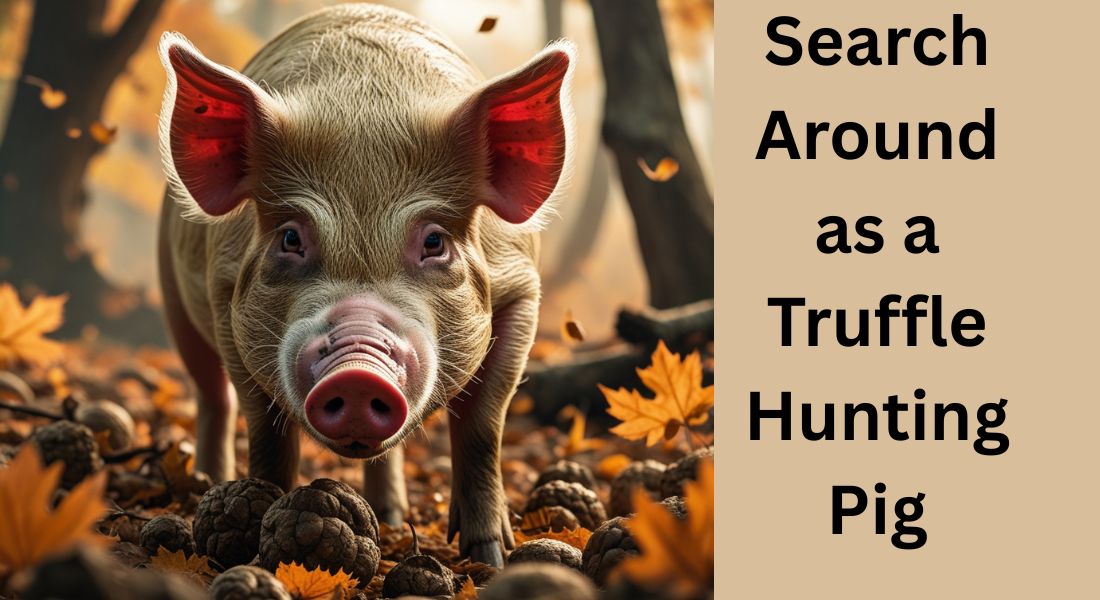
1. What Makes Pigs Exceptional Truffle Seekers 🐷
Truffle pigs—or truffle hogs—are domestic pigs trained to sniff out underground truffles with remarkable accuracy. They can detect truffles buried up to 3 feet (91 cm) beneath the surface, thanks to their superior olfactory senses Wikipedia. Initially believed to be drawn by male pig hormones like androstenol, scientists now know truffles emit dimethyl sulfide, which captivates pigs.
Rooting and foraging come naturally to pigs, making them well-suited for truffle hunting. Trainers simply walk them on a leash through wooded areas where truffles grow, and allow their instincts to guide the search .
2. A Journey Back in Time: History of Truffle-Hunting Pigs
This craft dates as far back as the Roman Empire, but its clear documentation begins with Renaissance gastronomist Bartolomeo Platina in the 15th century. By the 17th century, English naturalist John Ray had recorded the practice, and by 1875, a trained truffle pig could cost up to 200 francs—an investment recouped many times over due to the high market value of truffles.
Italy banned the use of pigs for truffle hunting in 1985 to preserve the forest floor; their rooting often damaged mycelium, harming future production.
3. Following a Truffle-Pig Around the Woods
Walking behind a pig on the hunt is a sensory experience:
-
Nose to the ground: With snout prodded deep into soil, pigs sniff out volatile compounds signaling a hidden truffle.
-
Rapid excavation: Once scent is confirmed, pigs dig with intense enthusiasm.
-
Skilled handler intervention: Hunters often have to beat the pig to the prize—pigs tend to gobble up truffles unless closely monitored.
-
Reward system: Once the truffle is retrieved, pigs are rewarded with treats like apples or potatoes.
In southwest France, these hunts are a seasonal tradition—walking through oak forests in winter, following a hunter and his pig in cold, truffle-filled silence.
4. Dogs vs. Pigs: Evolution of the Tools of the Trade
While pigs remain effective, many truffle hunters now prefer dogs—particularly breeds like the Lagotto Romagnolo. Dogs offer key advantages:
-
No ecosystem damage: They can pinpoint truffles without cause heavy rooting.
-
They don’t eat the loot: Dogs are trained to alert handlers without consuming the truffle.
-
Legal compliance: In countries like Italy where pigs are banned, dogs remain the go-to choice.
Yet pigs retain their place in regions where cultural and practical preference persists.
5. Training a Truffle-Hunting Pig
Training is surprisingly swift:
-
Scent conditioning: Introduce piglets to truffle scent early.
-
Reward association: Linking truffle detection with treats teaches them to seek.
-
Field acclimation: Practice in natural environments helps them learn rooting skills.
-
Lead training: Pigs need to stay controlled on a leash during hunts.
Within a few weeks, pigs reliably identify and alert to truffle locations.
6. Environmental Considerations & Conservation
Despite their effectiveness, pigs can be harmful to truffle habitats:
-
Mycelium destruction: Their powerful digging often tears truffle roots, reducing future yields.
-
Soil disruption: Digging creates holes that can lead to erosion and habitat instability.
-
Unharvested truffles: Pigs may eat truffles before handlers can collect them.
Italy ceased pig use in 1985 to address these ecological issues, though some regions still embrace pigs culturally.
7. The Modern Day Truffle Hunt
Today, hunts vary by region and hunter preference:
-
Pigs: Still valued for their accuracy and nostalgic appeal in parts of France and North America.
-
Dogs: Increasingly preferred for environmental and legal reasons.
-
Alternative methods: Includes observing for truffle-seeking insects like truffle flies, which indicate potential sites .
Tours in truffle-rich areas (Italy, France, Oregon) allow tourists to experience a facet of this refined craft.
8. Why People Love These Hunts
Truffle-pig hunting is a multisensory experience:
-
Connection to tradition: It evokes centuries-old culinary culture.
-
Immersive in nature: Wandering quiet woodlands and following a pig’s lead reinforces a close bond with the earth.
-
Educational and thrilling: Watching pig and handler coordinate to reveal hidden treasures is both instructive and exciting.
9. Final Reflections
Hunting truffles with pigs blends science, instinct, and tradition:
-
Science: Understanding the chemistry of truffle scent and pig olfaction.
-
Instinct: Tapping into innate rooting behavior.
-
Tradition: Participating in a culinary heritage renewed season after season.
Although dogs are offering a more sustainable direction, pigs remain iconic figures in the hunt—motivated by scent, driven by reward, and guided by human handlers into the hidden world beneath forest soil.
The next time you search “around as a truffle‑hunting pig,” you’re envisioning a craft steeped in history, ecology, and delight—one sniff, one root, one treasure at a time.