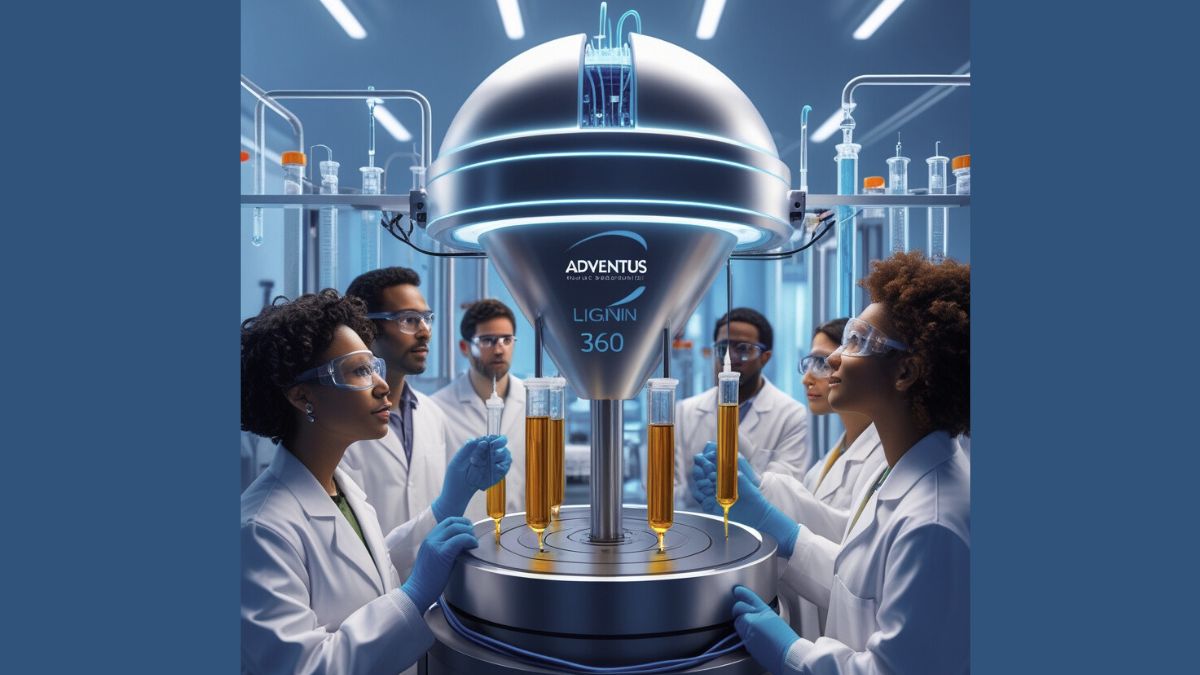
Across the rising tide of green chemistry and circular bioeconomy, lignin—a complex organic polymer in plant cell walls and a co‑product of pulp and paper manufacturing—has often been overlooked. Enter Adventus Lignin 360, a forward-looking initiative aimed at capturing lignin’s full potential through advanced fractionation, purification, and application strategies. This article delves into what Adventus Lignin 360 is, why it matters, and how it’s poised to reshape multiple industries.
1. What Is Adventus Lignin 360?
Though the name suggests a branding or project effort, Adventus Lignin 360 represents a comprehensive 360-degree approach to lignin:
-
Fractionation & Purification: Breaking lignin down into chemically uniform fractions.
-
Characterization: Deep analysis of lignin structure to tailor it for specific uses.
-
Application Development: Deploying lignin-derived materials in biofuels, bioplastics, coatings, adhesives, nanocomposites, and more.
-
Market Scaling: Bridging lab innovations with industrial viability.
This aligns with recent research highlighting lignin’s rising relevance as a renewable feedstock for high-value products, not merely a low-value residue .
2. The Technical Core of the 360 Approach
Adventus Lignin 360 relies on advanced chemical and mechanical processes, such as:
-
Ultrafiltration and solvent fractionation to isolate lignin nanoparticles or tailored molecular-weight fractions .
-
Nanoparticle technology to enhance dispersibility and interface with polymers .
-
Functional modifications (like phenolation, phosphorylation, or methacrylation) to tune properties such as UV protection, antioxidant activity, thermal stability, and adhesive performance .
This suite of approaches enables developers to engineer lignin’s structure for specific performance outcomes.
3. Core Applications of Adventus Lignin 360
A. Biocomposites & Coatings
High-value lignin fractions can reinforce bioplastics, improve flame resistance, and add UV-blocking capability to films—ideal for packaging and building materials .
B. Adhesives & Resins
Substituting phenol in phenolic adhesives, lignin becomes a renewable binder for wood composites and coatings. Innovations allow formaldehyde-free options .
C. Carbon Fiber & Analytics
Lignin’s high carbon content makes it a promising low-cost precursor for carbon fibers and conductive materials .
D. Nanofillers & Sunscreen
Lignin nanoparticles embedded in coatings or gels can boost UV protection, act as antioxidants, or serve as functional fillers .
E. Bioplastics & Polyurethanes
Modified lignin has been used in thermoplastic polyurethane foams and biodegradable plastics, reducing both cost and fossil dependency .
4. AdvantaGeous Sustainability & Resource Efficiency
🌱 Circular Economy
Lignin, once burnt for energy, can now become feedstock for valuable materials—making industrial streams truly circular .
🔬 Green Processing
Adventus Lignin 360 emphasizes solvent-free or mild fractionation and avoids toxic chemicals—aligning with smart green chemistry practices .
🌍 Reduced Carbon Footprint
Substituting lignin-based products for phenolic, plastic, or petrochemicals reduces carbon emissions, waste, and fossil reliance .
5. Regional & Market Dynamics
-
Americas: Strong kraft lignin availability with growing demand in coatings and composites .
-
Europe / MEA: Sustainability mandates and advanced biorefinery capabilities accelerate high-purity lignin projects .
-
Asia-Pac: Rapid expansion in lignin utilization for bio-plastics, adhesives, and industrial manufacturing .
Major lignin innovators—like Borregaard, Sappi, AkzoNobel, Lignovations, and Green Agrochem—show the real-world momentum of these technologies .
6. Challenges & Future Opportunities
Despite promising advancements, Adventus Lignin 360 must navigate:
-
Lignin variability: Structural differences based on source (kraft, soda, organosolv) affect process and performance .
-
Scale-up & cost: Lab successes must become economically competitive at industrial volumes.
-
Technical hurdles: Incorporating high lignin loads without compromising processing or performance remains complex .
-
Standards: Certification and consistency standards for bio-based materials are still evolving.
Still, stepping through these obstacles will open doors to new markets for textiles, packaging, construction, electronics, and pharmaceuticals.
7. The Road Ahead for Adventus Lignin 360
The next frontier includes:
-
Smart lignin-based materials: Electrically conductive, antimicrobial, or stimuli-responsive polymers.
-
3D/4D printing: Using lignin in SLA/DLP resins to produce sustainable printed parts .
-
Next-gen composites: Combining lignin with nanocellulose or graphene for advanced applications.
-
Regulatory integration: Securing approvals for food contact, medical, or industrial use.
Research continues to drive development, and companies are forging partnerships in R&D and commercialization.
Conclusion
Adventus Lignin 360 isn’t just about valorizing a low-value byproduct—it embodies a full-spectrum shift toward sustainable, circular, and high-performance bioproducts. Through advanced purification, functionalization, and scalable application, it stands to reshape adhesives, coatings, plastics, composites, and more—ushering in a new age of bio-based innovation and environmental stewardship.
Let me know if you’d like a breakdown of Adventus partners, technical process flows, or comparison with other lignin initiatives!