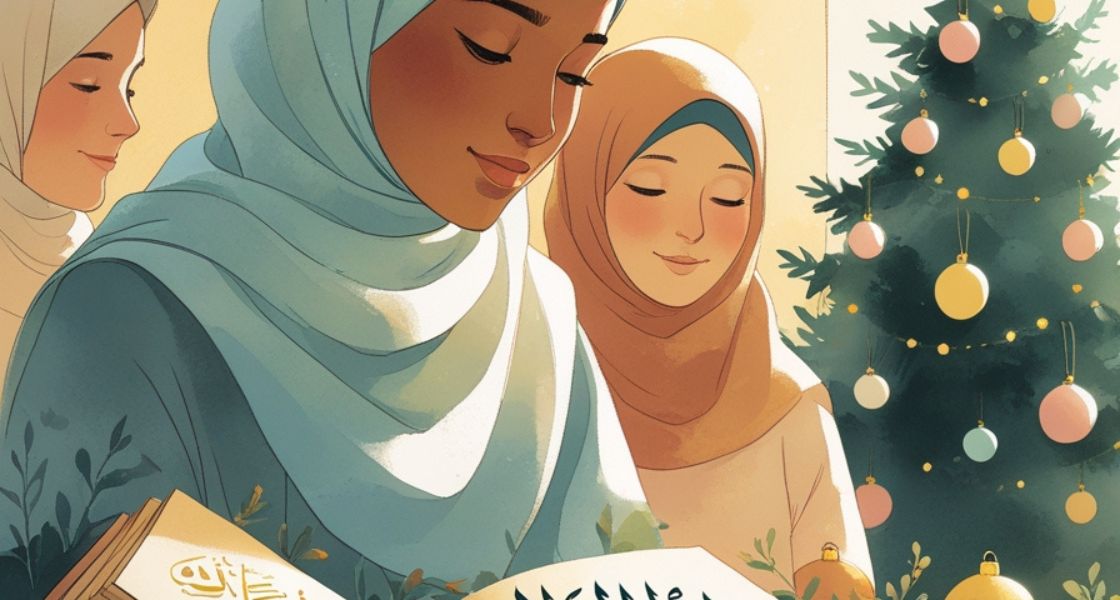
Every year during the holiday season, as Christmas lights go up and festive songs fill the air, people of different cultures and faiths come together to celebrate. But many often wonder: Do Muslims celebrate Christmas? The short answer is no, most Muslims do not celebrate Christmas in a religious or traditional sense. However, the reasoning behind this is rooted in Islamic beliefs and varies depending on culture, geography, and individual interpretation.
In this article, we explore this topic in depth with related questions such as Is Christmas haram in Islam, Do Muslims celebrate birthdays, and more — all with a human perspective to foster understanding and respect among different faiths.
Is Christmas Haram in Islam?
In Islam, Christmas is generally considered haram (prohibited) for religious observance. The reason is simple: Christmas is a Christian holiday that celebrates the birth of Jesus (peace be upon him) as the Son of God, a belief that contradicts Islamic teachings. While Muslims highly respect Jesus (known as Isa in Arabic) as a prophet, they do not believe he was divine or the son of God.
Islam encourages Muslims to honor their own religious practices and avoid imitating other religions in matters of worship. Celebrating Christmas as a religious event — attending church services, putting up nativity scenes, or exchanging gifts as part of a religious custom — would generally be viewed by Islamic scholars as inappropriate or impermissible.
What Do Muslims Celebrate Instead of Christmas?
Muslims have their own religious holidays, the most important being:
-
Eid al-Fitr – Celebrated at the end of Ramadan, the month of fasting. It’s a joyful occasion marked by communal prayers, feasting, charity, and visiting friends and family.
-
Eid al-Adha – Also known as the “Festival of Sacrifice,” it commemorates Prophet Ibrahim’s willingness to sacrifice his son in obedience to God. This holiday includes the ritual animal sacrifice (Qurbani), sharing meals, and charitable giving.
These Eid festivals are deeply rooted in Islamic tradition and are celebrated across the Muslim world with great enthusiasm.
Do Muslims Celebrate Birthdays?
Muslim views on celebrating birthdays vary widely. There is no mention of birthday celebrations in early Islamic tradition, and some scholars believe birthday parties imitate non-Islamic customs and are therefore discouraged. However, many Muslims — especially in non-Arab and Western cultures — do celebrate birthdays in a non-religious, family-oriented way with cake, gifts, and gatherings.
The key issue lies in intent and religious significance. If a birthday is celebrated simply as a family event with no religious overtones, many Muslims see no harm in it.
Do Muslims Celebrate Christmas in the Quran?
The Quran does not mention Christmas, as it is not an Islamic holiday. However, the Quran does speak about Jesus (Isa) and his miraculous birth to Maryam (Mary), which is a point of shared reverence with Christians. The major difference is that Muslims do not consider Jesus to be divine, and thus do not celebrate his birth as a holy event.
So, while Muslims believe in the virgin birth of Jesus and honor him as a prophet, the concept of Christmas as celebrated in Christianity has no foundation in Islamic scripture.
Do Muslims Celebrate Christmas Reddit?
On platforms like Reddit, you’ll find a variety of perspectives. Some Muslims mention that they join in on the cultural aspects of Christmas, especially in Western countries. This may include attending office Christmas parties, exchanging gifts, or enjoying holiday meals with non-Muslim friends and neighbors — without any religious intention.
Others are more conservative and avoid all forms of Christmas-related activities to maintain religious boundaries. The Reddit Muslim community reflects this diversity, with discussions often emphasizing intent, cultural integration, and personal choice.
Do Muslims Celebrate Easter?
No, Muslims do not celebrate Easter, as it is a Christian holiday that commemorates the resurrection of Jesus, a belief Islam does not support. According to Islamic belief, Jesus was not crucified but was instead raised to the heavens by God. Therefore, Easter has no religious relevance in Islam.
While some Muslims may enjoy springtime festivities around the Easter season or participate in community events like egg hunts in secular contexts, they do not observe Easter as a religious celebration.
Do Muslims Celebrate Halloween?
Most Muslims do not celebrate Halloween, as it is considered a pagan-rooted holiday with themes that can conflict with Islamic values. Costumes, trick-or-treating, and horror-themed decorations may be seen as promoting superstition, fear, or imitation of non-Islamic customs.
That said, some Muslim families, especially in Western countries, may allow children to dress up in fun, innocent costumes or hand out candy as a way to socialize without engaging in the holiday’s original meaning. Again, this comes down to individual choice and interpretation.
Do Muslims Celebrate New Year?
The Islamic calendar has its own New Year, which begins with the month of Muharram. This event is not typically celebrated in a festive way like the Gregorian New Year. However, many Muslims around the world do acknowledge January 1st as the start of a new year and may use the occasion to reflect, make resolutions, or spend time with family.
Some religious scholars discourage celebration of the Gregorian New Year, while others allow non-religious recognition as long as it does not involve prohibited activities like drinking or un-Islamic partying.
Final Thoughts: Understanding and Respecting Differences
So, do Muslims celebrate Christmas? Not in a religious sense. But responses vary depending on personal views, cultural background, and where one lives. The core reason for not celebrating Christmas is theological — it is rooted in beliefs that differ significantly from Christian doctrine.
However, many Muslims are happy to respect the holiday spirit, enjoy time with friends, and express goodwill toward others during this season — while still remaining true to their own faith. Understanding these differences helps build mutual respect and peaceful coexistence in today’s diverse world.