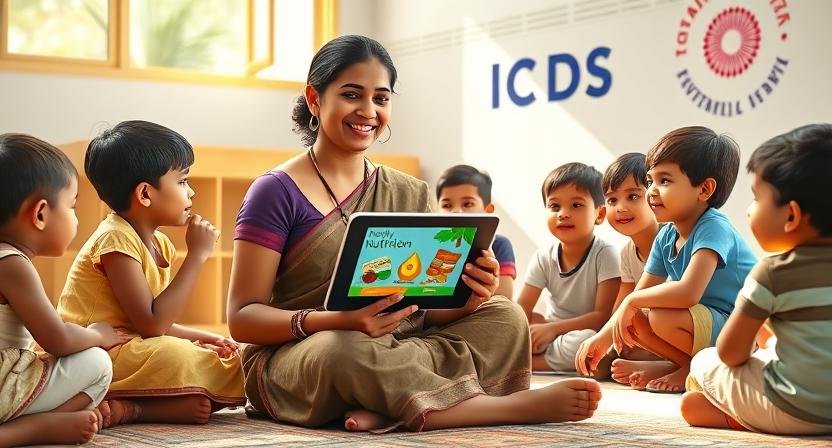
For decades, the Integrated Child Development Services (ICDS) scheme has stood as a cornerstone of India’s public health and nutrition infrastructure. Its iconic angular logo, depicting a mother and child, is a familiar sight in villages and urban slums across the nation, representing a promise of nourishment, care, and early learning. However, in an era of rapid digital transformation and evolving public health challenges, a legacy system requires a legacy upgrade. This is where the conceptual framework of ICDS X comes into play—not as an official rebranding, but as a forward-looking vision for a digitally empowered, data-driven, and hyper-efficient future for child development services.
The “X” here is a variable. It signifies the unknown future, the multiplier effect of technology, and the intersection of various services—health, nutrition, education, and social welfare—into a cohesive, powerful force. It represents the next generation of a system that has touched millions of lives but now stands on the brink of a necessary and profound transformation.
The Bedrock: Understanding the Original ICDS
Before envisioning ICDS X, it’s crucial to acknowledge the monumental work of the existing ICDS apparatus. Launched in 1975, it is one of the world’s largest and most unique programs for early childhood care and development. Its services are delivered through a vast network of Anganwadi Centres (AWCs), managed by Anganwadi Workers (AWWs) and helpers. The core services include:
-
Supplementary Nutrition: Providing hot-cooked meals and take-home rations to children under six, and pregnant and lactating women.
-
Preschool Non-Formal Education: Imparting early education to children in the 3-6 age group to prepare them for formal schooling.
-
Nutrition and Health Education: Educating women, especially young mothers, on issues of health and nutrition.
-
Immunization, Health Check-ups, and Referral Services: Linking beneficiaries to the public health system for vaccinations, antenatal check-ups, and treatment of illnesses.
The scheme has undoubtedly improved nutritional outcomes, reduced infant mortality rates, and provided a critical safe haven for millions of children. However, it faces persistent challenges: manual, paper-based record-keeping leading to data delays and inaccuracies; issues with supply chain management for nutrition; difficulties in monitoring the quality of services; and an overwhelming administrative burden on Anganwadi workers.
The Pillars of ICDS X: A Tech-Enabled Paradigm Shift
ICDS X is the vision to address these challenges by integrating cutting-edge technology into every layer of the ICDS ecosystem. It’s not about replacing the human touch of the Anganwadi worker but empowering her with tools to be more effective. The framework rests on several key pillars:
1. Digitalized Data Management (The Paperless AWC):
The foundation of ICDS X is the complete digitization of all records. Instead of cumbersome registers, Anganwadi Workers would use ruggedized tablets or smartphones with intuitive applications. This would allow for:
-
Real-time Data Entry: Immediate recording of attendance, meal distribution, and health observations.
-
Automated Reporting: Automatic generation of reports for supervisors, eliminating manual consolidation and reducing errors.
-
Dynamic Growth Monitoring: Digital growth charts that instantly plot a child’s progress against WHO standards, triggering automatic alerts for malnutrition or stunting.
2. Advanced Analytics and Predictive Modeling:
With data flowing in real-time from thousands of AWCs, a centralized ICDS X platform could leverage big data analytics and AI.
-
Identifying At-Risk Cohorts: The system could analyze trends to predict which geographical areas or demographic groups are at highest risk of nutritional deficits, allowing for proactive intervention.
-
Supply Chain Optimization: AI could predict the required amount of nutrition supplies for each AWC based on beneficiary count and historical usage, minimizing waste and preventing stock-outs.
-
Personalized Interventions: Analytics could help tailor nutrition and counseling advice for specific families based on their unique data profile.
3. Enhanced Service Delivery and Training (e-Learning):
ICDS X would revolutionize how Anganwadi Workers are trained and supported.
-
Digital Training Modules: Interactive modules and video tutorials on smartphones could provide continuous learning on new nutrition guidelines, preschool pedagogy, and health protocols.
-
Tele-mentorship: AWWs in remote areas could connect with nutritionists, doctors, and childcare experts for guidance on complex cases via video calls.
4. Empowered Beneficiary Engagement:
Technology can create a direct bridge between the scheme and its beneficiaries.
-
Parent Portals and Mobile Apps: Mothers could receive SMS alerts about upcoming vaccination drives, health check-up camps, and information about their child’s attendance and nutritional status.
-
Feedback Mechanisms: Digital channels would allow for real-time feedback on the quality of food and services, fostering accountability and continuous improvement.
The Human Element: Anganwadi Workers as Tech-Savvy Champions
A critical aspect of the ICDS X vision is that technology must serve the frontline worker, not hinder her. The transition requires:
-
User-Centric Design: Applications must be designed in local languages with simple, icon-based interfaces for workers with varying levels of digital literacy.
-
Comprehensive Training: Phased and hands-on training programs to build confidence and competence in using digital tools.
-
Technical Support: A dedicated helpline and support system to troubleshoot hardware and software issues promptly.
The goal is to free the Anganwadi worker from administrative drudgery, allowing her to focus on what she does best: caring for children, counseling mothers, and being a community leader.
Challenges on the Path to ICDS X
Realizing this vision is not without significant hurdles:
-
Digital Infrastructure: Ensuring reliable internet connectivity in the remotest parts of India is a prerequisite.
-
Cybersecurity and Data Privacy: Safeguarding the sensitive health data of millions of women and children is paramount and requires robust legal and technical frameworks.
-
Financial Investment: The initial investment in hardware, software development, and training is substantial.
-
Scalability and Interoperability: Any system must work seamlessly across different states and integrate with other government databases (like POSHAN Tracker, Ayushman Bharat) without creating new data silos.
Conclusion: A Future of Nourishment and Potential
ICDS X is more than a technological upgrade; it is a re-imagination of a beloved national program for the 21st century. By harnessing the power of data and connectivity, it has the potential to transform ICDS from a broad-based welfare scheme into a precise, proactive, and powerful instrument for change. It promises a future where no child’s growth is stunted due to data gaps, where no mother misses critical health advice due to information asymmetry, and where every Anganwadi worker is equipped to be a superhero in her community. The journey to ICDS X is complex, but the destination—a healthy, well-nourished, and empowered future generation—is undoubtedly worth the effort.
Informational FAQs
Q1: Is ICDS X an officially launched government scheme?
A1: No, “ICDS X” is not an official government program name. It is a conceptual term used by experts and analysts to describe the future, technology-driven evolution of the existing Integrated Child Development Services (ICDS) scheme. The government’s POSHAN Abhiyaan and the POSHAN Tracker app are real-world steps in this direction.
Q2: What is the POSHAN Tracker, and how does it relate to ICDS X?
A2: The POSHAN (Prime Minister’s Overarching Scheme for Holistic Nourishment) Tracker is a real-time, government-launched digital platform that allows Anganwadi Workers to record and monitor data of beneficiaries using a smartphone application. It is a foundational component of the broader ICDS X vision, bringing digital data management and growth monitoring to life.
Q3: How would ICDS X improve the quality of food provided?
A3: Through features like real-time beneficiary tracking, the system could ensure more accurate food allocation per center. Furthermore, integrated supply chain management could prevent spoilage and stock-outs. Digital feedback mechanisms from beneficiaries could also provide immediate insights into food quality, enabling quicker corrective actions.
Q4: Would ICDS X make the Anganwadi Worker’s job obsolete?
A4: Absolutely not. The core of ICDS X is to augment the Anganwadi Worker’s capabilities, not replace her. By automating manual record-keeping and administrative tasks, it would free up her time to focus on high-value activities like child care, interactive teaching, and personalized counseling for mothers.
Q5: What is the biggest barrier to implementing an ICDS X-like system?
A5: The most significant challenges are ensuring consistent digital infrastructure (especially internet connectivity in rural and remote areas) and managing the large-scale change management required to train hundreds of thousands of Anganwadi Workers to effectively use new technology.