In the vibrant, bustling world of bagel shops, amidst the golden hues of plain and sesame and the cheerful sprinkle of everything seasoning, there sits a darker, more enigmatic option. The pumpernickel bagel, with its nearly black exterior and dense, chewy crumb, is often overlooked by the casual buyer. Yet, for those in the know, it represents one of the most complex and historically rich offerings in the baker’s case. It’s not merely a color variation; it is a story of Old World traditions, unique ingredients, and a flavor profile that stands in a category all its own.
To understand the pumpernickel bagel is to first understand its namesake: pumpernickel bread. This is not a bread defined by a single ingredient but by a specific process. True German pumpernickel is a Westphalian rye bread made from coarsely ground whole rye grains and, traditionally, no wheat flour. Its legendary dark color is not achieved from molasses or coffee, as is common in many imitations, but through a long, slow baking process at a low temperature. The natural sugars in the rye caramelize over many hours (sometimes up to 24), resulting in a deep brown, almost black loaf with a moist, dense texture and a uniquely sweet, malty, and slightly sour flavor.
The pumpernickel bagel is a North American adaptation of this European classic. It takes the core flavor concept—the deep, earthy, slightly sweet rye—and translates it into the familiar, ring-shaped form of the bagel. However, achieving that signature dark color and complex taste requires a specific set of ingredients that set it apart from its lighter cousins.
The Anatomy of a True Pumpernickel Bagel
A genuine pumpernickel bagel gets its character from a few key components:
-
Rye Flour: This is the non-negotiable heart of the matter. While a 100% rye bagel would be incredibly dense and not quite “bagel-like,” a significant portion of rye flour is used, often a mix of dark rye flour and pumpernickel meal (coarsely ground rye) alongside high-gluten bread flour to provide the necessary structure and chew.
-
The Coloring and Flavoring Agents: Here is where recipes diverge. To mimic the long-baking process of traditional pumpernickel without spending a full day on one batch, bakers use natural agents to impart the dark color and signature sweetness.
-
Molasses: The most common ingredient, blackstrap molasses adds a deep, bittersweet flavor and a rich, dark brown color.
-
Cocoa Powder or Instant Coffee: A small amount of unsweetened cocoa powder or espresso powder is a clever baker’s secret. It doesn’t make the bagel taste chocolatey or of coffee; instead, it deepens the color and adds a roasty, bitter note that complements the rye’s earthiness.
-
Caramel Color: Sometimes used in commercial production for consistent coloring.
-
-
The Sweetener: Beyond molasses, a touch of brown sugar or barley malt syrup is often added to enhance the malty, sweet notes and to feed the yeast.
-
The Liquid: Some recipes use brewed coffee or even stout beer instead of water to further amplify the deep, roasty flavors.
The process of making them is the same as any other bagel: the dough is mixed, shaped into rings, briefly proofed, given a quick boil in water often sweetened with malt syrup (which gives the bagel its signature shiny, chewy crust), and then baked until firm.
A Flavor and Texture Experience
Biting into a well-made pumpernickel bagel is a multi-sensory experience. The exterior should be firm and slightly crisp from the bake, giving way to a remarkably dense and chewy interior. The crumb is tight and moist.
The flavor profile is where it truly shines. It’s a symphony of deep, earthy notes from the rye, a touch of sweetness from the molasses, and a subtle, bitter complexity from the cocoa or coffee. It’s less one-note and more savory-sweet, making it an incredibly versatile base for both sweet and savory toppings.
The Ultimate Canvas: How to Enjoy a Pumpernickel Bagel
The robust flavor of a pumpernickel bagel can stand up to strong companions. It is not a neutral canvas like a plain bagel; it is a co-star in any culinary pairing.
-
The Classic Savory: This is its natural home. A thick schmear of rich, creamy cream cheese is a match made in heaven. The tangy, cool cream cheese perfectly balances the bagel’s deep, sweet earthiness. Elevate it further with:
-
Red onion and capers for a briny, sharp kick.
-
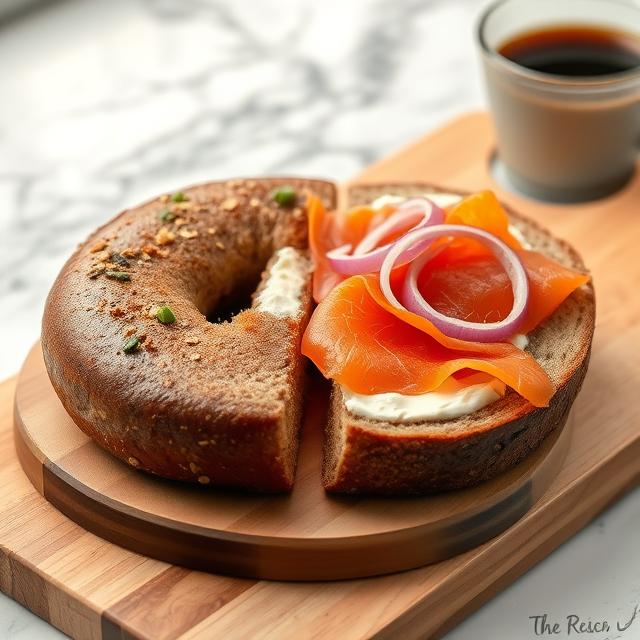
Smoked salmon (lox) and dill, a classic combination where the smoky fish complements the bagel’s complexity beautifully.
-
Cucumber, tomato, and a sprinkle of coarse sea salt.
-
A robust horseradish cream cheese or a sharp cheddar cheese slice.
-
-
The Sweet Side: Don’t underestimate its potential for a sweet treat. The inherent molasses sweetness makes it a fantastic partner for:
-
Sweetened whipped cream cheese or mascarpone and a drizzle of honey.
-
Apple butter or cinnamon honey.
-
Peanut butter or almond butter, where the nutty flavors find a great friend in the rye.
-
-
Beyond the Schmear: Stale pumpernickel bagels make outstanding bread for stuffing or breadcrumbs, adding a profound depth of flavor to dishes like meatloaf or a coating for chicken cutlets. They also make exceptional bagel chips for a charcuterie board.
A Staple of Substance
The pumpernickel bagel is more than just bread; it’s a testament to the art of baking. It carries the heritage of European rye bread into a beloved North American form. It asks for a moment of consideration, promising a richer, more satisfying experience than its simpler counterparts. The next time you find yourself at the bagel counter, bypass the ordinary and reach for the dark, dense, and mysterious pumpernickel. Your palate will thank you for the adventure.
Informational FAQs About Pumpernickel Bagels
Q1: Is a pumpernickel bagel healthy?
A: Compared to a plain white flour bagel, pumpernickel bagels can be a healthier choice. The rye flour provides more dietary fiber, which aids in digestion and helps you feel full longer. It also generally has a lower glycemic index, meaning it causes a slower, more gradual rise in blood sugar. However, it is still a calorie-dense carbohydrate, so moderation is key.
Q2: Why is my pumpernickel bagel not very dark?
A: Many commercial bagels labeled “pumpernickel” use a higher ratio of wheat flour and less of the dark coloring agents (like molasses or cocoa) to cut costs and create a milder flavor. An authentically dark pumpernickel bagel is typically found at specialty bakeries that prioritize traditional ingredients.
Q3: Does a pumpernickel bagel taste like chocolate or coffee?
A: No. When used in the small quantities typical of bagel recipes, cocoa powder and instant coffee act as flavor enhancers and colorants. They contribute to a deep, roasty, and complex bitterness that complements the rye and molasses without imparting a distinct chocolate or coffee taste.
Q4: Are pumpernickel bagels vegan?
A: Typically, yes. The basic ingredients for a pumpernickel bagel are flour, water, yeast, salt, and coloring agents like molasses. Always check with the bakery if you are unsure, as some recipes might include small amounts of dairy or honey.
Q5: Can I make pumpernickel bagels at home?
A: Absolutely! While making bagels requires some effort (specifically the boiling step), it is a very rewarding process. You can control the ingredients to create a truly dark and flavorful bagel by using a blend of bread flour and dark rye flour, and incorporating molasses and a small amount of cocoa powder into your dough.
Q6: How should I store pumpernickel bagels?
A: Like all bagels, they are best eaten the day they are baked. To maintain freshness, store them in a paper bag at room temperature for a day or two. For longer storage, slice them first, and freeze them in an airtight bag. You can toast them directly from the freezer.