To understand Tulum is to read its map. Unlike the dense, bustling grids of older cities, the geography of Tulum tells a story of ancient history, breathtaking nature, and modern evolution. A Tulum Mexico Map, is not merely a tool for navigation; it’s a key that unlocks the distinct experiences this world-famous destination offers. This guide will dissect the Tulum map, breaking down its key zones—the Archaeological Zone, the Hotel Zone, the Pueblo (Downtown), and the vast natural reserves—to help you plan an informed and seamless journey.
The Lay of the Land: Tulum’s Three Distinct Worlds
Visually, any map of Tulum will reveal three primary areas running north-to-south, roughly parallel to the coastline: the Beach Road (Hotel Zone), the main federal highway (Federal Highway 307), and the town center (Tulum Pueblo). Understanding the relationship between these is the first step to mastering Tulum.
1. The Tulum Archaeological Zone: Where History Meets the Sea
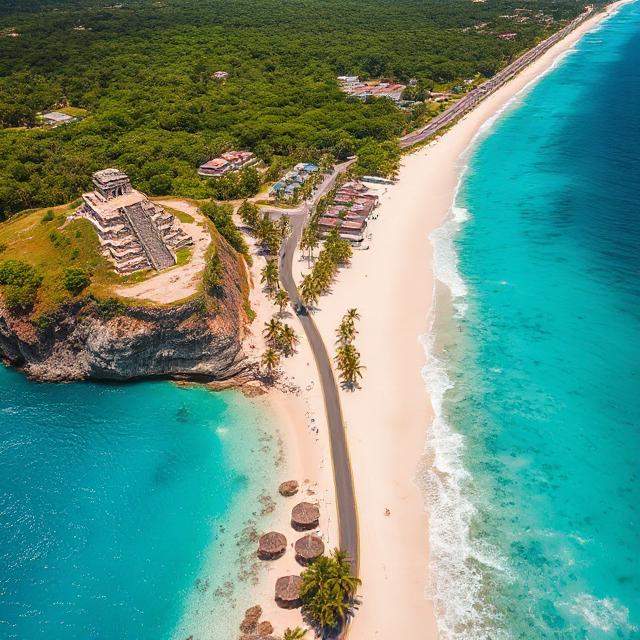
Perched on a 12-meter (39-foot) cliff overlooking the turquoise Caribbean Sea, the Tulum Ruins are the most iconic landmark and a fixed point on every map. This walled city was one of the last built and inhabited by the Maya and served as a major port and fortress. Its strategic coastal location is immediately apparent on a map.
-
What the Map Shows: The site is clearly marked, usually with a pyramid icon. Note its position east of the main highway and north of the modern Hotel Zone. Parking is on the inland (west) side, and a short walk leads you to the cliff-top ruins. On the map, you’ll also see the public beach access point just south of the ruins, leading to a stunning stretch of sand perfect for a post-tour swim.
-
Key Insight: The ruins are a separate entity from the town. Most visitors spend 2-3 hours here. It’s best to arrive early (right at opening, 8 AM) to avoid the intense heat and the largest crowds from nearby resorts.
2. Tulum Hotel Zone (Zona Hotelera): The Bohemian Chic Coastline
Running south from the ruins for approximately 10 km (6 miles) is a narrow road officially known as Boca Paila Road, but universally referred to as the “Hotel Zone” or “Beach Road.” This is the heart of Tulum’s internationally renowned boutique hotel, restaurant, and nightlife scene.
-
What the Map Shows: The road is a single lane in each direction, running parallel to the beach, with the sea on the east and the dense jungle and lagoons (like Laguna Kaan Luum) on the west. Maps will be dotted with countless icons for hotels, wellness centers, and acclaimed restaurants. It’s crucial to note that this strip is long and not easily walkable end-to-end. The northern end is closer to the ruins, while the southern end leads toward the Sian Ka’an Biosphere Reserve.
-
Key Insight: Navigating the Hotel Zone can be slow, especially in the evening. Bicycles are the preferred mode of transport for many staying here. Your map is essential for gauging distances between your accommodation and that famous restaurant you want to try.
3. Tulum Pueblo (Downtown): The Beating Heart
West of the highway lies Tulum Pueblo, the actual town where many locals live and work. This is where you’ll find a more authentic and affordable taste of Mexican life, with local markets, taquerias, shops, and a vibrant atmosphere.
-
What the Map Shows: The town is centered around Avenida Tulum, the main north-south artery, which is intersected by cross streets named with ordinals (Calle Sol Ote, Calle Luna, etc.). The ADO bus station, a major transit hub for buses to Cancun, Playa del Carmen, and beyond, is located here on Avenida Tulum. Maps will also show the large Chedraui supermarket, a key spot for stocking up on supplies.
-
Key Insight: The pueblo is where you go for value, authentic food, and everyday services. The distance from the pueblo to the beach is about 3-4 km (a 5-10 minute drive or taxi ride). Many savvy travelers choose to stay in the more affordable pueblo and bike or taxi to the beach, enjoying the best of both worlds.
Navigating Between the Zones: The Arteries
The backbone connecting all these areas is Federal Highway 307. This is the main, fast-moving highway that runs the entire length of the Riviera Maya from Cancun to Tulum and beyond. Every turnoff to the beach or the town originates from this road.
-
The Main Access Point: The primary junction to look for on your map is where Highway 307 meets the road to the beach. This is often marked by a large statue of a Maya diver and is the gateway to the Hotel Zone. From this junction, you can go north (toward the ruins) or south (down the length of the hotels).
-
Getting to the Pueblo: Exits from Highway 307 into Tulum Pueblo are well-marked. Avenida Cobá and Avenida Tulum are the main entry points.
Beyond the Basics: What Your Map Reveals About Nature & Culture
A detailed map of Tulum will also highlight its incredible natural and cultural attractions scattered in the surrounding areas:
-
Cenotes: The Yucatán Peninsula is famous for its cenotes—natural sinkholes filled with fresh water. Your map will show dozens around Tulum, like the popular Gran Cenote (just west of the Hotel Zone), Cenote Calavera, and the stunning cave system of Cenotes Dos Ojos. They are often plotted with a droplet icon.
-
Sian Ka’an Biosphere Reserve: At the southern end of the Tulum map, the road and the coastline merge into the UNESCO World Heritage site of Sian Ka’an, a massive protected reserve of tropical forests, mangroves, and marshes. This is a destination for eco-tours and adventure.
-
Ruins of Cobá: Located northwest of Tulum, a map will show the ancient city of Cobá, home to the tallest pyramid in the Yucatán, which you can still climb. It’s about a 45-minute drive inland.
Practical Navigation Tips for Your Trip
-
Google Maps & Maps.me: Both are reliable in Tulum for driving directions. Download offline maps on Google Maps or use the Maps.me app for areas with spotty cell service.
-
Transport: Rent a bike for the Hotel Zone, use taxis (agree on a price first), or rent a car for maximum flexibility to explore cenotes and Cobá.
-
Orientation: Remember: the ocean is always east. The highway (307) is your north-south guide. The beach road runs parallel to the coast.
A map of Tulum is a promise of adventure. It charts a course from ancient wonders to modern luxuries, from vibrant town life to serene natural pools. By understanding its layout before you go, you transition from a passive tourist to an confident explorer, ready to unlock all the magic this unique destination has to offer.
Informational FAQs
Q1: Is it easy to get around Tulum without a car?
A: Yes, it is very feasible. Within the Pueblo and the Hotel Zone, bicycles are excellent. Taxis are plentiful but can be expensive for frequent long trips. Colectivos (shared vans) run constantly along Highway 307 and are an affordable way to get to Playa del Carmen or the ruins.
Q2: How far is Tulum Pueblo from the beach?
A: The distance from the center of Tulum Pueblo to the beginning of the Beach Road is approximately 3-4 kilometers (2-2.5 miles). This takes about 5-10 minutes by car or taxi and 15-20 minutes by bicycle.
Q3: What is the best way to get to the Tulum Ruins?
A: You can take a taxi from town or the hotel zone, bike there (if you’re staying nearby), or catch a north-bound colectivo on Highway 307 and ask to be dropped off at “las ruinas.” There is a designated stop.
Q4: Are there any free public beaches in Tulum?
A: Yes. There is a public beach access point just south of the Tulum Ruins archaeological site. Another popular option is Playa Paraiso, which has a public section alongside paid lounge chairs and services.
Q5: What should I look for on a map to find authentic food?
A: While famous restaurants are in the Hotel Zone, look for clusters of eateries along Avenida Tulum and the side streets in Tulum Pueblo. Places filled with locals are always a good sign. The area around the intersection of Avenida Tulum and Calle Sol Ote is particularly lively.