Introduction: Ever Felt Like You’re Screaming into the Void?
Ever felt like you’re battling a faceless giant? A government agency, a corporation, even a university… they’ve wronged you, haven’t they? You’ve navigated the labyrinthine processes, filled out the forms, and pleaded your case, only to be met with silence, indifference, or that maddening bureaucratic “no.” You feel powerless, a tiny voice lost in the roar. You’re not alone.
Enter the Ombudsman. A strange word, isn’t it? But behind that peculiar moniker lies a powerful idea: an independent, impartial champion dedicated to fairness. Think of them as your personal shield against institutional overreach. But what *is* an ombudsman, really?
In this post, we’ll embark on a journey to understand this often-overlooked figure. We’ll delve into their origins, explore their functions, dissect their impact, and even ponder their future in our increasingly complex world.
I. The Basics: What on Earth is an Ombudsman?
Let’s decode that word: “Ombudsman.” It hails from Sweden, a land of long winters and, apparently, a deep-seated concern for justice. It loosely translates to “people’s representative” or “grievance person.” A fitting title, wouldn’t you agree?
Now, it’s crucial to understand what an ombudsman *isn’t*. They’re not lawyers, ready to litigate your case. Nor are they judges, wielding gavels and rendering verdicts. Instead, they occupy a unique space: independent and impartial. Their role is to investigate, mediate, and advocate for fairness, not to pick sides.
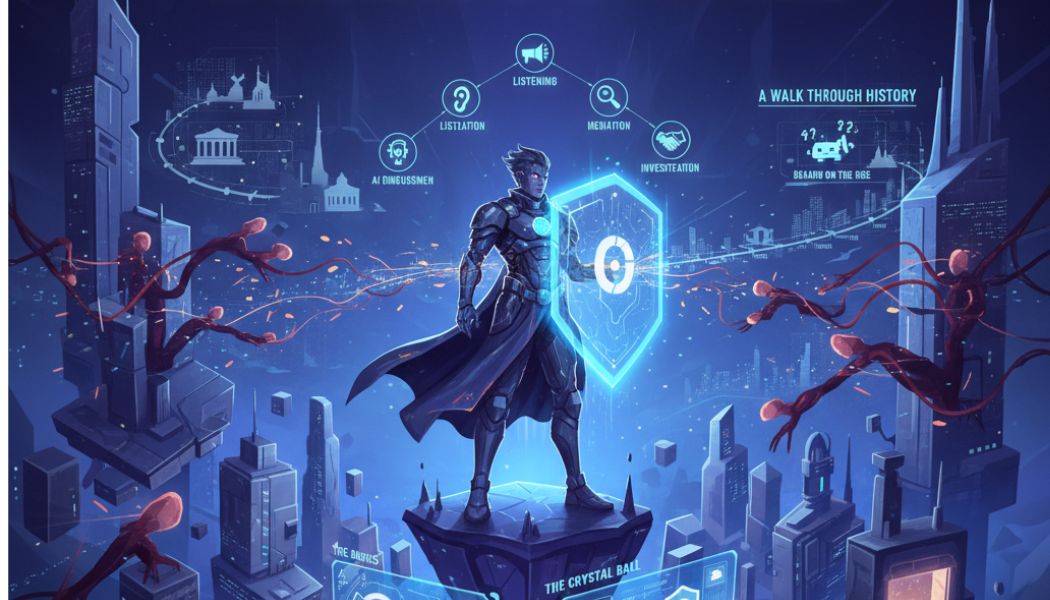
So, what exactly *do* they do? Think of it as a three-pronged approach. First, they *listen*. They receive and investigate complaints, giving voice to those who feel unheard. Second, they *mediate*. They act as facilitators, seeking mutually agreeable solutions between the complainant and the institution. Finally, they *illuminate*. They identify systemic issues and advocate for improvements, ensuring that the same problems don’t keep arising. The aim is to correct maladministration and promote fair practices.
You’ll find ombudsmen in a surprising variety of places. From government offices at all levels, to private companies striving to improve customer relations, to universities seeking to resolve student grievances, and in specialized fields like children’s rights, media ethics, and financial services. They are the silent guardians of due process, scattered across the landscape of modern life.
II. A Walk Through History: From Swedish Kings to Global Guardians
The seed of the ombudsman idea was planted long ago. Glimmers of this concept appear in ancient history. Consider the secret royal inspectors of ancient China, or the Roman tribunes, figures designed to protect the plebeians from the excesses of the patricians. These were, in a sense, “proto-ombudsmen,” embryonic forms of the office we know today.
However, the true birth certificate of the modern ombudsman traces back to Sweden. It began with King Charles XII in 1713, during his exile in the Ottoman Empire. He appointed a “Supreme Ombudsman” to ensure his officials acted according to law. But the real breakthrough came with the Swedish Constitution of 1809, which established the *Parliamentary* Ombudsman. This was a revolutionary concept: an independent officer of parliament, tasked with safeguarding citizens’ rights against the power of the government. This became the blueprint.
From Scandinavia, the idea spread, first to neighboring countries, then further afield. New Zealand adopted the ombudsman model in 1962, marking its arrival on the global stage. Over time, the ombudsman became a global standard for oversight, a testament to its effectiveness in promoting good governance.
The United States saw a proliferation of ombudsman offices at the state and local levels, and within various federal agencies. This evolution led to the specialization we see today, with ombudsmen focusing on specific areas of concern, from environmental protection to consumer rights.
III. The Verdict: Do They Actually Work? Current Opinions & Real Talk
Let’s be honest: do ombudsmen *actually* make a difference? The answer, like most things in life, is complicated.
The good news is that those who utilize the services of an ombudsman generally report high levels of satisfaction. They offer a cheaper, quicker, and more accessible alternative to the often-intimidating court system. They promote accountability, transparency, and good governance within organizations. Crucially, they can identify systemic issues and push for positive change that benefits not just the individual complainant, but the entire system.
However, there’s also a less rosy side to the story. Public awareness of ombudsmen remains relatively low, leading to unrealistic expectations. Some people mistake them for regulators with enforcement powers or even personal advocates, ready to fight tooth and nail for their cause. Criticism arises that some investigations are mere “desk-based paper exercises”, lacking the depth and rigor needed to uncover the truth.
A key limitation lies in the fact that an ombudsman’s recommendations are not always legally binding. Their power rests on persuasion, influence, and the threat of public exposure. Furthermore, research suggests that ombudsmen are disproportionately used by educated and politically aware individuals, potentially leaving vulnerable groups underserved. The impact on overall public trust in government, while positive, is subtle and difficult to quantify.
IV. The Battleground: Controversies, Criticisms & Ethical Tightropes
The path of the ombudsman is not always smooth. They often find themselves navigating a minefield of controversies, criticisms, and ethical dilemmas.
One of the most persistent questions revolves around independence. Can an ombudsman truly be impartial if their staff previously worked for the very body they are investigating? Political interference, both overt and subtle, remains a constant threat. Underfunded offices struggle to cope with increasing workloads, compromising their ability to conduct thorough investigations.
The “who is the client?” dilemma can be particularly thorny, especially in complex cases involving family members or individuals with impaired decision-making capacity. When does an ombudsman prioritize confidentiality, and when does the imperative to “do the right thing” require them to break that confidence, particularly in cases of potential serious harm?
The proliferation of “watchdog” bodies can lead to confusion about mandates and jurisdictional overlap. Legal disputes and governmental pushback on findings are not uncommon, highlighting the challenges ombudsmen face in holding powerful institutions accountable.
V. The Crystal Ball: What’s Next for the Ombudsman?
Looking ahead, the demand for ombudsman services is only likely to increase, particularly in areas such as human rights and consumer protection. The rise of the digital age presents both challenges and opportunities.
Data privacy and the ethics of artificial intelligence are emerging as new battlegrounds, potentially giving rise to “AI Ombudsmen” who can investigate algorithmic bias and ensure fairness in automated decision-making. Online dispute resolution (ODR) technologies, better case management systems, and digital communication tools offer the potential to enhance the efficiency and accessibility of ombudsman services. However, it’s crucial to ensure that technology doesn’t exacerbate the digital divide, further marginalizing vulnerable populations.
Calls for reform are growing louder, with advocates pushing for legally binding powers and the ability for ombudsmen to initiate investigations independently. There’s also a push to consolidate fragmented ombudsman schemes to improve efficiency and reduce confusion. Adapting mandates to cover emerging challenges such as climate change and global insecurity will be essential.
The ombudsman’s role is evolving from primarily resolving individual complaints to driving systemic change. Balancing these two functions will be key to maximizing their impact.
Conclusion: Your Advocate for a Fairer Future
The ombudsman, despite its challenges, remains a crucial institution, serving as a vital check on power. It offers a powerful, accessible path to justice and fairness. As our world becomes ever more complex, the need for independent oversight and impartial dispute resolution will only grow.
So, keep an eye on your local ombudsman. They may not be a superhero in the traditional sense, but they are a vital advocate for the “little guy,” constantly striving to adapt and protect our rights in an increasingly complex world. In a time where trust in institutions is wavering, the ombudsman stands as a beacon of hope, a reminder that fairness is still possible.