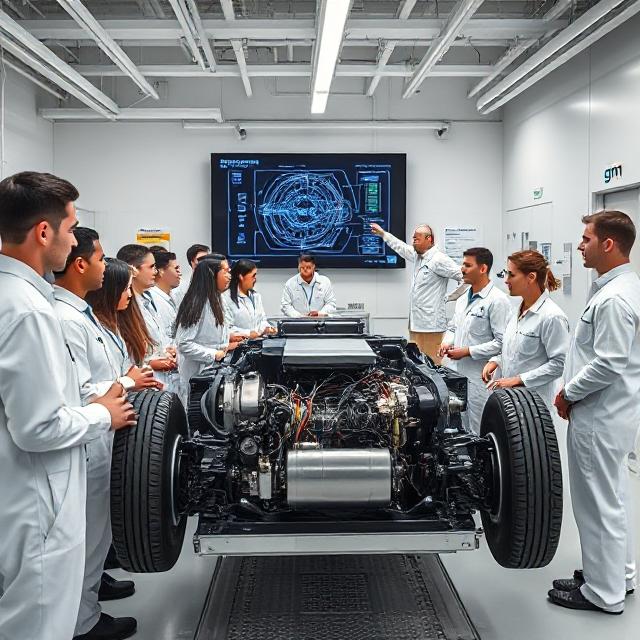
The automotive industry is in the midst of a seismic shift, moving from internal combustion engines to electric powertrains and from manual controls to autonomous driving software. This revolution isn’t just happening on the assembly line or in design studios; it’s fundamentally changing the skills required to build, sell, and service the vehicles of tomorrow. At the heart of preparing a workforce for this new era is a critical initiative known as the GMAcademy.
For many, the term “GMAcademy” might evoke images of a single, physical campus. In reality, it represents a far more dynamic and comprehensive ecosystem of learning and development. It is General Motors’ strategic commitment to bridging the skills gap, fostering internal talent, and ensuring that both its current employees and future recruits are equipped to lead the charge into a new automotive age. This article explores the multifaceted nature of the GM Academy, its programs, and its significance for the industry and the workforce.
More Than a Place: The Philosophy of the GM Academy
The core philosophy of the GM Academy is continuous, accessible, and relevant education. In a world where technology evolves at a breakneck pace, a one-time training session is no longer sufficient. The Academy embodies a culture of lifelong learning. It’s designed to be agile, updating its curriculum in near real-time to reflect the latest advancements in battery chemistry, software development, advanced manufacturing robotics, and customer experience paradigms.
This approach benefits multiple stakeholders:
-
For Employees: It provides clear pathways for career advancement, skill diversification, and job security in an evolving market. A line worker can train to become a battery technician; a salesperson can become an expert on EV infrastructure.
-
For the Company: It ensures GM has a pipeline of highly skilled talent ready to tackle complex challenges, maintain a competitive edge, and execute its vision like the Ultium platform and broader electrification strategy.
-
For New Recruits: It serves as an attractive beacon, signaling GM’s investment in its people and providing a structured onboarding process that immerses them in the company’s technology and culture from day one.
Pillars of the Academy: Key Programs and Initiatives
The GM Academy isn’t a monolith but a collection of targeted programs. Some of its most significant pillars include:
1. Technical Skills Development (The Manufacturing Floor of the Future):
This is perhaps the most visible aspect of the Academy. As GM retools factories for electric vehicle production, it must simultaneously retool its workforce. Programs here focus on:
-
Electric Vehicle Propulsion Systems: In-depth training on the assembly, diagnosis, and repair of high-voltage battery packs, electric motors, and power electronics.
-
Advanced Automation and Robotics: Teaching employees how to operate, maintain, and troubleshoot the sophisticated robots that populate modern assembly plants.
-
Connected and Autonomous Vehicle Technology: Educating technicians on the complex suite of sensors, lidar, radar, and computing systems that enable these features.
2. Software and Digital Expertise:
The modern car is a computer on wheels. Recognizing this, the GM Academy places a heavy emphasis on building software competency.
-
Coding Bootcamps: Programs to upskill existing employees in critical programming languages relevant to vehicle software and infotainment systems.
-
Cybersecurity: Specialized training to protect vehicles from digital threats, a non-negotiable aspect of connected car technology.
-
Data Analytics: Teaching employees how to interpret the vast amounts of data generated by vehicles to improve performance, predict maintenance needs, and enhance user experience.
3. Dealer and Service Network Training:
The revolution doesn’t stop at the factory gate. GM’s extensive dealer network must be equally prepared. The Academy provides critical resources for:
-
EV Sales Consultants: Training on how to effectively communicate the benefits of EV ownership, from environmental impact to cost savings and performance, and how to guide customers through home charging installation.
-
Certified EV Technicians: Creating a nationwide network of highly trained technicians specifically certified to safely service GM’s electric vehicles, using specialized tools and diagnostic procedures.
4. Leadership and Professional Growth:
The Academy also focuses on cultivating the next generation of leaders within GM. This includes traditional leadership training, mentorship programs, and courses on project management and strategic thinking, all tailored to the unique context of the automotive industry’s transformation.
The Role of Partnerships and Community Colleges
A crucial element of the GM Academy’s strategy is its collaboration with external educational institutions. GM has forged strong partnerships with community colleges across the United States, particularly those located near its manufacturing facilities.
These partnerships create a feeder system of talent. The colleges develop curricula—often designed with direct input from GM engineers—that teach the specific skills the company needs. Students graduate with an associate degree or professional certificate and are “job-ready,” often moving directly into roles at GM. This model not only benefits GM but also strengthens local communities by creating clear, high-value career pathways for residents without the need for a traditional four-year degree.
The Human Element: Why Investment in People Matters
Beyond the technical specifications, the GM Academy underscores a fundamental truth: technology is built by and for people. Automating factories and designing software are human-driven endeavors. By investing heavily in education, GM is making a statement that its most valuable asset is not its machinery or its patents, but its people.
This investment builds morale, fosters loyalty, and encourages innovation. An employee who feels the company is investing in their growth is more likely to contribute ideas, exhibit problem-solving initiative, and become a brand ambassador. In the fierce war for tech talent, a robust academy program is also a powerful recruiting tool, setting GM apart from both traditional automakers and new tech entrants.
Conclusion: A Blueprint for the Industry
The GM Academy is far more than a corporate training department. It is a strategic imperative and a forward-thinking response to one of the biggest industrial transitions in history. By creating a structured, expansive, and adaptable learning ecosystem, General Motors is not just building cars; it is building the architects, engineers, and technicians of its own future.
It serves as a blueprint for how large, established industries can navigate disruption—not by resisting change, but by empowering their workforce to embrace and drive it. As the automotive landscape continues to evolve, the culture of continuous learning fostered by the Academy will be the true engine of innovation and success.
Informational FAQs about the GM Academy
Q1: Is the GM Academy a physical college campus?
A: While GM has physical training centers, particularly at its manufacturing plants and tech centers, the “GM Academy” is primarily a conceptual umbrella for a wide variety of training programs. These include on-site training, online courses, partnerships with community colleges, and dedicated training curricula for different roles.
Q2: Who can participate in GM Academy programs?
A: Programs are primarily designed for two groups: current GM employees seeking to upskill or reskill for new roles within the company, and new recruits who undergo specific onboarding training. Some preparatory programs are also available to students at partner educational institutions.
Q3: Are these programs free for employees?
A: Typically, yes. GM Academy programs are considered a company-funded benefit and investment in its workforce. Employees are usually paid for their time spent in training.
Q4: Can someone from the public enroll in a GM Academy program to become a certified technician?
A: Not directly through GM. The path for someone outside the company is typically to enroll in a automotive technology program at a community college that is a GM partner (e.g., one that offers GM ASEP – Automotive Service Educational Program). Upon graduation, they would then apply to become a technician at a GM dealership, where they would receive further brand-specific training.
Q5: What is the ultimate goal of the GM Academy?
A: The ultimate goal is to future-proof both GM’s workforce and the company itself. It ensures GM has a steady pipeline of talent equipped with the precise skills needed to achieve its goals in electrification, software-defined vehicles, and advanced manufacturing, thereby maintaining a competitive advantage.