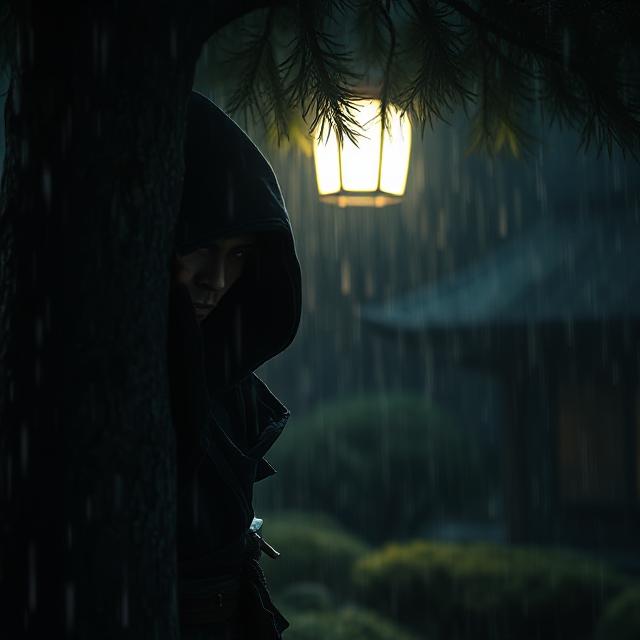
The announcement of Assassin’s Creed Shadows (formerly known as Assassin’s Creed Codename Red) sent waves of excitement through the gaming community. Promising to finally deliver a long-awaited feudal Japan setting, the game features dual protagonists: the shinobi Naoe and the legendary African samurai Yasuke. However, intertwined with the anticipation for its late 2024 release is a persistent online conversation, often centered on terms like “Assassin’s Creed Shadows Crackwatch.” This article aims to demystify this phenomenon, exploring what it means, the context behind it, and the broader implications for the gaming industry and consumers.
What Does “Crackwatch” Actually Refer To?
To understand the search term, we must first break it down. “Crackwatch” is not an official platform or service but a colloquial term derived from community-driven websites and forums that track the status of software “cracks.” A crack is an unauthorized modification that bypasses the digital rights management (DRM) protection on a video game, allowing it to be played without a legitimate license or purchase.
Sites like the original CrackWatch subreddit (now defunct) and its successors act as informational hubs. Their primary functions are to:
-
Track Release Status: Monitor which newly released games have been cracked and by which hacking group (e.g., EMPRESS, CODEX).
-
Provide Updates: Offer news on the progress of cracking specific, often heavily protected, games.
-
Foster Discussion: Create a space for users to discuss DRM, piracy, and the time it takes for games to be cracked.
Therefore, a user searching for “Assassin’s Creed Shadows Crackwatch” is almost certainly looking for information on whether the game has been pirated and made available for free download illegally shortly after its release.
The Inevitable Connection: Ubisoft and Denuvo DRM
The reason Assassin’s Creed Shadows is immediately linked to “Crackwatch” discussions is due to publisher Ubisoft’s longstanding and strict DRM policies. Historically, Ubisoft titles are among the most heavily protected in the industry.
The most significant barrier for would-be crackers is Denuvo Anti-Tamper. This is a sophisticated, commercial-grade DRM solution designed to integrate directly with a game’s executable file, making reverse engineering extremely difficult and time-consuming. While Denuvo does not prevent a game from being cracked indefinitely, its purpose is to create a significant delay—often weeks or months—to protect the crucial initial sales window.
For a blockbuster title like Assassin’s Creed Shadows, which represents a massive financial investment for Ubisoft, employing Denuvo is a near-certainty. This guarantees that upon its release, the game will be a primary target for cracking groups, and its status will be a major topic on tracking forums. The “Crackwatch” community will be watching closely to see if any group can break Denuvo’s protection and how long it takes them to do so.
The Ethical and Practical Debate Surrounding Piracy
The conversation around “Crackwatch” is a microcosm of a larger, ongoing debate about game piracy.
Arguments Often Made for Piracy:
-
Cost Prohibition: Games are expensive, and in many regions, pricing is not adjusted for local economies, making them unaffordable for some.
-
“Demo” Functionality: Some argue they use pirated copies as a trial to test performance and gameplay before committing to a purchase, especially in an era where demos are rare.
-
Preservation and Access: Concerns about games becoming permanently unavailable when digital storefronts shut down or servers are taken offline.
-
Protest Against DRM: A minority pirate games specifically to protest against DRM software, which they argue harms the performance and experience for legitimate paying customers.
The Counterarguments and Consequences:
-
Loss of Revenue: Piracy directly diverts potential sales revenue from developers, publishers, and everyone involved in the game’s creation. This can impact budgets for future projects, updates, and DLC.
-
It’s Illegal: Software piracy is copyright infringement and is against the law in most countries.
-
Security Risks: Downloading cracked software from unofficial sources carries significant risks, including malware, viruses, ransomware, and spyware that can compromise your personal data and system.
-
No Support or Updates: Pirated copies cannot access official online services, multiplayer modes, or crucial day-one patches and future updates that fix bugs and improve performance.
The Performance Question: Does DRM Like Denuvo Hurt Games?
A critical part of the “Crackwatch” discourse is the claim that Denuvo DRM negatively impacts game performance. The argument is that the constant background authentication and protection checks consume CPU resources, leading to lower frame rates, stuttering, and longer loading times.
There is evidence to support this. Numerous technical analyses and comparisons by outlets like Digital Foundry have shown measurable performance differences in some games when comparing the legitimate (Denuvo-protected) version against a cracked (Denuvo-free) version. However, the impact is not universal and varies greatly depending on how the DRM is implemented and the game’s underlying code.
For Assassin’s Creed Shadows, this will undoubtedly be a point of contention. Players with high-end systems may not notice, but those on the minimum or recommended specs might be concerned that DRM could hinder their experience. This frustration often fuels the desire for a cracked version, even among those who otherwise buy games.
Looking Ahead: The Official Path to Assassin’s Creed Shadows
While the “Crackwatch” conversation will continue in its own corner of the internet, the vast majority of players will engage with Assassin’s Creed Shadows through official channels.
The game is scheduled for release on November 15, 2024, on PC (via Ubisoft Connect and the Epic Games Store), PlayStation 5, and Xbox Series X/S. Players can already wishlist or pre-order standard, gold, or ultimate editions, which typically include early access and bonus content.
For those excited about the game but wary of performance or cost, the healthiest approach is to:
-
Wait for independent performance reviews and benchmarks after the game launches.
-
Look for official sales, which happen frequently on Ubisoft titles.
-
Consider subscription services like Ubisoft+, which offers access to new releases, including premium editions, for a monthly fee, effectively acting as a “try before you buy” model.
Informational FAQ
Q1: Is it legal to use websites that track game cracks?
A: Visiting such sites is generally not illegal in itself, as they typically only provide information and discussion. However, using the information to seek out, download, or distribute cracked software is illegal copyright infringement.
Q2: Will Assassin’s Creed Shadows definitely use Denuvo DRM?
A: While Ubisoft has not officially confirmed it for Shadows yet, their track record with major AAA releases makes it an almost certainty. It is safe to assume the PC version will be protected by Denuvo Anti-Tamper.
Q3: Can I get banned from platforms like Steam for pirating games?
A: Yes. If you are caught using pirated software or attempting to use modified files with a legitimate platform, your account can be permanently banned for violating the Terms of Service.
Q4: Are there any safe alternatives to piracy if I can’t afford a game?
A: Absolutely. Consider waiting for a sale, using a subscription service like Ubisoft+ or Xbox Game Pass (which often includes Ubisoft titles), or checking if the game is available through your local library. Many games also receive free-to-play weekends.
Q5: When can we expect a crack for Assassin’s Creed Shadows?
A: It is impossible to say. It depends entirely on the complexity of its DRM and the motivation of cracking groups. It could be a matter of days, or it could take many months. There is no reliable timetable.