For every educator, there comes a day. It might be a sudden fever, a family emergency, or a well-deserved professional development opportunity. Whatever the reason, you won’t be in your classroom. The success of that day—whether it’s a productive learning experience or a chaotic free-for-all—hinges almost entirely on one crucial document: your substitute plan.
Sub plans are far more than a simple list of activities. They are a bridge between your presence and your absence, a detailed roadmap that guides a stranger through the complex ecosystem of your classroom. Effective sub plans ensure that student learning continues seamlessly, respect the substitute’s time and expertise, and protect your hard-earned classroom culture. They are, in essence, an educator’s most critical safety net.
Why “Wingin’ It” Is Not a Strategy
The temptation to leave a quick note or simply tell a colleague what to do is strong, especially when you’re feeling unwell or rushed. However, this approach is fraught with risk. Incomplete plans can lead to:
-
Lost Instructional Time: The substitute spends valuable minutes tracking down materials or clarifying instructions.
-
Student Anxiety: Children, especially younger ones, thrive on routine. An unstructured day can be unsettling.
-
Behavioral Issues: Idle time and uncertainty are the prime catalysts for classroom management challenges.
-
Substitute Frustration: A poorly prepared day is stressful for the sub, making them less likely to return to your school.
Investing time in creating robust, reusable sub plans is an investment in your peace of mind. Knowing your class is in good hands allows you to focus on recovering from an illness or engaging in your training without a constant undercurrent of worry.
The Anatomy of a Bulletproof Sub Plan
Think of your sub plan as a manual for running your classroom. It should be so comprehensive that a competent substitute can step in and teach effectively with minimal outside help. Here are the essential components to include:
1. The Essentials (The Cover Page)
This is the first page your sub will see. It must include:
-
Date and Teacher Name: Clearly displayed.
-
Daily Schedule: A minute-by-minute breakdown of the day, including specials (art, music, PE), lunch, recess, and dismissal times.
-
Important Contacts: List key personnel like the office secretary, a helpful neighboring teacher, a reliable paraeducator, and the school nurse with their extension numbers.
-
Emergency Procedures: A bold, easy-to-find section detailing fire drill, lockdown, and severe weather protocols. Include a map of the evacuation route.
2. Classroom Rosters and Procedures
-
Student Rosters: Provide a list of all students. Include any pronunciation guides for tricky names. Have a separate list for any grouping (reading groups, lunch choices, etc.).
-
Attendance and Lunch Count: Explain exactly how you take attendance and submit the lunch count to the office.
-
Classroom Rules and Routines: Detail your expectations for behavior. How do students ask to use the restroom? How do they get a pencil? What is the signal for silence? The more the sub knows about your normal routines, the more confidently they can enforce them.
-
Helpful Students: Identify 2-3 students who are responsible and knowledgeable about class routines. This gives the sub allies and empowers your students.
3. Lesson Plans and Activities
This is the core instructional content. The golden rule here is KISS: Keep It Simple and Structured.
-
Clarity is Key: Write instructions that are unambiguous. Assume the sub has no prior knowledge of your current unit.
-
Overplan: Always have more activities than you think you’ll need. It is far better to have leftover work than to have 25 bored students with 20 minutes to spare.
-
Use Familiar Work: This is not the day for a brand new, complex lesson. Plan review activities, independent reading, well-explained worksheets, or continuation of a familiar project.
-
Differentiation: Briefly note if any students require modified assignments or have specific learning plans (IEPs, 504s). Leave their adjusted work with the general plans.
-
Technology Notes: If a lesson requires logging into a specific app or website, provide step-by-step login instructions for the sub and a list of student passwords if needed. Always have a low-tech backup plan in case the internet is down or a device fails.
4. The Sub Folder: Your Master Document
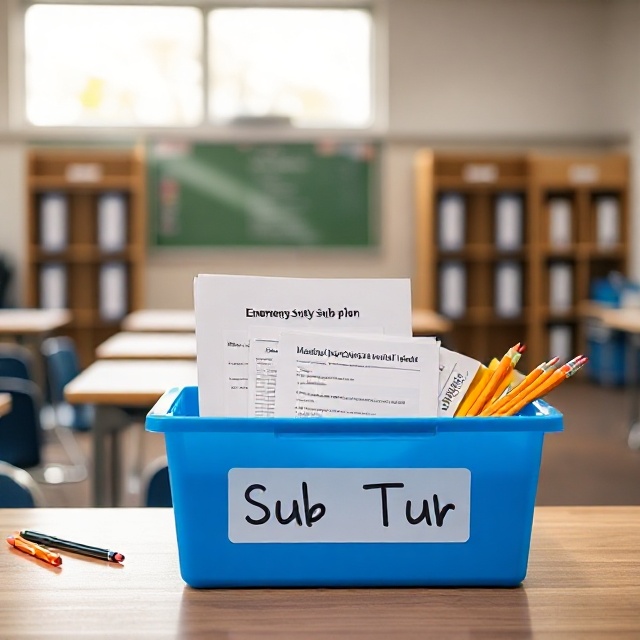
Your sub plans shouldn’t be created from scratch each time. Maintain a master “Sub Tub” or binder that is always ready to go. This should contain:
-
All the essential information listed above (updated as needed).
-
Several days’ worth of generic, high-quality emergency activities that can be used at any time of year (e.g., creative writing prompts, reading comprehension sheets, math review packets).
-
Seating charts (updated periodically).
-
A map of the school highlighting important locations: the lounge, bathrooms, copy room, etc.
-
A few positive notes or a small treat—a gesture of appreciation that lets the sub know they are valued.
Beyond the Binder: The Intangible Elements
A truly successful sub plan also considers the human element.
-
Build a Relationship: If you know you’ll be out, try to get the name of your sub in advance and welcome them in a note. A positive tone sets the stage for a good day.
-
Empower, Don’t Micromanage: Your plan is a guide, not a straitjacket. Trust a qualified sub to use their professional judgment and teaching style within the framework you provide.
-
The Debrief: Leave a simple form for the sub to fill out at the end of the day. Ask about what was accomplished, how the students behaved, and any questions that arose. This feedback is invaluable for future planning.
Creating thorough sub plans requires an upfront time commitment, but the payoff is immense. It is a professional practice that demonstrates respect for your students, your substitutes, and your own well-being. By weaving a strong safety net, you ensure that your classroom remains a place of learning and stability, even when you can’t be there to hold it together yourself.
Informational FAQs on Substitute Plans
Q1: How far in advance should I prepare my master sub folder?
A: Ideally, you should have a basic master folder prepared within the first month of school. Once your routines are established and your class roster is set, you can assemble the core components. Update it after any major schedule change or at the start of a new semester.
Q2: What are the best “emergency” activities to include for last-minute absences?
A: The best emergency activities are self-contained, require minimal instruction, and review previously taught skills. Think: creative writing story starters, reading passages with questions, math fact practice games, silent sustained reading, or a simple STEM challenge using common classroom materials.
Q3: How much detail is too much detail?
A: While being thorough is good, avoid overwhelming the sub. Use bullet points, bold headings, and clear sections to make the plan easily scannable. A five-page, dense paragraph format will likely not be read carefully. Concise, organized information is always best.
Q4: Should I tell my students I will be absent?
A: If you know in advance, it is generally a good practice to tell your students. It prepares them mentally for the change in routine and allows you to reiterate your behavioral expectations. For unexpected absences, your detailed plans and identified “helper” students will provide the structure they need.
Q5: Is it necessary to leave work that will be graded?
A: This is a personal choice. Many teachers leave practice work or review activities that are checked for completion rather than for a formal grade. The primary goal of a sub day is continuity and engagement, not necessarily introducing and assessing new, critical material.