In the vast tapestry of names, brands, and cultural references that populate our world, some terms emerge that pique curiosity without immediate recognition. “Camilano” is one such term. It is not a household word, nor does it have a single, monolithic definition. Instead, its significance is layered, existing at the intersection of personal identity, entrepreneurial spirit, and local legacy. To understand Camilano is to explore how a name can evolve from a personal identifier into a symbol of quality, community, and craftsmanship.
The Linguistic and Historical Roots: A Name of Strength
At its core, “Camilano” appears as a surname of Italian origin. Linguistically, it is a patronymic name, likely derived from the given name “Camillo.” The name Camillo itself has roots in ancient Roman history, stemming from “Camillus,” which was a term for a youth employed in religious services. It denoted a noble and honorable position.
Over centuries, the name evolved and spread throughout the Italian peninsula. The suffix “-ano” is a common feature in Italian surnames, often indicating “belonging to” or “descendant of.” Therefore, “Camilano” can be interpreted to mean “son of Camillo” or “of the family of Camillo.” Like many Italian surnames, its specific geographic concentration can often be traced to particular regions or villages, serving as a historical marker of lineage and origin. For individuals bearing this surname, it is a connection to ancestry, a story of migration, and a piece of personal heritage carried across generations, often to new worlds in the Americas and beyond.
The Modern Manifestation: Camilano as a Brand of Craftsmanship
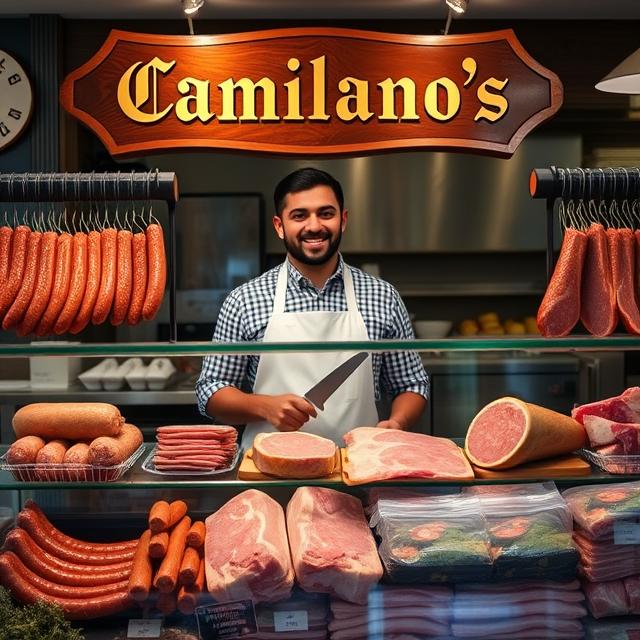
While its historical roots are personal, the most accessible public face of Camilano today is likely that of a brand, particularly in the realm of food and craftsmanship. In this context, “Camilano” transcends a family name and becomes a trademark of quality. This is most evident in businesses like Camilano’s Butcher Shops or Camilano’s Specialty Foods, which can be found in various communities, especially those with a strong Italian-American or Italian-Canadian presence.
These establishments are often family-run, multi-generational operations where the name above the door is a promise. The ethos of a Camilano-branded business is typically built on pillars of:
-
Authenticity: Offering traditional products made according to old-world recipes and techniques. This could include house-made sausages, cured meats, artisan cheeses, and prepared foods that taste of heritage.
-
Quality: Sourcing the finest ingredients and prioritizing skill over speed. The focus is on butchery as a craft, where knowledge of cuts and respect for the product is paramount.
-
Community: Acting as a hub within a neighborhood. These are places where owners know their customers by name, where food advice is freely given, and where the experience feels personal and genuine, a stark contrast to the anonymity of large chain supermarkets.
In this sense, “Camilano” has become synonymous with a trusted, artisanal approach to food. It represents a dedication to preserving culinary traditions and delivering an unmatched level of quality to a community that values authenticity.
Camilano Beyond Food: A Diverse Entrepreneurial Spirit
The utility of a strong name is not limited to one industry. The entrepreneurial spirit associated with a name like Camilano can extend into other ventures. It is possible to find:
-
Camilano Construction or Woodworking: Leveraging the name to imply sturdy, reliable, and craftsmany work. The values of building something lasting with skill align closely with the artisanal values of a food brand.
-
Camilano Arts or Design: Perhaps used by an artist or designer as their professional moniker, blending their personal identity with their public creative output.
-
Local Landmarks: In some towns, a prominent family name can become attached to a place, such as “the old Camilano building” or “Camilano Park,” indicating a family’s long-standing contribution and presence in the area.
This diversification shows how a name can act as a flexible vessel for reputation. Whether applied to food, wood, or design, it carries a connotation of skill, trust, and human touch.
The Cultural Tapestry: More Than Just a Business
The significance of Camilano also exists in the intangible realm of culture. For those who grew up with a Camilano’s in their town, the name can evoke powerful sense memories: the aroma of herbs and aging meat, the sound of a butcher’s knife sharpening, the taste of a perfectly seasoned sandwich. It becomes a part of the local identity, a fixture in the story of a place.
Furthermore, in the digital age, individuals with the Camilano surname contribute to its story through social media, professional networks, and personal blogs. Each person adds a new thread to the tapestry, whether they are an academic, an artist, an engineer, or a teacher. The name continues to evolve, representing not just a past legacy but a living, breathing, and diverse set of present-day achievements.
Conclusion: The Essence of Camilano
So, what is Camilano? It is not one thing, but many. It is a name etched in history, connecting individuals to ancient Roman pages and Italian villages. It is a brand stamped on quality food, representing artisanal skill and a commitment to community. It is a potential banner for craftsmanship in various trades, and it is a personal identity for families around the world.
The power of “Camilano” lies in its authenticity. In a world increasingly dominated by faceless corporations and generic products, names that carry the weight of personal responsibility and generational craftsmanship stand out. They remind us of the value of human skill, the importance of tradition, and the enduring strength of a good reputation built one customer, one project, and one generation at a time.
Informational FAQs About Camilano
1. Is Camilano a first name or a last name?
Camilano is primarily recognized as a surname (last name) of Italian origin. It is less commonly used as a first name.
2. What does the name Camilano mean?
The name is patronymic, meaning it’s derived from a father’s name. It likely comes from “Camillo” with the suffix “-ano,” meaning “son of Camillo” or “from the family of Camillo.”
3. Where is the Camilano name from?
It originates from Italy. As with many Italian surnames, its specific roots can likely be traced to a particular region, though the name itself is found among Italian diaspora communities worldwide.
4. Is there a large company called Camilano?
Camilano is not typically the name of a massive multinational corporation. Its modern commercial use is most commonly associated with small to medium-sized, often family-owned, businesses like butcher shops, delicatessens, or specialty food stores, particularly in North America.
5. How can I find a Camilano business near me?
A simple online search for “Camilano” along with your city or region is the best method. Due to their local and community-based nature, they may also be listed in local business directories or featured in regional food and culture articles.
6. Are all businesses named Camilano related?
Not necessarily. While some may be run by different branches of the same extended family, it is also possible that unrelated entrepreneurs with the Camilano surname have started businesses using their own name. The common thread is the leveraging of the name’s association with quality and authenticity.