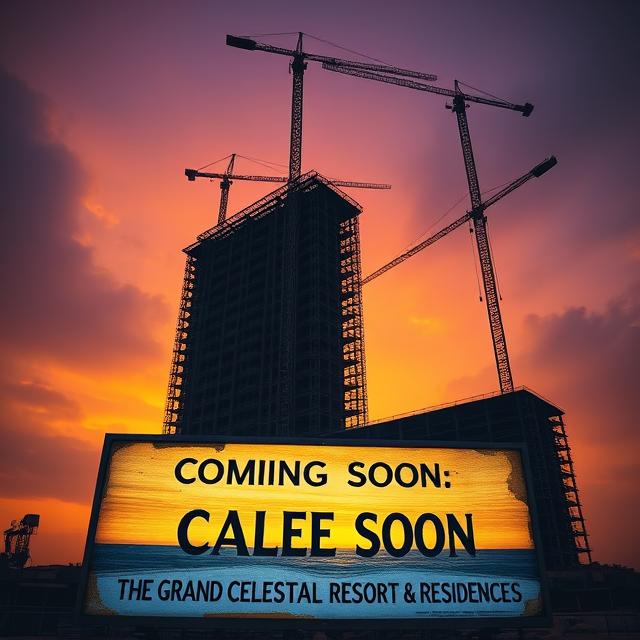
Flagship Resort Development Chapter 11: In the world of high-stakes real estate and luxury tourism, few projects capture the imagination quite like a flagship resort development. These are not mere hotels; they are envisioned as destination landmarks, sprawling complexes designed to define a skyline, revitalize a region, and set a new standard for opulence and experience. They promise economic booms, thousands of jobs, and unparalleled guest amenities. Yet, the path from visionary blueprint to successful operation is perilously fraught with risk. For some of these titanic projects, the journey ends not with a grand opening ribbon-cutting, but with the complex legal filing of a Chapter 11 bankruptcy.
This outcome, while often portrayed as a catastrophic failure, is more accurately a critical financial restructuring tool. Understanding why these multi-million or billion-dollar endeavors land in Chapter 11 reveals the immense complexities and vulnerabilities of large-scale development.
The Anatomy of a Flagship Resort Development
A flagship resort is typically characterized by its scale, brand prominence, and ambition. Think of massive casino resorts on the Las Vegas Strip, expansive ski-in/ski-out mountain villages, or exclusive island retreats. They often feature:
-
A renowned brand: A major hotel chain (e.g., Ritz-Carlton, Four Seasons) or a well-known celebrity attached to its restaurants and amenities.
-
Mixed-use components: Beyond rooms, they include high-end condominiums, retail shopping, convention space, multiple restaurants, spas, and entertainment venues.
-
Significant job creation: They are pitched to communities as major employers.
-
Extreme capital intensity: Funding involves complex layers of equity from developers and investors, and massive debt from construction loans and bond issuances.
The Perfect Storm: Why Flagship Resorts File for Chapter 11
The reasons a project of this magnitude seeks Chapter 11 protection are rarely singular. Instead, it is usually a confluence of factors that create an insurmountable cash flow crisis.
1. Crippling Debt Load and Construction Overruns:
The primary culprit is almost always debt. These projects are funded through enormous construction loans that carry high interest rates. Any delay—due to weather, permitting issues, supply chain disruptions, or design changes—can lead to catastrophic cost overruns. Interest continues to accrue on the borrowed capital, ballooning the total debt before the first guest ever checks in. By the time the doors open, the debt service payments can be so high that even strong revenue cannot cover them.
2. Economic Downturns and Market Timing:
Flagship resorts often have development timelines spanning half a decade or more. An project conceived during an economic boom can open its doors squarely into a recession (e.g., The Great Recession of 2008). Discretionary travel and luxury spending are the first expenses consumers and businesses cut. A resort opening in such an environment faces an immediate and severe revenue shortfall, making it impossible to meet its financial obligations.
3. Overestimation of Market Demand:
Developers are, by nature, optimists. Feasibility studies can sometimes be overly optimistic about average daily rates, occupancy levels, and the absorption rate of condominium units. If the actual market demand fails to meet these aggressive projections, revenue falls short. This is especially common in emerging or saturated markets where a new resort must fiercely compete for a finite pool of high-end travelers.
4. Operational Inefficiency and High Fixed Costs:
Running a city-within-a-city is exponentially more complex than running a standard hotel. The fixed costs are enormous: payroll for hundreds of employees, utilities for massive properties, maintenance of extensive grounds and facilities, and marketing budgets to fill thousands of room-nights. Inefficient management can quickly burn through cash reserves.
5. Force Majeure Events:
The recent COVID-19 pandemic is a stark example of an external, unforeseeable event that brought global travel to a halt. Resorts carrying significant debt were suddenly devoid of income for months, making bankruptcy protection the only viable option to survive. Natural disasters like hurricanes can have a similarly devastating impact on a specific region.
Chapter 11: A Tool for Survival, Not Just Failure
It is crucial to reframe the concept of Chapter 11 in this context. While it indicates severe financial distress, it is not necessarily an end. Instead, it is a legal mechanism designed for reorganization.
The goal of a Chapter 11 filing for a resort development is to:
-
Create Breathing Room: The “automatic stay” provision immediately halts all collection efforts, foreclosure actions, and lawsuits from creditors. This gives the company time to formulate a plan without its assets being piecemealed off.
-
Restructure Debt: The company can negotiate with its secured lenders (banks) and unsecured creditors (vendors, contractors) to reduce the total debt burden, extend repayment terms, or convert debt into ownership equity. A lender might agree to accept 70 cents on the dollar to ensure the property continues operating, rather than forcing a fire sale.
-
Reject Burdensome Contracts: The debtor can “reject” leases or contracts that are no longer economically viable, such as an overpriced restaurant lease or a management agreement that is draining resources.
-
Secure Debtor-in-Possession (DIP) Financing: The company can obtain new, super-priority loans to fund its operations during the bankruptcy process, ensuring it can remain open and functional while it restructures.
A successful Chapter 11 process allows the resort to emerge as a leaner, financially stable entity with a sustainable capital structure, ready to compete effectively in the marketplace. Many of the most famous resorts in the world have undergone this process and emerged stronger.
The Ripple Effects
The bankruptcy of a flagship resort development sends shockwaves through the community.
-
Creditors: Local contractors, suppliers, and vendors often face significant losses, as they are typically unsecured creditors.
-
Employees: Job security is thrown into question, though the restructuring aim is often to preserve the majority of jobs long-term.
-
The Local Economy: The project may be a cornerstone of local tourism. Its struggles can impact ancillary businesses like taxi services, restaurants, and attractions that relied on its traffic.
-
The Market: It can affect property values and consumer perception of the entire destination, at least in the short term.
Conclusion
The filing of Chapter 11 by a flagship resort development is a dramatic event that underscores the high-risk, high-reward nature of mega-projects in the hospitality industry. It is a story of ambition colliding with financial reality, often accelerated by external economic forces. However, it is not simply a story of failure. The bankruptcy code provides a critical second chance—a structured opportunity to hit the reset button on unsustainable debt, preserve a valuable asset, and ultimately, ensure that the visionary dream of a flagship resort can still have a viable and prosperous future.
Informational FAQs
Q1: Does Chapter 11 mean the resort will close down?
A: Not necessarily. In fact, the primary goal of Chapter 11 is to allow the business to continue operating while it restructures its debts. Closure is typically a last resort if a reorganization plan cannot be agreed upon, at which point it might convert to a Chapter 7 liquidation.
Q2: What happens to my reservation or wedding booking if the resort files for Chapter 11?
A: Most resorts will honor existing reservations and contracts as they are a source of crucial revenue during bankruptcy. The court will often authorize the company to continue these ordinary business operations. However, it’s always advisable to contact the resort directly for confirmation and monitor communications from them.
Q3: Who takes over the resort during Chapter 11?
A: The existing management usually remains “in possession” of the company, running day-to-day operations. This is why it’s called “Debtor-in-Possession.” They are, however, overseen by the bankruptcy court and must seek court approval for major decisions.
Q4: What is the difference between Chapter 11 and Chapter 7 for a resort?
A: Chapter 11 is for reorganization—the business continues operating while it restructures. Chapter 7 is for liquidation—a court-appointed trustee shuts down the business and sells all assets to pay back creditors. A Chapter 11 case can convert to a Chapter 7 if restructuring fails.
Q5: Can a resort be successful after emerging from Chapter 11?
A: Absolutely. Many well-known companies, including major airlines and hotel chains, have successfully used Chapter 11 to shed unsustainable debt, renegotiate contracts, and return to profitability. It is a legally recognized tool for financial recovery.