In the vast tapestry of human culture and craftsmanship, certain terms evoke a sense of deep-rooted tradition, a connection to the earth, and the meticulous skill of an artisan. One such term, though not found in modern dictionaries or historical archives, is Dihward. This word, seemingly plucked from the lexicon of a forgotten village or a fantasy realm, carries with it an air of enigmatic purpose. To explore Dihward is to embark on a journey into the concept of a craft so intrinsic to a community’s identity that it becomes synonymous with the place itself. This article will delve into the imagined etymology, cultural significance, practical process, and enduring legacy of Dihward, painting a picture of a tradition that, while fictional, reflects very real human endeavors.
The Etymology and Cultural Heart of Dihward
The word Dihward itself is a compound, suggesting a origin in a old, perhaps Germanic or Celtic-inspired, linguistic tradition. Breaking it down, “Dih” could be derived from a root meaning “clay,” “earth,” or “dwelling,” connecting it intrinsically to the land. “Ward” often denotes a guardian, a keeper, or a specific action of protection and care. Therefore, a Dihward is not merely an object or a person; it is a concept. It is the Guardian of the Earth or the Keeper of the Hearth.
In this constructed context, Dihward refers to two intertwined ideas:
-
The Artisan: The Dihward is the master craftsperson, a individual entrusted with the sacred knowledge of transforming the local clay into objects of profound utility and beauty.
-
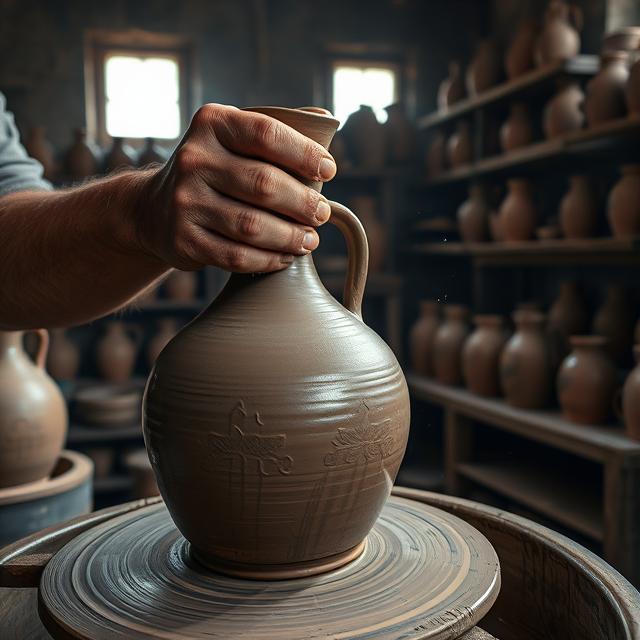
The Vessel: More specifically, it is the name for the distinctive earthenware jug or pitcher they produce—a vessel designed not just for holding liquid, but for nurturing it, enhancing it, and serving as the centerpiece of community gatherings.
The cultural significance of Dihward is immense. In the fictional village where this tradition thrives, the Dihward jug is present at every major life event. It holds the water for a child’s naming ceremony, the wine for a wedding toast, and the spiced cider shared during harvest festivals. It is a symbol of hospitality, community, and sustenance. The design and quality of a household’s Dihward are a point of pride, a silent testament to their connection to local tradition. The Dihward artisan is thus a pillar of the community, a keeper of secrets that bind the people to their land and to each other.
The Artisan’s Process: Crafting a Dihward
The creation of a true Dihward is a ritualistic process, passed down through generations. It begins not in a workshop, but in the landscape. The Dihward artisan knows precisely where to find the unique, iron-rich clay known as “Dih-stone.” This clay is chosen for its plasticity, its firing strength, and the distinctive reddish-brown hue it imparts.
Once excavated, the clay is painstakingly purified and wedged. Unlike mass production, the Dihward is never thrown on a fast-spinning wheel. Instead, it is coaxed into form using a combination of slow-wheel turning and meticulous hand-coiling and pinching. This method allows the artisan to imbue the clay with intention with every movement. The process is slow, meditative, and respectful.
The defining feature of a Dihward vessel is its form. It is characteristically bulbous at the base, tapering to a narrower neck, and topped with a sturdy, elegantly curved handle. This shape is not arbitrary. The wide base provides a large surface area for liquids to breathe, while the narrower neck minimizes oxidation and preserves freshness. The spout is designed to pour a smooth, laminar stream without dripping—a hallmark of the craft’s precision.
After drying to a leather-hard state, the Dihward is engraved. Using sharp tools, the artisan etches intricate patterns into the clay. These motifs are deeply symbolic: interlocking knots representing community, waves symbolizing the flow of life, and stylized local flora and fauna. This is where each artisan’s unique signature emerges within the strict boundaries of tradition.
The firing is the final, most critical stage. The Dihward pieces are stacked in a traditional ground-burning kiln, fueled by specific hardwoods that contribute to the final color and character. The firing can take over a day, with the master Dihward tending the flames constantly, reading the heat by its color and feel. The result is a incredibly durable, yet surprisingly lightweight, vessel. The final finish is not a glossy glaze, but a natural seal achieved by rubbing the surface with beeswax, giving it a soft, water-resistant, and satin sheen that deepens with age and use.
The Modern Context and Legacy of Dihward
In our age of globalized manufacturing and disposable goods, a tradition like Dihward faces inevitable challenges. The knowledge is esoteric, the process is time-consuming, and the output cannot compete with factory-made products on price.
However, the value of Dihward lies precisely in its opposition to these modern paradigms. It represents the Slow Movement, sustainability, and the human touch. A well-made Dihward jug, cared for properly, lasts for generations. It becomes an heirloom, carrying the stories of every celebration it has witnessed.
Modern enthusiasts seek out such crafts not for mere utility, but for connection. To own a Dihward is to own a piece of a story, a connection to an artisan, and a commitment to preserving a unique cultural expression. It is a statement against homogenization. Contemporary Dihward artisans, while honoring the old methods, might experiment with new forms or slightly adapt motifs, ensuring the tradition evolves and remains relevant without losing its soul. They are not just potters; they are historians, ecologists, and community guardians all at once.
The lesson of Dihward, though fictional, is very real. It reminds us that the most profound objects in our lives are often those made with intention, connected to a place, and rich with story. They are the Keepers of the Hearth, guarding not just water or wine, but our connection to craft, community, and the earth itself.
Informational FAQs About Dihward
Q1: Is Dihward a real, historical craft?
A: No. Dihward is a fictional craft and term created for the purpose of this article to explore and celebrate the concepts of traditional artistry, cultural significance, and sustainable craftsmanship. It is an amalgamation of real-world pottery traditions from various cultures.
Q2: What is the primary purpose of a Dihward vessel?
A: In its fictional context, the primary purpose of a Dihward jug is to store and serve beverages like water, wine, or cider. Its specific earthenware construction and design are intended to naturally keep liquids cool and enhance their taste through slight aeration from the porous clay.
Q3: How does a Dihward improve the taste of water?
A: This is a property of real-world unglazed clay. The micro-porous nature of fired clay allows for minimal evaporation, which has a slight cooling effect. Furthermore, the clay can interact with the minerals in the water, potentially smoothing its taste. The beeswax seal prevents leaking while still allowing this interaction.
Q4: How would one care for a Dihward jug?
A: Care would involve hand-washing without harsh detergents to preserve the beeswax seal, allowing it to air dry thoroughly, and periodically re-sealing the interior with food-grade beeswax to maintain its water-resistant properties.
Q5: Why wouldn’t a Dihward be glazed on the inside?
A: The fictional tradition avoids internal glazing to maintain the “breathing” quality of the clay, which is central to its function of naturally cooling and enhancing the stored liquid. A glaze would seal the pores, turning it into a more conventional, albeit less “live,” container.
Q6: Can the concept of Dihward be applied to modern life?
A: Absolutely. While Dihward itself is fictional, its principles are not. Supporting local artisans, choosing handmade and sustainable products over mass-produced goods, and valuing objects with a story and connection to tradition are all very real ways to incorporate the “spirit of Dihward” into modern living.