In the relentless pursuit of athletic excellence, the margin between victory and defeat is often measured in milliseconds and millimeters. For decades, coaches and athletes have relied on physical conditioning, tactical drills, and raw talent to gain an edge. However, a new frontier is emerging, one that operates not on the field or in the weight room, but within the intricate patterns of data and the fundamental frequencies of human movement. This frontier is known as Sports Harmonicode.
At its core, Sports Harmonicode is an interdisciplinary philosophy and methodology that merges the analytical power of sports data science with the principles of biomechanics and physics, specifically the concept of harmonic motion and resonance. It posits that peak athletic performance is not just about strength or speed, but about achieving a state of perfect efficiency and synchronization—a “harmonic code” where an athlete’s movements are in ideal resonance with their body’s mechanics and the demands of the sport.
The Symphony of Movement: Understanding the “Harmonic” Principle
Every movement an athlete makes—a pitcher’s throw, a gymnast’s dismount, a swimmer’s stroke—is not a series of jerky, isolated actions. Instead, it is a complex, wave-like motion comprising a series of oscillations and rhythms. Think of a perfectly struck golf ball. The crack of the club is the culmination of a kinetic chain that starts from the ground, travels up through the legs, rotates the hips, extends the torso, and finally whips the arms and club in a fluid, transfer of energy. This chain is a harmonic sequence.
When this sequence is perfectly aligned, energy is transferred with maximal efficiency and minimal wasted effort or injury-causing dissonance. When it’s out of sync, the result is a loss of power, accuracy, and a higher risk of strain. Sports Harmonicode is the practice of identifying, measuring, and optimizing this sequence.
The “Code” Element: Data as the Conductor
The “code” in Harmonicode refers to the immense datasets now available through modern technology. This is where the theory meets practice. By using high-tech tools, sports scientists can deconstruct an athlete’s performance into quantifiable data points:
-
Motion Capture Technology: Specialized cameras create a precise 3D model of an athlete’s skeleton in motion, tracking the angle, velocity, and acceleration of every joint.
-
Wearable Sensors: Inertial Measurement Units (IMUs) embedded in clothing or equipment provide real-time data on acceleration, rotation, and force on the field of play.
-
High-Speed Video: Ultra-slow-motion footage allows for frame-by-frame analysis of technique.
-
Force Plates: These measure the magnitude and direction of the forces an athlete exerts on the ground, crucial for understanding jumping, running, and cutting motions.
This raw data is the encrypted “code.” Sports Harmonicode analysts are the cryptographers, using advanced software and algorithms to decipher it. They aren’t just looking for how fast an arm is moving; they are analyzing the phase relationship between the hip rotation and the shoulder rotation. They are calculating the frequency of a runner’s stride to find the most efficient cadence. They are identifying points of energy leakage—where a slight biomechanical inefficiency is dissipating power that should be going into the throw, jump, or kick.
Harmonicode in Action: Practical Applications Across Sports
The theory of Sports Harmonicode is universal, but its application is sport-specific.
-
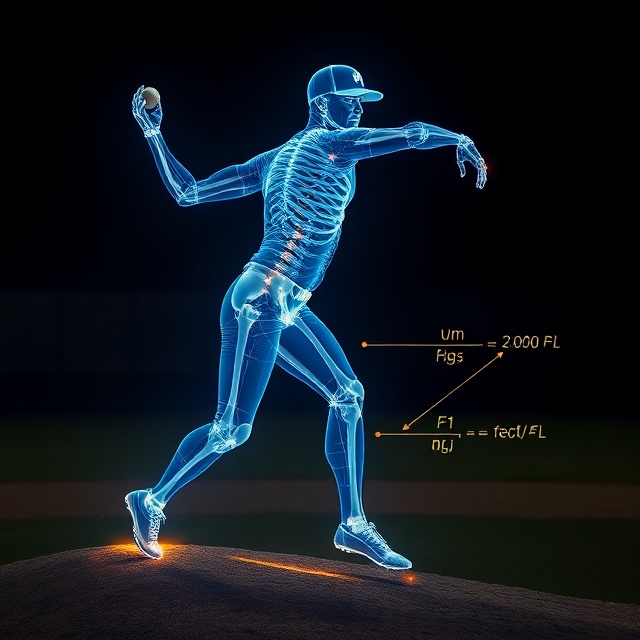
Baseball Pitching: Analysts can determine the perfect harmonic sequence for a pitcher’s throwing motion. By ensuring the timing of their leg drive, hip rotation, torso flexion, and arm whip are in a resonant cascade, they can maximize velocity while significantly reducing the torque and stress on the vulnerable ulnar collateral ligament (UCL) in the elbow.
-
Running: Every runner has a natural cadence (stride rate). Harmonicode analysis can find the optimal cadence that minimizes impact forces (which lead to injury) and maximizes forward propulsion. It can also analyze arm swing symmetry, ensuring the upper body is working in harmony with the lower body to maintain efficiency and balance.
-
Swimming: The goal is to reduce drag and maximize propulsion. Motion capture in pools can analyze the harmonic rhythm of a swimmer’s stroke cycle, identifying the most efficient kick frequency and the ideal entry point and “catch” of the hand in the water to create maximum pull with minimal splash and turbulence.
-
Tennis and Golf: These sports are all about consistent, reproducible technique. Harmonicode can create a “resonant fingerprint” of an athlete’s perfect swing. Any deviation from this harmonic model in practice can be instantly flagged for correction, allowing for incredibly precise technical coaching.
-
Rehabilitation: This is one of its most powerful applications. After an injury, an athlete often develops compensatory movements that throw their entire kinetic chain out of harmony. By comparing pre-injury harmonic data to current movement patterns, therapists can design targeted rehab programs that don’t just restore strength, but restore the original, efficient movement pattern, preventing re-injury.
The Human Element: Beyond the Numbers
A crucial aspect of Sports Harmonicode is that it is a tool for enhancement, not replacement. The data provides the “what,” but the coach and athlete must still explore the “why” and “how.” The best harmonic analysis in the world is useless without the context of coaching intuition, athlete feel, and psychological factors like confidence and focus.
The goal is not to turn athletes into robots executing perfect code. It is to use that code to provide them with unambiguous feedback. An athlete might “feel” like their timing is off. Harmonicode can show them exactly how and where it is off, creating a clear pathway for correction. It translates subjective feeling into objective reality.
The Future Frequency of Sports
As sensor technology becomes smaller, cheaper, and more integrated into standard equipment, access to Harmonicode principles will trickle down from elite professionals to collegiate, amateur, and even youth sports. The potential to improve performance, extend careers, and prevent injuries on a massive scale is profound.
Sports Harmonicode represents the next logical step in athletic evolution. It moves us beyond simply training harder to training smarter. By listening to the hidden symphony of the human body in motion and learning to write a more efficient score, we are unlocking a new era of human potential, one perfectly resonant movement at a time.
Informational FAQ on Sports Harmonicode
Q1: Is Sports Harmonicode just a fancy term for sports analytics?
A: It’s an evolution of it. While sports analytics often focuses on outcome-based data (e.g., shooting percentage, win shares), Harmonicode focuses on the process data—the biomechanical and physical principles that lead to those outcomes. It’s the fusion of analytics with fundamental physics.
Q2: Do athletes need a background in physics to benefit from this?
A: Not at all. The athlete interacts with the interpreted results, not the raw data. A coach or analyst might tell a pitcher, “Your front foot is landing 5 milliseconds too early, breaking the kinetic chain,” which is a much more actionable insight than a complex graph of angular velocity.
Q3: Is this technology only for professional athletes with big budgets?
A: Currently, the most advanced implementation is at the professional and elite Olympic levels. However, the core principles are already filtering down. Many physical therapists and advanced training facilities use portable motion capture and force plates, making harmonic analysis more accessible than ever.
Q4: Could over-reliance on Harmonicode data stifle an athlete’s natural instinct and creativity?
A: This is a key consideration. The philosophy behind Harmonicode is to optimize efficiency, not eliminate artistry. The data provides a foundation of technically sound movement, upon which an athlete’s unique instincts and creative problem-solving during competition can flourish. It’s a guide, not a cage.
Q5: What are the ethical considerations surrounding this much data collection on athletes?
A: This is an important emerging debate. Issues of data privacy, ownership of an athlete’s biomechanical “blueprint,” and the potential for it to be used in contract negotiations are all critical topics that leagues, players’ associations, and ethicists are beginning to grapple with.
Q6: What academic background do Sports Harmonicode analysts typically have?
A: This is a highly interdisciplinary field. Successful analysts often have backgrounds in sports science, biomechanics, kinesiology, mechanical engineering, data science, or a combination of these fields.