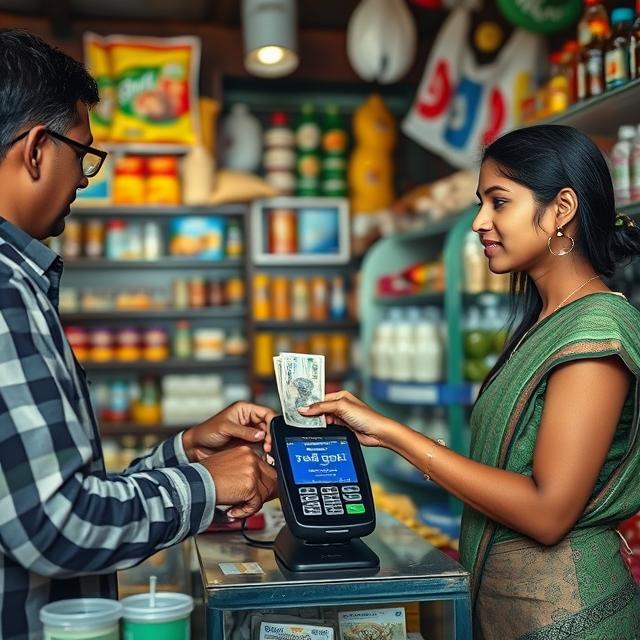
In the bustling markets of Dhaka, the tea stalls of Sylhet, and the rural homesteads of Rangpur, a quiet financial revolution has been taking place. For millions of Bangladeshis, accessing digital financial services doesn’t always happen through a smartphone app or a bank website. Instead, it happens through a small, ubiquitous point-of-sale (POS) terminal at a local grocery store or agent outlet. This interconnected network, the backbone of this revolution, is known as Pasonet.
This article delves into the world of Pasonet, exploring what it is, how it functions, its profound impact on the economy, and the challenges it faces as Bangladesh marches towards a fully digital future.
What Exactly is Pasonet? The National Payment Switch
At its core, Pasonet (which stands for Payment Switch Of Bangladenet) is the national electronic payment switch of Bangladesh. Conceptualized and implemented by Bangladesh Bank, the country’s central bank, it is a secure, centralized technological platform that connects the electronic financial channels of all scheduled banks and non-bank financial institutions (FIs) in the country.
Think of it as a grand central station for digital financial transactions. Before Pasonet, if a customer of Bank A wanted to send money to an account in Bank B, the process was often cumbersome, slow, and sometimes involved manual reconciliation. Pasonet acts as the neutral, common gateway that seamlessly routes transaction messages between these different financial institutions in real-time, ensuring interoperability and efficiency.
Its primary objective is to foster a cashless society by enabling affordable, accessible, and swift electronic fund transfers for every citizen, thereby promoting financial inclusion at an unprecedented scale.
How Does the Pasonet System Work? A Step-by-Step Breakdown
The magic of Pasonet lies in its simplicity and efficiency from an operational standpoint. Here’s a breakdown of a typical transaction, such as a cash-out request from a mobile financial service (MFS) like bKash or Nagad:
-
Initiation: A customer visits a local agent (a grocery shop, mobile phone store, etc.) and provides their MFS account details and the amount they wish to withdraw.
-
Transaction Request: The agent uses their Pasonet-enabled POS terminal or software to initiate a withdrawal request. This request is sent to their bank’s server.
-
Routing to the Switch: The bank’s server does not process the request itself if the recipient is from another institution. Instead, it instantly routes the transaction message to the central Pasonet switch.
-
Switch Processing: Pasonet receives the message, validates its format and security, identifies the destination institution (e.g., bKash’s settlement bank), and forwards the request to that institution’s server.
-
Authorization: The destination institution (bKash) receives the request, checks the customer’s account for validity and balance, and sends an approval or denial message back through the exact same route: to Pasonet, then to the agent’s bank, and finally to the POS terminal.
-
Completion: Upon approval, the agent hands the cash to the customer. The entire process, involving multiple different financial entities, is completed in a matter of seconds.
-
Settlement: Crucially, the actual movement of money between the banks happens later in a batch process managed by Bangladesh Bank. At the end of the day, Pasonet’s system calculates the net position of each member bank (who owes whom how much), and the central bank facilitates the settlement, ensuring all accounts are balanced.
Key Services Powered by Pasonet
Pasonet is not a single service but a platform that enables a multitude of services:
-
Interbank Fund Transfer: The cornerstone service, allowing customers to transfer funds between accounts in different banks instantly.
-
Mobile Financial Services (MFS) Interoperability: This is perhaps its most visible function. It allows customers of one MFS provider (e.g., bKash) to send money directly to a customer of another (e.g., Nagad or Rocket), breaking down silos and creating a unified financial ecosystem.
-
ATM Interoperability: While the National ATM/QR Code Consortium (NAP) now handles this, Pasonet laid the groundwork by enabling customers to use any bank’s ATM card at any other bank’s ATM machine.
-
Point of Sale (POS) Transactions: It connects POS terminals across the retail landscape, allowing debit and credit cards from any member bank to be used at any merchant outlet.
-
Real-Time Gross Settlement (RTGS) and Bangladesh Electronic Funds Transfer Network (BEFTN): Pasonet works alongside these systems for large-value and batch-based retail transactions, respectively, forming a comprehensive national payment infrastructure.
The Transformative Impact: Why Pasonet Matters
The implementation of Pasonet has been a game-changer for Bangladesh’s economy and its people.
-
Driving Financial Inclusion: Millions of unbanked and underbanked citizens, especially in rural areas, now have access to formal financial services through a vast network of agents. They don’t need a bank account; a simple mobile phone connection is enough to receive remittances, pay bills, and save money securely.
-
Formalizing the Economy: By digitizing transactions, Pasonet brings a large segment of the informal economy into the formal channel. This increases transparency, reduces the scope for black money, and broadens the government’s tax base.
-
Efficiency and Cost-Effectiveness: Electronic transactions are far cheaper and faster than manual cash handling and traditional banking procedures. This efficiency boosts economic activity and reduces the overall cost of financial operations for the entire nation.
-
Empowering Citizens: It provides a safe, reliable, and immediate method for urban workers to send remittances to their families in villages, for students to receive tuition money, and for small businesses to receive payments without the risks associated with carrying physical cash.
Challenges and the Road Ahead
Despite its success, the Pasonet ecosystem faces challenges:
-
Digital Literacy: A significant portion of the population still lacks the confidence or knowledge to use digital financial tools independently, relying on agents for assistance.
-
Agent Network Management: Ensuring all agents are reliable, honest, and have sufficient liquidity (both cash and electronic float) is a constant operational challenge for the banks and MFS providers.
-
Cybersecurity: As the central nervous system of the country’s finances, Pasonet is a high-value target for cybercriminals. Maintaining robust, state-of-the-art security is paramount and an ongoing effort.
-
System Downtimes: Occasional technical glitches or maintenance downtimes can halt transactions nationwide, highlighting the risk of reliance on a single, centralized system.
The future of Pasonet is intertwined with Bangladesh’s “Smart Bangladesh” vision. We can expect deeper integration with newer technologies like expanded QR code payments, more sophisticated e-commerce platforms, and potentially even blockchain-based solutions, all while continuing to bring the next million users into the formal digital economy.
Informational FAQs About Pasonet
1. Is Pasonet a bank or a mobile financial service like bKash?
No, Pasonet is neither. It is the underlying infrastructure or platform that allows banks and MFS providers like bKash, Nagad, and Rocket to connect and transact with each other seamlessly. You cannot have an account with Pasonet.
2. Is there a fee for using Pasonet services?
Pasonet itself charges member institutions a small switching fee. However, the end-user fee for a specific transaction (e.g., interbank transfer or cash-out) is determined and charged by the respective bank or MFS provider you are using, not by Pasonet directly.
3. How is Pasonet different from the NPSB (National Payment Switch Bangladesh)?
NPSB is the newer, overarching brand that encompasses all national payment systems, including Pasonet. In many contexts, the names are used interchangeably, but technically, Pasonet is a key component of the NPSB framework.
4. Who can become a Pasonet member?
Membership is open to all scheduled banks and non-bank financial institutions (FIs) that are licensed by Bangladesh Bank and agree to adhere to its technical and operational guidelines.
5. How secure is a transaction through Pasonet?
Extremely secure. Bangladesh Bank mandates strict security protocols, including encryption and secure communication channels, for all transactions routed through the switch. It is designed to be a highly resilient and protected system.