The world of agriculture and horticulture is in a constant state of evolution. As growers seek more efficient, sustainable, and powerful ways to nourish their plants, the science behind plant nutrition advances. One of the most intriguing developments in this field is the emergence of carbon technology, a method that moves beyond simply feeding plants to enhancing the entire soil ecosystem. At the forefront of this movement is a product known as Mannacote. But what exactly is it, and how does it represent a shift in how we think about plant health? This article explores the science, benefits, and applications of Mannacote technology.
What is Mannacote? Beyond a Simple Fertilizer
To label Mannacote merely as a “fertilizer” would be a significant understatement. It is more accurately described as a nutrient delivery system or a carbon-based fertilizer technology. The core innovation lies in its unique coating process.
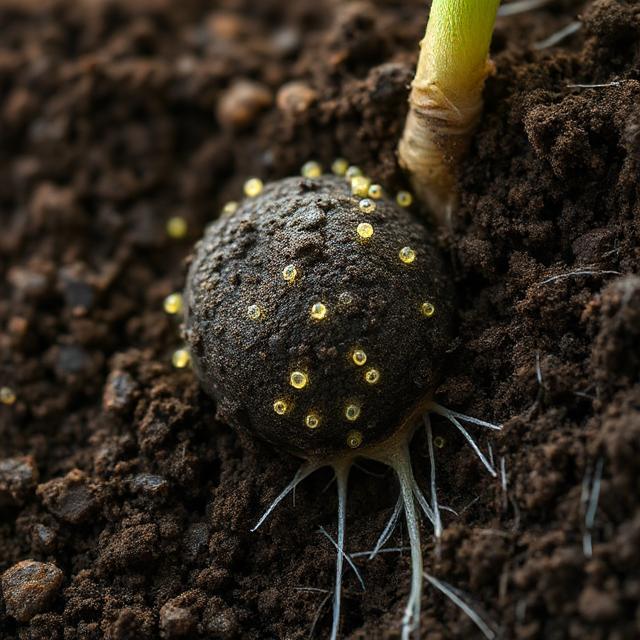
Mannacote is a patented technology where essential mineral nutrients (like nitrogen, phosphorus, potassium, and micronutrients) are coated with a complex, energy-rich carbon matrix. This matrix is derived from organic sources, primarily mannanoligosaccharides (MOS). Think of it not as a pill, but as a time-release capsule packed with both the medicine (nutrients) and the food (energy) for the soil’s digestive system.
This fundamental difference—the marriage of minerals with a readily available carbon energy source—sets it apart from conventional synthetic fertilizers or even many organic options.
The Science of Delivery: How Mannacote Works in the Soil
The magic of Mannacote doesn’t happen in the bag; it happens in the soil. Traditional fertilizers provide nutrients directly to the plant, often in a rapid, sometimes inefficient, and potentially wasteful burst. Mannacote takes a more sophisticated, biological approach.
-
The Carbon Beacon: When a Mannacote granule enters the soil, its carbon-rich coating acts as a powerful attractant. This carbon is a high-value food source for the billions of beneficial microbes (bacteria and fungi) that call the soil home.
-
Microbial Activation: These microbes are drawn to the granule and begin to consume (metabolize) the carbon coating. This process energizes the entire microbial community around the root zone (the rhizosphere), causing it to flourish.
-
Targeted Nutrient Release: As the microbes consume the carbon coating, they gradually expose and release the mineral nutrients contained within the granule. The microbes don’t just release the nutrients; they often process them into forms that are more easily absorbed by plant roots.
-
Symbiotic Relationship: The plant benefits from a steady, slow-release supply of readily available nutrients right at its root tips. In return, the plant exudes sugars through its roots, which further feed the microbial community. This creates a powerful positive feedback loop of soil health.
In essence, Mannacote doesn’t feed the plant directly; it feeds the soil biology, which in turn feeds the plant. This mimics natural, high-functioning ecosystems like forests and prairies, where plants and microbes work in harmony.
Tangible Benefits for Growers and Gardeners
This unique mode of action translates into several key benefits for anyone growing plants, from large-scale farmers to backyard enthusiasts.
-
Enhanced Nutrient Use Efficiency (NUE): By preventing nutrients from leaching away or volatilizing into the air, Mannacote ensures a higher percentage of the applied nutrients are actually used by the plant. This can lead to reduced fertilizer requirements over time, saving money and reducing environmental impact.
-
Improved Soil Health: The constant injection of carbon energy rebuilds organic matter, stimulates microbial diversity and population, and improves soil structure. Healthier soil has better water infiltration and retention, reduces compaction, and is more resilient.
-
Stronger Plant Growth and Resilience: Plants that receive a consistent, biologically-mediated nutrient supply often exhibit stronger root systems, improved vigor, and better resistance to environmental stresses like drought and heat. Healthier plants are also naturally more resistant to pests and diseases.
-
Environmental Sustainability: The increased efficiency of Mannacote means significantly less nutrient runoff into waterways, which is a primary cause of algal blooms and ecological dead zones. It represents a more regenerative approach to land management.
Practical Applications: Where is Mannacote Used?
Mannacote technology is versatile and is being integrated into a wide array of products for different sectors:
-
Broadacre Agriculture: Used in crops like corn, soybeans, wheat, and cotton to boost yields, improve plant health, and build soil organic matter on a large scale.
-
Specialty Crops: Viticulturists use it in vineyards to enhance grape quality and vine sustainability. Fruit and nut tree growers also utilize its benefits.
-
Turf Management: Golf courses, sports fields, and sod farms use Mannacote-coated products to achieve lush, healthy, and durable turf with fewer inputs.
-
Horticulture and Nurseries: Greenhouse operators and nursery professionals use it for container-grown plants, flowers, and ornamentals to ensure optimal growth and reduce fertilizer frequency.
-
Home Gardening: An increasing number of consumer-facing fertilizer brands are incorporating Mannacote technology into their products, allowing home gardeners to experience the benefits of carbon-based nutrition.
Mannacote vs. Conventional Fertilizers: A Comparison
| Feature | Conventional Synthetic Fertilizers | Mannacote Technology |
|---|---|---|
| Primary Action | Feeds the plant directly | Feeds the soil biology, which feeds the plant |
| Nutrient Release | Often rapid, prone to leaching | Slow, steady, and controlled by microbial activity |
| Soil Health Impact | Can degrade microbial life and organic matter over time | Actively builds soil organic matter and microbial diversity |
| Nutrient Efficiency | Lower; significant potential for waste | High; reduced leaching and volatilization |
| Environmental Impact | Higher risk of runoff and pollution | Lower environmental footprint |
| System Approach | Linear: Input -> Plant | Cyclical: Input -> Soil -> Microbes -> Plant |
Informational FAQs About Mannacote
Q1: Is Mannacote an organic fertilizer?
A: The classification can be complex. The nutrient core can be from conventional sources, but the carbon coating is derived from organic materials. While it may not be certified “organic” in all formulations, its function is inherently biological and aligns closely with organic principles of building soil health. Some Mannacote-based products are OMRI-listed for organic use.
Q2: Can I use Mannacote with my existing fertilizer regimen?
A: Absolutely. Many growers use Mannacote not as a complete replacement but as a core component of a integrated program. It can be banded with traditional fertilizers or used as a starter fertilizer to enhance the efficiency of the entire nutrient strategy.
Q3: How soon will I see results after applying Mannacote?
A: While some effects, like a microbial bloom, begin immediately, the most noticeable results are often observed in the medium to long term. You may see improved plant vigor within a season, but the most significant benefits—like enhanced soil structure and water retention—accumulate over multiple growing seasons with consistent use.
Q4: Is it cost-effective compared to cheaper fertilizers?
A: While the initial cost per unit may be higher, the increased Nutrient Use Efficiency (NUE) means you often need to apply less product to achieve the same or better results. When you factor in the long-term savings on fertilizer, the potential for higher yields, and the invaluable benefit of improved soil health (which reduces future inputs), it proves to be highly cost-effective.
Q5: Where can I find products with Mannacote technology?
A: Mannacote is a technology licensed to various fertilizer manufacturers. It is not a brand you buy off the shelf directly. Look for fertilizer products that explicitly state “With Mannacote Technology” or “Mannacote-Coated” on the bag or in the product description from agricultural suppliers, turf management companies, and garden centers.