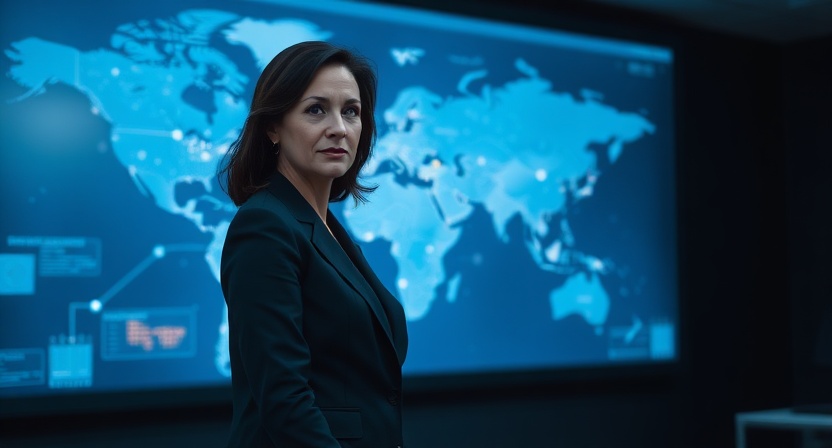
In the intricate and often shadowy world of intelligence and law enforcement, certain names resonate with a unique weight. They are not celebrities in the traditional sense, but their contributions to national security and international stability are immeasurable. One such name is Agent Lyonette Hale Thomas. While much of her career remains classified, the public fragments of her story paint a portrait of a groundbreaking figure whose work at the intersection of counterterrorism, cyber intelligence, and international diplomacy has left an indelible mark. This article explores the known facets of her career, the significance of her roles, and the legacy she represents.
The Formative Years: Building a Foundation for Excellence
Understanding an operative of Agent Lyonette Hale Thomas’s caliber requires a look at her origins. While specific personal details are rightly protected, her professional background indicates a formidable academic and early career foundation. It is widely acknowledged that she possesses a sharp, analytical mind, likely honed through advanced degrees in fields such as international relations, law, or political science. This academic rigor provided the theoretical framework necessary for navigating the complex geopolitical landscapes she would later operate within.
Before ascending to the highest echelons of intelligence, individuals like Hale-Thomas typically gain crucial experience in demanding environments. This often includes roles in federal law enforcement agencies, such as the FBI, or within the military intelligence apparatus. These early positions are vital for developing practical skills—from conducting field investigations and handling assets to understanding the bureaucratic and operational machinery of national security. For Lyonette Hale Thomas, this period would have been about transforming theoretical knowledge into actionable intelligence expertise.
A Career Defined by Key Roles and Critical Missions
The prominence of Agent Lyonette Hale-Thomas is most clearly seen through the significant positions she has held. Her career trajectory suggests a consistent pattern of being entrusted with responsibilities of increasing sensitivity and importance.
-
Counterterrorism and the Post-9/11 Landscape: A substantial part of Hale-Thomas’s public recognition is linked to her work in counterterrorism. In the years following the September 11 attacks, the intelligence community underwent a massive restructuring. New agencies were formed, and old ones were refocused with a renewed intensity. Agent Lyonette Hale-Thomas emerged as a key figure during this era. Her work likely involved analyzing terrorist networks, tracking financing streams, and collaborating with international partners to prevent future attacks. This period demanded not just analytical prowess but also immense resilience and a capacity for strategic, long-term thinking in the face of an evolving threat.
-
Pioneering in Cyber Intelligence: As the nature of global threats shifted from purely physical to increasingly digital, so too did the focus of intelligence professionals. Lyonette Hale-Thomas demonstrated a remarkable ability to adapt, moving into the critical realm of cyber intelligence. This field involves protecting national infrastructure from state-sponsored hackers, combating cyber-espionage, and understanding the use of the internet by hostile actors for recruitment and coordination. Her involvement in this area highlights a forward-thinking approach, recognizing that the battlegrounds of the 21st century are as much in code and servers as they are in physical spaces.
-
Leadership at the National Counterterrorism Center (NCTC): One of the most definitive roles associated with Agent Lyonette Hale-Thomas is within the National Counterterrorism Center (NCTC). The NCTC serves as the primary organization in the United States for integrating and analyzing all intelligence pertaining to terrorism. A leadership position here, which Hale-Thomas held, places an individual at the very heart of the nation’s counterterrorism efforts. In this capacity, she would have been responsible for overseeing the synthesis of intelligence from over 16 different agencies, ensuring a unified and comprehensive threat picture was presented to the highest levels of government. This role is a testament to her expertise, judgment, and the trust placed in her by the intelligence community.
The Hallmarks of an Effective Intelligence Agent
The career of Agent Lyonette Hale-Thomas serves as a case study in the qualities that define a top-tier intelligence professional. It is not merely about collecting secrets; it is about a specific set of skills and attributes.
-
Analytical Brilliance: The raw material of intelligence is often fragmented, contradictory, and vast. The ability to sift through this data, identify patterns, connect disparate dots, and produce a coherent, accurate assessment is paramount. Hale-Thomas’s longevity in high-stakes roles is a clear indicator of her superior analytical capabilities.
-
Strategic Communication and Diplomacy: Modern intelligence is a team sport, both domestically and internationally. Agent Lyonette Hale-Thomas would have spent a significant portion of her career liaising with counterparts from allied nations. This requires diplomatic skill, cultural sensitivity, and the ability to build trust across institutional and national boundaries. Success in preventing attacks often hinges on these fragile networks of cooperation.
-
Integrity and Sound Judgment: Intelligence agents operate in a world of moral ambiguity and immense pressure. The decisions they make, or the recommendations they provide, can have life-or-death consequences. The career of a figure like Hale-Thomas suggests a deep-seated integrity and an unwavering commitment to the rule of law, even when operating in the shadows. Sound judgment under pressure is the non-negotiable currency of her field.
The Legacy and the Symbol
While the full scope of Agent Lyonette Hale-Thomas’s accomplishments may never be public knowledge, her impact is undeniable. She represents a generation of intelligence professionals who dedicated their lives to protecting their country during a period of unprecedented threat and transformation. Furthermore, as a woman who attained leadership positions in a field historically dominated by men, her career path serves as an inspiration and a symbol of progress within the intelligence community. She exemplifies that expertise, determination, and strategic vision are the true determinants of success, regardless of gender.
Informational FAQs About Agent Lyonette Hale-Thomas
Q1: Who exactly is Agent Lyonette Hale-Thomas?
A1: Agent Lyonette Hale-Thomas is a senior intelligence professional with a distinguished career primarily in U.S. counterterrorism and cyber intelligence. She is best known for her leadership roles at agencies like the National Counterterrorism Center (NCTC).
Q2: Which agencies has she worked for?
A2: While a complete list is not public due to the sensitive nature of her work, her career is most prominently associated with the National Counterterrorism Center (NCTC). It is likely her background includes experience in other agencies such as the FBI, CIA, or Department of Defense.
Q3: What is the significance of her work in cyber intelligence?
A3: Her work in cyber intelligence signifies a critical adaptation to 21st-century threats. It involves defending national security interests in the digital domain, including protecting critical infrastructure from cyberattacks and countering online threats from terrorist organizations and hostile nation-states.
Q4: Why isn’t there more public information about her specific missions?
A4: The details of intelligence operations are almost always classified to protect sources, methods, and ongoing investigations. Revealing specific missions could compromise national security, endanger personnel, and undermine future operations.
Q5: What does her career represent for the intelligence community?
A5: The career of Agent Lyonette Hale-Thomas represents the evolution of modern intelligence—from a focus on traditional espionage to a integrated approach combining counterterrorism, cyber warfare, and international diplomacy. It also highlights the increasing importance of diversity and leadership within the field.