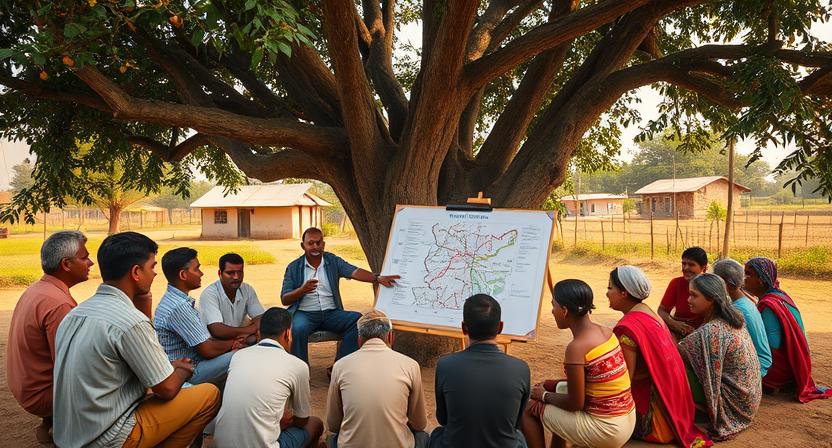
In an increasingly interconnected world, the challenges facing humanity are complex and multifaceted. Poverty, inequality, environmental degradation, and lack of access to education and healthcare are not isolated issues but interconnected problems requiring coordinated, collective action. While governments and large international bodies play crucial roles, the ground-level, nuanced work is often spearheaded by a specific type of organization: the Association for Social Development (ASD). These entities are the silent architects of sustainable change, building stronger communities from the ground up. This article delves into the essence, functions, and profound impact of such associations.
What Exactly is an Association for Social Development?
An Association for Social Development is typically a non-profit, non-governmental organization (NGO) that operates with the primary objective of improving the well-being of communities and individuals, particularly the marginalized and underserved. Unlike commercial enterprises driven by profit, an ASD is motivated by a mission for social justice, equity, and sustainable progress.
The term “association” is key; it implies a coming together of people—social workers, community members, experts, and volunteers—united by a common vision. They are not external imposers of solutions but facilitators who work in association with the communities they serve. This participatory approach is the bedrock of their philosophy, ensuring that development is not something done to people, but something achieved with them.
The Core Pillars of an ASD’s Work
The activities of an Association for Social Development can be vast and varied, tailored to the specific needs of their target demographic. However, their work generally rests on several core pillars:
1. Community Mobilization and Empowerment
The first and most critical step is engaging the community. An ASD acts as a catalyst, helping community members identify their own problems, resources, and potential solutions. This is done through:
-
Participatory Rural Appraisal (PRA): Techniques like social mapping, wealth ranking, and seasonal analysis help communities visually represent and analyze their own situation.
-
Formation of Self-Help Groups (SHGs): Especially for women and farmers, SHGs foster savings, internal lending, and collective action on issues like health, sanitation, and livelihoods.
-
Capacity Building Workshops: Training community members in skills, leadership, and rights awareness empowers them to become agents of their own development.
2. Education and Literacy Programs
Recognizing education as a fundamental right and a key driver of development, many ASDs run initiatives ranging from non-formal education centers for out-of-school children to adult literacy programs. They often focus on innovative, inclusive teaching methods and may also work with local governments to improve the quality of public schooling.
3. Healthcare and Sanitation Initiatives
Improving public health is a cornerstone of social development. An ASD’s work in this area includes:
-
Organizing health camps for general check-ups, immunizations, and eye care.
-
Spreading awareness about preventive healthcare, nutrition, and hygiene.
-
Promoting the construction and use of toilets and safe drinking water sources to combat water-borne diseases.
4. Sustainable Livelihoods and Economic Empowerment
Poverty alleviation is a central goal. ASDs work to create sustainable economic opportunities by:
-
Skill Development: Providing vocational training in trades like tailoring, carpentry, computer applications, or mobile phone repair.
-
Promoting Agriculture: Introducing sustainable farming techniques, facilitating access to credit and markets for smallholder farmers.
-
Micro-enterprise Development: Supporting entrepreneurs from marginalized communities to start and sustain small businesses.
5. Advocacy and Human Rights
Beyond direct action, ASDs play a vital role as advocates. They bring the concerns of the marginalized to the forefront, lobbying local and national governments for policy changes, better implementation of welfare schemes, and the protection of human rights, particularly for women, children, and indigenous populations.
The Operational Model: How an ASD Functions
The effectiveness of an Association for Social Development hinges on a well-structured, transparent operational model.
-
Governance: Typically governed by a Board of Trustees or a Governing Body comprising experienced professionals from various fields, which provides strategic direction and oversight.
-
Funding: Resources are usually mobilized through grants from international development agencies, corporate social responsibility (CSR) funds from companies, donations from individuals, and sometimes government contracts for implementing specific schemes. Financial transparency is paramount to maintain donor trust.
-
Human Resources: The backbone of an ASD is its team—a mix of dedicated paid professionals (project managers, social workers, accountants) and passionate volunteers who bring energy and local connection.
-
Monitoring and Evaluation (M&E): Successful ASDs have robust M&E systems to track progress against set indicators, measure impact, and learn from both successes and failures. This ensures accountability and continuous improvement.
The Challenges Faced on the Ground
The path of social development is not without obstacles. Associations often grapple with:
-
Funding Instability: Reliance on project-based grants can lead to uncertainty, making long-term planning difficult.
-
Bureaucratic Hurdles: Navigating government regulations and slow administrative processes can delay project implementation.
-
Cultural and Social Barriers: Deep-rooted patriarchal norms, caste discrimination, or religious tensions can impede community participation and the acceptance of new ideas.
-
Measuring Intangible Impact: While it’s easy to count the number of toilets built, measuring empowerment, increased self-confidence, or social cohesion is a complex challenge.
The Ripple Effect: Why ASDs are Indispensable
The true value of an Association for Social Development lies in the ripple effect it creates. A single intervention, like empowering a woman through a self-help group, can lead to multiple positive outcomes: her children are more likely to be educated, her family’s health improves, and she becomes a role model in her community, inspiring others. This grassroots-led, holistic approach ensures that development is not just sustainable but also owned by the community, making it far more resilient and impactful than top-down models.
In essence, ASDs are the vital connective tissue between policy and people, between resources and need. They embody the principle that development is not merely about economic growth but about enhancing human capabilities and expanding choices for every individual, leaving no one behind.
Informational FAQs about Associations for Social Development
1. How is an Association for Social Development different from a charity?
While both are noble endeavors, their core approaches differ. A charity often focuses on providing immediate relief (like food, clothing, or shelter) to alleviate suffering. An ASD, however, focuses on long-term development by addressing the root causes of problems. Its goal is to empower people to become self-reliant, moving beyond temporary aid.
2. Can I volunteer with an Association for Social Development?
Absolutely. Most ASDs welcome volunteers. Opportunities can range from on-ground fieldwork (teaching, community outreach) to remote support (graphic design, content writing, social media management, data analysis). It’s best to contact ASDs directly to understand their specific needs.
3. How can I ensure that an ASD is legitimate and uses donations effectively?
Always research before donating. Look for:
-
Transparency: A legitimate ASD will have its registration details, annual reports, and financial statements publicly available on its website.
-
Credentials: Check if it is registered with appropriate government bodies (like the Charity Commission in the UK or the IRS for 501(c)(3) status in the US).
-
Impact Reports: Reputable organizations regularly publish reports detailing their projects, outcomes, and the number of people benefited.
4. What are some examples of well-known Associations for Social Development?
While many operate at local or national levels, some international examples with a strong development focus include BRAC (originally Bangladesh Rural Advancement Committee), Oxfam, and ActionAid. These organizations exemplify the ASD model of participatory development and advocacy.
5. Do ASDs only work in rural areas?
No. While a significant portion of their work is in rural communities, many ASDs also work in urban slums, addressing issues like urban poverty, homelessness, child labor, and access to services for migrant populations. The focus is always on the most vulnerable, regardless of location.