Introduction: Wait, What’s “Feschon”?
The word hangs there, doesn’t it? “Feschon.” A phonetic stumble? A typo yearning for redemption? Perhaps. It certainly looks like a playful jab at the more… avant-garde excesses of the fashion world. We’ve all been there, haven’t we? Staring at a runway creation so audacious, so utterly other, that all we can muster is an incredulous, drawn-out, “Oh… fashun.” A silent acknowledgement of the spectacle, the performance art masquerading as clothing.
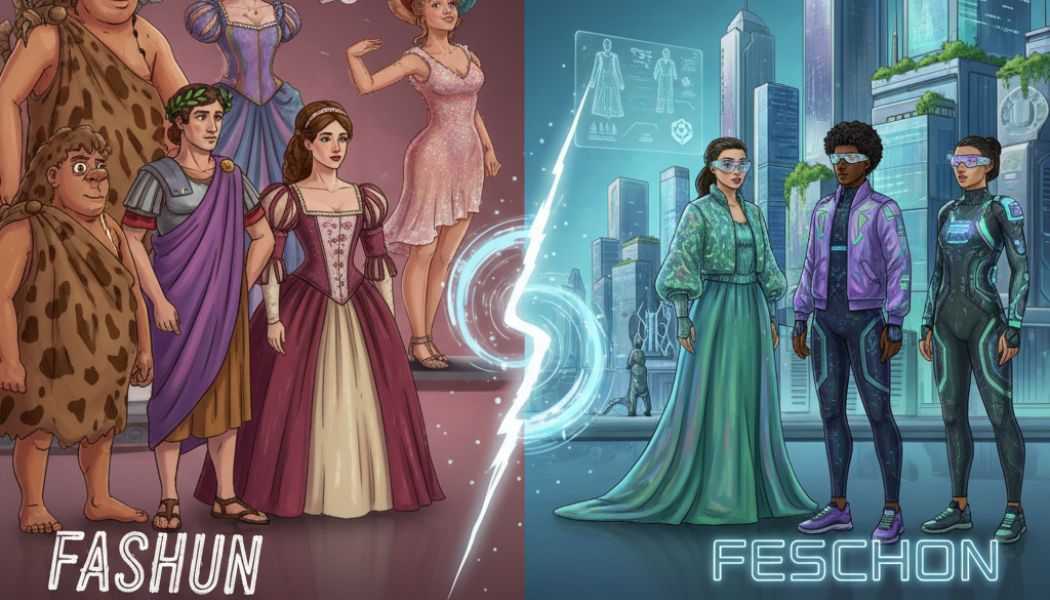
But lurking beneath this surface-level jest is something far more intriguing. A nascent concept, a portmanteau pregnant with possibility. “Feschon” – a fusion of “fashion,” “innovation,” and “technology.” It transcends the mere aesthetics of the moment. It dares to grapple with the existential questions facing our sartorial choices. What will we wear tomorrow, not just to impress, but to endure? How do we reconcile our desire for self-expression with the urgent need for planetary preservation? “Feschon” is not just what’s in; it’s about what’s next for our planet, our ethics, and – perhaps most intimately – our very wardrobes.
So, buckle up. We embark on a winding journey – a pilgrimage, if you will – through the annals of style. We’ll trace its meandering path from rudimentary coverings to the dazzling, often dizzying, landscape of contemporary trends. We’ll dissect the controversies, confront the uncomfortable truths, and ultimately, dare to glimpse the tantalizing, tech-tinged horizon of how we might dress – and be – in the years to come.
Part 1: The OG “Fashion” – A Whirlwind Tour Through Time (and Why It Matters)
Consider the genesis of clothing. Not as mere adornment, but as a fundamental necessity. Imagine our cave-dwelling ancestors, draping themselves in animal hides – a primal ballet of survival and resourcefulness. Then, almost as if by some inexplicable impulse, the narrative shifts. Function gives way to symbolism. The Roman elite, swathed in togas dyed the regal hue of Tyrian purple, broadcasting their status with every carefully arranged fold.
The centuries unfurl, a tapestry woven with ever-shifting silhouettes. The constricting corsets of the Renaissance, sculpting the female form into an idealized hourglass. The extravagant layers of the medieval court, a dizzying display of wealth and power. Each era, a distinct chapter in fashion’s ongoing autobiography, a testament to our relentless desire to communicate through cloth.
The Industrial Revolution, a seismic event that irrevocably altered the trajectory of fashion. Suddenly, mass production became a reality, democratizing style and making clothing accessible to a wider swathe of humanity. Yet, lurking beneath this progress lay the seeds of a future reckoning, a foreshadowing of the ethical and environmental dilemmas that would come to define our era.
And then, the 20th century – a rollercoaster of sartorial reinvention. The rebellious flappers, casting off the shackles of Victorian convention. Dior’s “New Look,” a romantic counterpoint to the austerity of wartime. The audacious mini-skirts of the Swinging Sixties, a brazen declaration of youthful liberation. The power suits of the Eighties, armor for the ambitious woman navigating the corporate landscape. Grunge, a defiant rejection of polished perfection. A relentless, restless churn of trends, each vying for attention, each reflecting the zeitgeist of its moment.
This intricate, often contradictory history is the bedrock upon which “feschon” now emerges. A vital context, a reminder that fashion is never created in a vacuum. It is always in conversation with the past, grappling with the present, and tentatively reaching towards the future.
Part 2: What’s Trending Now (and What’s Just “Fashun”?)
What constitutes “fashion” today? It feels almost impossible to define, doesn’t it? The relentless democratization of style, fueled by the voracious appetite of social media, has fragmented the once-monolithic fashion system into a million shimmering shards of personal expression. The rise of individual style over blind adherence to trends. The ongoing tension between comfort and extravagance. The undeniable influence of TikTok, a digital runway where trends are born, die, and are resurrected with bewildering speed.
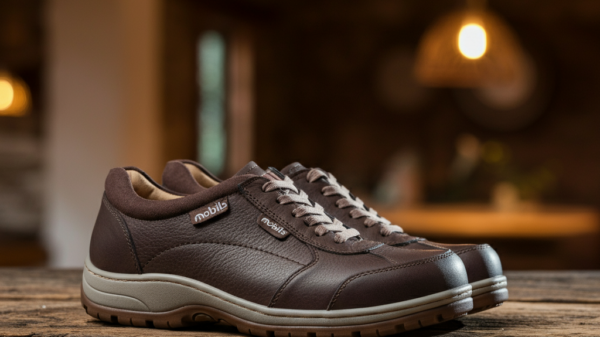
As we gaze upon the approaching Fall/Winter 2025 season, certain themes begin to coalesce. A yearning for cozy comfort – oversized knits, enveloping faux fur coats promising warmth and solace. A nostalgic nod to preppy classics – the resurgence of argyle sweaters, the revival of sweater vests, the gleeful plundering of thrift store gold. A flirtation with boudoir dressing – delicate slip dresses layered beneath sharply tailored blazers, a playful juxtaposition of vulnerability and strength. A grounding in practicality – menswear-inspired shoes, sturdy loafers and oxfords offering a welcome respite from towering heels. An embrace of earthy tones – rich mocha hues providing a soothing counterpoint to the digital cacophony of modern life. Bold statement belts cinching silhouettes and geometric eyewear adding an intellectual air.
We also see subscription services, such as Fashom. While the phonetic similarity to “feschon” might be initially confusing, it’s key to distinguish between the two. Services such as Fashom, despite their individual successes or failures, speak to a broader shift in how consumers engage with fashion.
And what, pray tell, is currently languishing on the fashion “pause” list? Perhaps the ubiquitous scarf coat, its moment of glory now fading into the annals of sartorial history. Or ballet slippers, once the epitome of effortless chic, now relegated to the realm of passé trends.
Part 3: The Dark Side of Fast Fashion – Why We NEED “Feschon” Now More Than Ever
Let’s confront the shadows, shall we? Because the glittering facade of “fashion” often conceals a troubling underbelly, a complex web of ethical and environmental transgressions that demand our attention.
Consider the cultural insensitivity that has plagued the industry. The tone-deaf appropriation of cultural artifacts, transforming sacred symbols into fleeting trends. The racist ad campaigns that have sparked outrage and ignited calls for accountability. Remember Dolce & Gabbana’s disastrous attempt to court the Chinese market? Or Gucci’s ill-conceived blackface sweater? Or H&M’s misstep with a racially insensitive hoodie advertisement? Thfashionese are not mere blunders; they are symptomatic of a deeper malaise, a lack of awareness and sensitivity that permeates the industry.
And then there’s the insidious issue of body shaming and the perpetuation of unrealistic beauty standards. Brands like Victoria’s Secret and Abercrombie & Fitch, with their historical promotion of unattainable ideals, have contributed to a culture of self-doubt and body image anxiety, particularly among young women.
But perhaps the most damning indictment of the traditional fashion system lies in its human cost. The exploitation of garment workers in developing countries, forced to toil in unsafe conditions for paltry wages. The prevalence of child labor in the global supply chain, robbing children of their innocence and their futures. The true price of cheap clothes, measured not in dollars and cents, but in human suffering.
And what of our planet? The environmental impact of the fashion industry is staggering. The unsustainable consumption of water resources, draining aquifers and exacerbating water scarcity. The pollution of waterways by toxic dyes and chemicals, poisoning ecosystems and endangering human health. The colossal carbon footprint, contributing to climate change at an alarming rate. The mountains of textile waste accumulating in landfills, a testament to our throwaway culture. And the insidious microfibers leaching into our oceans, polluting marine ecosystems and infiltrating the food chain.
Even the pursuit of shock value can be problematic. Where does one draw the line between artistic expression and irresponsible provocation? The staged rat release from Ksubi, or Alexander McQueen’s more macabre explorations, hint at this dangerous game.
The current controversies around “dirty fashion”, particularly the Balenciaga’s deliberately distressed trainers or JordanLuca’s urine jeans, prompt a deeper question: has the desire for novelty outstripped all sense of reason?
The truth is undeniable: the fashion industry, as it currently operates, is unsustainable, unethical, and deeply problematic. Which is precisely why we need “feschon.”
Part 4: Welcome to “Feschon” – Fashion’s Tech-Infused, Conscientious Future
“Feschon,” then, is not merely a trendy neologism; it is a call to action. A proactive response to the myriad challenges facing the fashion industry. It is a holistic approach that embraces sustainability, ethical responsibility, and technological innovation.
Sustainability is not just a buzzword; it is the very foundation of “feschon.” It necessitates a radical rethinking of materials, processes, and consumption patterns. Consider the promise of next-generation materials – mushroom leather (mycelium!), a sustainable alternative to animal-derived leather. Spider silk, a bio-fabricated fiber with unparalleled strength and elasticity. Piñatex, a textile crafted from pineapple leaf fibers, transforming agricultural waste into a valuable resource. Algae-based fabrics and dyes, harnessing the power of nature to create vibrant and eco-friendly colors.
“Feschon” champions the principles of circularity, extending the life cycle of garments through innovative strategies. Rent, repair, resell – these are the mantras of a circular economy. Digital IDs (CircularID) can track every garment, providing valuable information on its origins, composition, and potential for reuse.
Zero-waste patterns, seamless knitting, and on-demand production minimize waste and maximize efficiency. Imagine a world where clothing is created only when it is needed, eliminating the mountains of unsold inventory that plague the traditional fashion system.
Technology is the engine that drives “feschon,” transforming every aspect of the industry. Artificial intelligence can analyze vast datasets to predict trends, generate innovative designs, and personalize recommendations for individual consumers. The metaverse offers new possibilities for virtual try-ons, digital-only garments for avatars, and immersive shopping experiences. Brands like Gucci, Nike, and Burberry are already experimenting with these virtual frontiers, blurring the lines between the physical and digital worlds.
Smart threads can regulate body temperature, monitor health metrics, or even clean themselves, blurring the lines between clothing and technology. 3D printing allows for the creation of customized accessories, shoes, and intricate garments with minimal waste. Blockchain technology promises transparency and traceability, allowing consumers to verify the ethical and environmental credentials of their clothing.
“Feschon” empowers consumers, placing them at the heart of the creative process. Personalization on demand allows for the creation of garments tailored to individual body shapes and preferences, eliminating the need for standardized sizing. The resale market is exploding, with projections estimating a value of $351 billion by 2027. Rental services provide access to luxury items without the burden of ownership, promoting a more sustainable and accessible approach to fashion.
Conclusion: What Does Your “Feschon” Look Like?
We’ve journeyed far, haven’t we? From the primal necessity of animal skins to the opulent displays of royal courts, from the mass-produced excesses of fast fashion to the burgeoning possibilities of a tech-infused, conscientious future.
Now, the question remains: what role will you play in this revolution? Will you champion sustainable brands? Embrace the resale market? Or simply pause to reflect on the impact of your purchasing decisions? Every choice, no matter how small, has the power to shape the future of fashion.
The future is “feschon” – a fusion of style, sustainability, and technological innovation. It’s about looking good, doing good, and embracing the sci-fi cool of a more mindful, ethical, and environmentally responsible approach to clothing. Are you ready to step into the future of style?