In the realms of tactical operations, outdoor adventure, and industrial safety, the ability to see clearly in low-light or challenging conditions is not just an advantage—it’s a necessity. While standard flashlights serve a basic purpose, a specialized category of illumination has emerged to meet more demanding requirements: the recon light. Far more than a simple beam, a recon light is a sophisticated tool designed for situational awareness, stealth, and versatility. This article explores the technology, applications, and critical considerations behind these powerful devices.
What Exactly is a Recon Light?
At its core, a recon light is a high-performance, portable lighting tool engineered for scenarios where observation and information gathering are paramount. The term “recon,” short for reconnaissance, perfectly encapsulates its primary function. Unlike a conventional flashlight that merely illuminates a dark path, a recon light is designed to reveal details without compromising the user’s position or overwhelming their senses.
The defining characteristic of a recon light is its multi-spectrum capability. While it always includes a standard white light mode, its true power lies in the integration of other light wavelengths, primarily:
-
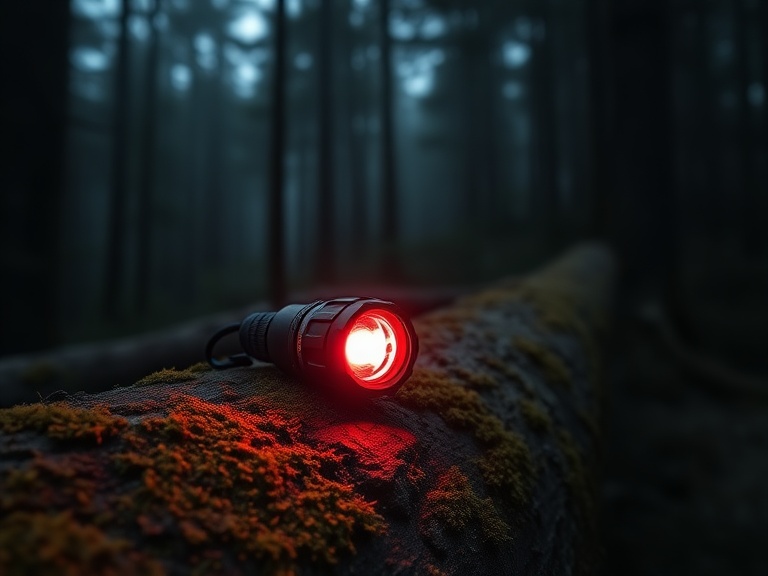
Red Light: Preserves night vision and is less detectable by the human eye at a distance.
-
Blue Light: Can enhance the visibility of blood trails (in hunting) or certain types of evidence (in forensics).
-
Green Light: Offers a balance between night vision preservation and brightness, effective for navigation and map reading.
-
Infrared (IR): Invisible to the naked eye and used exclusively with night vision devices.
This multi-functional approach allows a single device to adapt to a wide array of situations, making it an indispensable piece of gear for professionals and enthusiasts alike.
The Technology Behind the Beam: More Than Just Bulbs
The effectiveness of a recon light hinges on advanced technological components that work in concert to deliver reliable performance.
1. LED Technology:
Modern recon lights exclusively use Light Emitting Diodes (LEDs). LEDs are favored for their exceptional efficiency, long lifespan, durability, and compact size. High-quality LEDs, such as those from manufacturers like CREE, provide intense, focused beams with high lumen output and excellent color rendering, ensuring that what you see is an accurate representation of the environment.
2. Power Sources and Regulation:
Recon lights are typically powered by rechargeable lithium-ion batteries due to their high energy density and consistent power delivery. A critical, often overlooked component is the circuit driver. A high-quality driver ensures consistent output without flickering, manages thermal load to prevent overheating, and often includes programmable features. These can include memory functions for your preferred mode, strobe settings for emergency signaling, and even a “moonlight” or low-lumen mode for extreme battery conservation.
3. Optics and Beam Control:
The housing of the LED is just as important as the LED itself. Recon lights use either reflectors or TIR (Total Internal Reflection) optics.
-
Reflectors: Create a beam with a bright central hotspot and a wider, dimmer spill, useful for long-range throw.
-
TIR Optics: Produce a more uniform, smooth beam with a defined cutoff, ideal for close-to-mid-range tasks and reducing peripheral light scatter that could give away your position.
4. Durability and Environmental Sealing:
Built for harsh conditions, these lights are often constructed from aerospace-grade aluminum with a hard-anodized finish for corrosion and abrasion resistance. They must also possess a high IP (Ingress Protection) rating, such as IPX8, indicating they can be submerged in water, and be tested to withstand significant impact (e.g., MIL-STD-810G standards).
Diverse Applications: Who Uses Recon Lights and Why?
The versatility of recon lights makes them valuable across numerous fields.
Tactical and Law Enforcement:
For military personnel and law enforcement officers, a recon light is a force multiplier. The red light mode allows for reading maps and equipment inside a vehicle or tent without destroying their night-adapted vision before a mission. The white light, often with a high, momentary-on strobe capability, is reserved for positive threat identification and potential disorientation. IR capabilities are crucial for operations conducted with night vision goggles, allowing for silent, invisible communication and signaling between team members.
Search and Rescue (SAR):
SAR teams operate in unpredictable environments and all hours. A powerful white light is essential for illuminating large search areas. However, the lower-intensity colored lights are invaluable during extended operations at night, allowing team members to check equipment, communicate non-verbally with light signals, and maintain their night vision while navigating treacherous terrain.
Outdoor Recreation and Hunting:
Hunters are among the most common civilian users of recon lights. Walking to a blind or stand in pre-dawn darkness with a red or green light prevents spooking game animals, which are less sensitive to these wavelengths. It also allows the hunter to set up and remain visually aware without compromising their position. Campers and hikers use them for the same night-vision-preserving benefits around the campsite.
Industrial and Forensic Inspection:
In industrial settings, specific light wavelengths can reveal cracks, leaks, or material fatigue that is invisible under normal light. Similarly, in forensic science, blue light is used to detect bodily fluids, fibers, and other trace evidence that fluoresces under specific wavelengths, making a multi-spectrum recon light a compact tool for initial scene assessment.
Choosing the Right Recon Light: Key Considerations
Selecting a recon light requires careful thought about your specific needs.
-
Lumen Output: Don’t be fooled into thinking more lumens are always better. A light that is too bright can create blinding backscatter in fog, smoke, or dust. Look for a light with a sensible range of outputs, from a very low mode (1-5 lumens) to a high mode (500-1000+ lumens) for when you need maximum illumination.
-
Beam Type: Decide if you need a light that “throws” a long distance (focused beam) or “floods” a wide area (diffused beam). Some lights offer a compromise or adjustable focus.
-
UI (User Interface): The switching mechanism is critical. A simple, intuitive interface that allows you to quickly access the mode you need, especially in high-stress situations, is paramount. Tail-cap switches are common for tactical use, while side switches often offer more mode options.
-
Battery Life and Type: Consider the runtime on the modes you will use most often. The convenience of rechargeable built-in batteries versus the field-swappability of standard cells (e.g., 18650 or CR123A) is a key trade-off.
The Ethical and Responsible Use of Powerful Lighting
With the capability of these devices comes responsibility. The bright beams, particularly strobe functions, should never be directed at aircraft, vehicle drivers, or individuals without just cause. Understanding and respecting local laws and regulations regarding high-powered lights is essential for every user.
Informational FAQs
Q1: Are recon lights legal for civilians to own?
Yes, in most countries, recon lights are perfectly legal for civilians to purchase and own. They are considered tools. However, their use, particularly in public spaces, may be subject to local ordinances, and using them to harass or disorient others is illegal.
Q2: Why is red light specifically used for preserving night vision?
The human eye uses two types of photoreceptors: cones for color vision in bright light and rods for low-light vision. Rods are not very sensitive to longer wavelengths of light, which include the red end of the spectrum. Using a red light allows your cones to see details without “bleaching” the rhodopsin pigment in your rods, thereby maintaining their sensitivity to low light.
Q3: Can I use a standard recon light with my night vision device?
No. Standard recon lights with red, blue, green, and white LEDs emit visible light. To work with night vision devices, you need a dedicated IR (Infrared) flashlight or a recon light with a specific IR mode, which emits light invisible to the naked eye but clearly visible through night vision optics.
Q4: What does “CRI” mean in the context of lighting?
CRI stands for Color Rendering Index. It is a measure of a light source’s ability to reveal the true colors of objects compared to a natural light source. A high CRI (90+) is important in applications like forensic inspection or hunting, where accurately distinguishing colors and details is critical.
Q5: How should I maintain my recon light for long-term reliability?
Regularly check the O-rings for damage and lubricate them with a silicone-based grease to maintain water resistance. Keep the lens clean. If using rechargeable batteries, avoid fully draining them; partial discharges are better for longevity. Store the light in a cool, dry place.