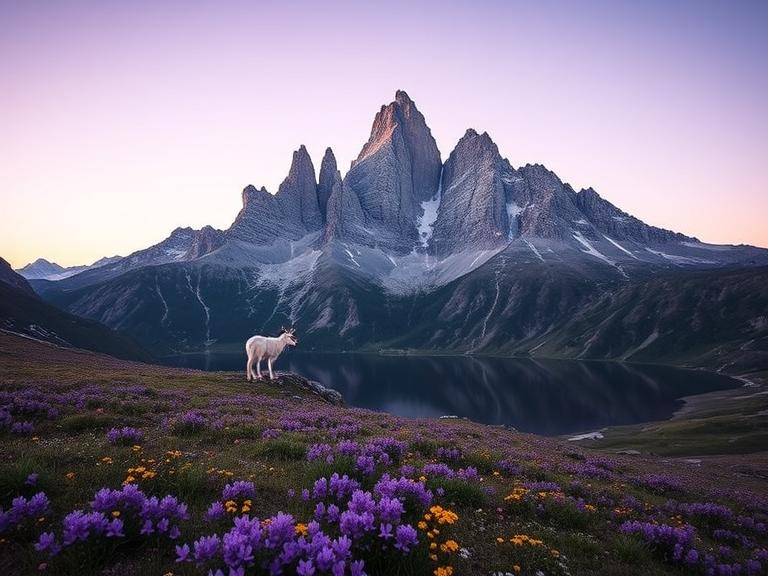
Rising from the earth with an almost deliberate grandeur, Ketl Mountain stands as a silent sentinel over the landscapes it inhabits. Unlike the crowded peaks of well-trodden ranges, Ketl Mountain exudes an aura of solitude and mystery. It is not merely a geological formation of rock and soil; it is a landmark steeped in local lore, a bastion of biodiversity, and a formidable challenge for the adventurous spirit. This article delves into the multifaceted identity of Ketl Mountain, exploring its geological origins, ecological significance, cultural imprint, and the raw experience of attempting to conquer its slopes. For those who seek to understand wild places, Ketl Mountain offers a compelling narrative written in stone and time.
The Geological Tapestry of Ketl Mountain
The story of Ketl Mountain begins millions of years ago, deep within the tumultuous forces of the Earth. Its current form is merely the latest page in a long and dynamic geological history.
Formation and Composition
Ketl Mountain is primarily a product of tectonic upheaval. It is composed of a core of ancient igneous rock, such as granite, which formed from magma that cooled and solidified deep underground. Over eons, the overlying layers of softer sedimentary rock—sandstone, shale, and limestone—were eroded away by wind, water, and ice, exposing this resilient plutonic core. This process, known as exhumation, is what gives Ketl Mountain its stark, imposing profile against the sky.
The mountain’s flanks tell a more complex story. Striations on its lower slopes and the presence of massive, scattered boulders, known as erratics, are clear evidence of past glaciation. Ancient glaciers carved the deep valleys that cradle the mountain’s base and sculpted its sharp ridges and cirques, leaving behind the dramatic, U-shaped valleys that characterize the region today. Every cliff face and scree slope is a chapter in this ancient ice-age saga.
Distinctive Physical Features
What sets Ketl Mountain apart are its unique physical characteristics. Its summit is often described as a “broken crown,” featuring a series of jagged spires rather than a single, rounded peak. On its northern face, a permanent scar known as the “Great Gully” runs from near the summit to the base—a deep chasm carved by a rockslide of monumental proportions, the evidence of which still litters the talus field below.
Another notable feature is the “Whispering Cave,” a large cavern situated halfway up the eastern slope. Formed by water seeping through fissures in the limestone deposits, the cave is known for the peculiar sound the wind makes as it passes through its narrow entrance, a low hum that echoes across the valley.
An Ecosystem in the Sky: Flora and Fauna of Ketl
The slopes of Ketl Mountain function as a vertical ecosystem, with distinct life zones changing as the altitude increases. This gradient creates a haven for specialized species adapted to the harsh conditions of high elevation.
Lower Slopes: The Verdant Apron
The base of the mountain is typically enveloped in a dense boreal or montane forest. Here, towering conifers like spruce and fir create a dense canopy, providing habitat for larger mammals such as black bears, deer, and the elusive lynx. The forest floor is a rich tapestry of mosses, ferns, and fungi, thriving in the cool, moist understory. This zone is the mountain’s most accessible and biologically productive area.
The Treeline and Alpine Tundra
As one ascends, the trees become stunted and gnarled, eventually giving way completely to the alpine tundra. This is a world of extreme conditions: fierce winds, intense ultraviolet radiation, and a short growing season. Life here is low to the ground and tenacious. Hardy, cushion-forming plants like moss campion and saxifrage cling to the thin soil, their roots preventing erosion. Alpine wildflowers, such as sky pilot and mountain heather, create breathtaking, if fleeting, displays of color during the brief summer.
High-Altitude Survivors
The upper reaches and rocky crags of Ketl Mountain are the domain of highly specialized animals. The most iconic is the mountain goat, whose sure-footedness on precarious ledges is legendary. Their thick white coats provide both camouflage against snow patches and insulation from the cold. Another master of this vertical world is the golden eagle, which often nests on the mountain’s most inaccessible cliffs, using the thermal updrafts to soar over its domain in search of prey like marmots and pikas that whistle from the scree fields.
Human History and Cultural Significance
Long before it appeared on modern maps, Ketl Mountain was a known entity to the Indigenous peoples of the region. Its name itself is believed to be an anglicized version of a native word whose meaning has been lost to time, though some local oral histories suggest it meant “Thunder’s Home” or “Stone Man.”
A Landmark in Lore
For generations, the mountain served as a vital navigational aid and a central feature in creation stories. It was often seen as a spiritual entity—a protector of the land or the resting place of ancient heroes. Some tales spoke of the “Whispering Cave” as a portal to the spirit world, its eerie hum the voices of ancestors. The mountain’s imposing presence naturally fostered a sense of reverence and caution, and it was common for journeys to be planned with the mountain as the primary reference point.
Modern Exploration and Recreation
In the era of modern exploration, Ketl Mountain presented a formidable challenge. The first recorded ascent was not achieved until the mid-20th century, a testament to its technical difficulty. Unlike popular peaks with established trails, routes up Ketl are often unmarked and require a combination of hiking, scrambling, and technical rock climbing.
Today, it remains a destination for experienced mountaineers seeking an unspoiled adventure. There are no visitor centers or gondolas here; the experience is raw and self-reliant. The primary reward is not a summit register or a souvenir, but the profound solitude and the unparalleled view from the “broken crown,” a vista of untamed wilderness stretching to the horizon.
The Ascent: A Test of Will and Skill
Attempting to climb Ketl Mountain is not a casual undertaking. It demands respect, preparation, and a high level of fitness and skill.
Preparation and Route-Finding
Prospective climbers must be proficient in navigation, as trails are faint or non-existent. A detailed topographic map and compass (and the knowledge to use them) are essential, as GPS signals can be unreliable in the deep valleys. Weather on the mountain is notoriously fickle; a sunny morning can rapidly transform into a life-threatening storm with high winds and plummeting temperatures. Climbers must be prepared for all conditions and possess the wisdom to turn back if the mountain dictates.
The Summit Push
The final push to the summit involves navigating the “broken crown” spires. This section often requires technical rock climbing skills, a rope, and protective gear. The rock, while solid in places, can be loose and unstable, demanding constant vigilance. The exposure is significant, with thousand-foot drops just a misstep away. Reaching the true summit is a profound accomplishment, earned through perseverance and skill, and the sense of achievement is matched only by the breathtaking, 360-degree panorama of pristine wilderness.
Informational FAQs about Ketl Mountain
1. Where is Ketl Mountain located?
Ketl Mountain is located in a remote wilderness area, typically part of a larger, protected range or national park. Its exact location is often kept vague to preserve its wild character and discourage unprepared visitors.
2. Can anyone climb Ketl Mountain?
No. Ketl Mountain is not a hike; it is a serious mountaineering objective. It should only be attempted by experienced climbers with technical rock climbing skills, off-trail navigation expertise, and the ability to handle extreme alpine conditions.
3. What is the best time of year to attempt an ascent?
The narrow window for a safe ascent is typically in late summer, from mid-July to early September. This is when most of the winter snow has melted, and weather conditions are at their most stable, though they can still change rapidly.
4. Are there any guided tours to the summit?
Due to the mountain’s difficulty, remoteness, and its status as a protected wilderness area, commercial guided tours to the summit are extremely rare or non-existent. Ascents are generally undertaken by small, self-sufficient parties.
5. What kind of wildlife might I encounter?
Climbers may see a wide range of wildlife, from deer and bears in the lower forests to mountain goats, marmots, pikas, and golden eagles in the high alpine zones. Proper food storage and a respectful distance are mandatory for safety.
6. Why is it important to preserve places like Ketl Mountain?
Ketl Mountain represents a crucial bastion of biodiversity, a living laboratory for geological and ecological study, and a place of profound natural beauty and solitude. Its preservation is vital for the health of the ecosystem and for future generations to experience true, untamed wilderness.