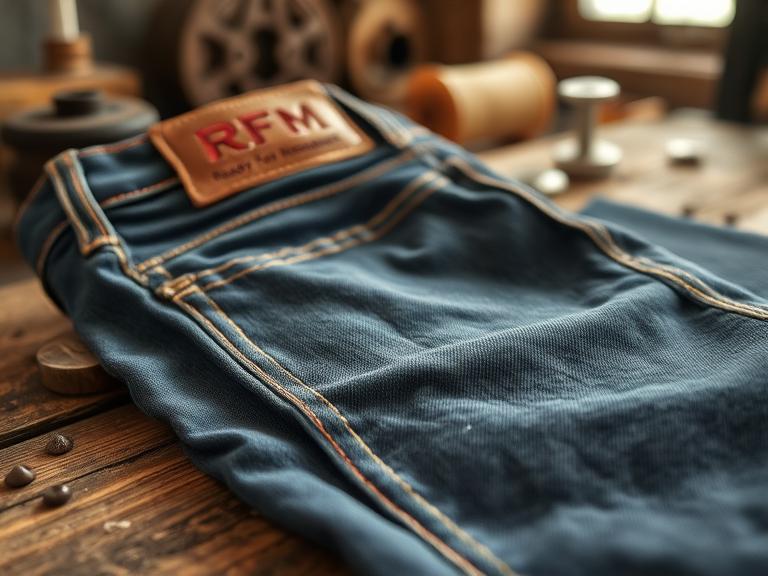
In the vast tapestry of American fashion, few garments carry the weight of history, utility, and cultural evolution quite like a pair of blue jeans. While names like Levi’s and Wrangler often dominate the narrative, there exists a rich undercurrent of brands that have shaped the industry from the ground up. Among these is RFM Jeans, a name that resonates with a sense of authenticity, durability, and a no-frills approach to classic workwear. This article delves into the story, characteristics, and enduring appeal of RFM jeans.
Decoding the Label: What Does “RFM” Stand For?
Before understanding the jeans, it’s crucial to understand the name. “RFM” is an acronym that stands for “Ready For Merchants.” This name is a direct reflection of the brand’s original ethos and target audience. Unlike brands that were marketed with a focus on cowboy culture or rugged individualism, RFM positioned itself as a practical, reliable supplier of durable pants for the everyday working man and the merchants who supplied them. The name itself is a promise of utility, suggesting a product that is prepared, dependable, and fit for purpose straight off the shelf.
A Stitch in Time: The Historical Roots of RFM
RFM Jeans are intrinsically linked to the larger story of denim in the United States, particularly in the post-World War II era. The brand was a product of the Overall Company, a manufacturing entity based in Henderson, Kentucky. During the mid-20th century, the demand for sturdy workwear was booming, driven by the industrial and agricultural sectors. The Overall Company, like many others in regions like the South and Midwest, sought to meet this demand by producing high-quality, affordable denim pants.
RFM was one of their flagship labels, designed to compete with other workwear giants. The brand’s philosophy was simple: use robust materials, implement strong construction techniques, and offer a product that could withstand the rigors of physical labor. They were not fashion statements first; they were tools. This foundational principle is key to understanding the design and construction details that vintage RFM jeans are known for today.
Anatomy of a Classic: Identifying Features of Vintage RFM Jeans
For denim enthusiasts and collectors, the value of a pair of RFM jeans lies in its specific, often subtle, design features. These characteristics are hallmarks of their workwear heritage and manufacturing era.
-
The Leather Patch: One of the most distinctive features of vintage RFM jeans is the leather patch located on the back waistband. Early patches often featured a stylized “RFM” logo, sometimes accompanied by a depiction of a horse or other Western motifs, alongside the words “Ready For Merchants.” The wear and patina on this leather patch tell a story of their own.
-
Riveted Construction: True to their workwear purpose, RFM jeans were built with durability at every stress point. Copper rivets were used to reinforce areas prone to tearing, such as the corners of pockets and the base of the fly. This was not a decorative choice but a functional necessity for laborers, farmers, and mechanics.
-
The Selvage Denim: Many vintage RFM jeans, particularly those produced before the widespread adoption of projectile looms, were made from selvage (or selvedge) denim. This refers to a self-finished edge on the fabric that prevents unraveling. The tell-tale sign is the colored line (often red or pink) running along the inside seam of the outseam. Selvage denim is highly sought after today for its quality, durability, and the characteristic “fade” it develops over time.
-
Hidden Details: Other classic details include a button-fly (zippers were sometimes seen as a weaker point), a cinch back for waist adjustment, and watch pockets deep enough to actually secure a pocket watch. The denim itself was often a stiff, unsanforized fabric, meaning it would shrink to fit the wearer’s body after the first wash, creating a truly personalized garment.
RFM in the Modern Era: From Workwear to Vintage Treasure
The latter part of the 20th century saw a shift in the denim landscape. The rise of pre-washed, designer, and fast-fashion jeans pushed many traditional workwear manufacturers, including the makers of RFM, to the sidelines or out of business. Production of classic RFM jeans ceased, and the brand faded from the mainstream.
However, this was not the end of the story. The 21st century has seen a massive resurgence of interest in heritage wear and raw selvedge denim. A new generation of consumers, disillusioned with disposable fashion, began seeking out garments with history, character, and superior construction. In this context, vintage RFM jeans were rediscovered.
Today, a pair of well-preserved, vintage RFM jeans is a prized find. They are celebrated on online marketplaces, in vintage clothing stores, and within denim enthusiast communities. Their value lies in their authenticity—they are a genuine artifact of American industrial history. For modern wearers, donning a pair of RFM jeans is a connection to a past era of craftsmanship and a statement against the homogeneity of contemporary fashion.
RFM vs. The Giants: A Place in the Denim Pantheon
It’s natural to compare RFM to brands like Levi’s 501 or Wrangler 13MWZ. While all are iconic, their paths diverge.
-
Levi’s successfully transitioned from pure workwear to a global lifestyle brand.
-
Wrangler cemented its identity around Western and rodeo culture.
-
RFM remained, in essence, a pure workwear brand. It never achieved the same mass-market, cross-cultural penetration, which is precisely what makes it so special to purists today. It represents a less-commercialized, more utilitarian strand of the American denim story.
Informational FAQs About RFM Jeans
Q1: Are RFM jeans still being made today?
A1: The original RFM jeans, as produced by the Overall Company with vintage details like selvedge denim and a leather patch, are no longer in production. The brand name or its variants may have been acquired and used on other garments, but these are not the same as the classic vintage pairs sought after by collectors.
Q2: How can I tell if my RFM jeans are vintage?
A2: Look for key indicators: a leather patch (often worn), a selvedge ID line on the outseam, a button-fly, a cinch back, and copper rivets. The presence of a union label (like the ILGWU tag) can also help date them, typically to before the 1990s.
Q3: Where is the best place to find vintage RFM jeans?
A3: Your best bets are dedicated vintage clothing stores, online auction sites like eBay, and platforms specializing in vintage workwear and selvedge denim. Be prepared to search carefully and know your measurements, as vintage sizing can differ from modern standards.
Q4: What should I look for when buying vintage RFM jeans?
A4: Check for condition issues like holes in the crotch or knees, broken seams, and significant stains. Also, note the waist and inseam measurements, as the unsanforized denim may have shrunk. The presence of original features, like an intact leather patch, adds to the value and authenticity.
Q5: Why are vintage workwear brands like RFM so expensive now?
A5: The high cost is driven by factors of scarcity, quality, and demand. These are durable, well-made garments from a bygone era. The supply is finite, and the demand from denim enthusiasts who appreciate the historical significance and superior construction of selvedge denim continues to grow, driving up prices.
Q6: Did RFM make other clothing besides jeans?
A6: Yes, like many workwear companies, the Overall Company likely produced a range of garments under the RFM label and others. This could include denim jackets, chore coats, and other work-related apparel, though the five-pocket jeans remain the most famous and collectible item.