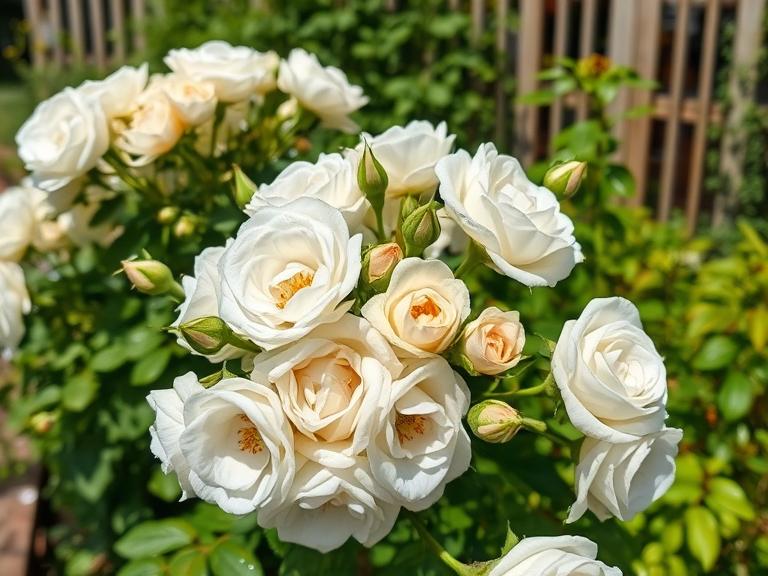
In the vast and vibrant world of roses, where dramatic colors and intoxicating scents often compete for attention, one variety has carved out a timeless niche through sheer, understated elegance and relentless performance. The Iceberg Rose, with its clouds of pristine white or soft pink blossoms, is more than just a plant; it is a gardening phenomenon. Revered by novices and horticultural masters alike, this floribunda rose has earned its place as one of the most popular and reliable roses in history.
A Brief History: The Accidental Masterpiece
The story of the Iceberg Rose begins not with a grand intention, but with a fortunate cross. In 1958, the German rose breeding firm of Kordes introduced this cultivar under the original name ‘Korbin’. It was the product of a cross between a hybrid tea rose and a hybrid musk rose. While its breeders knew they had created something special, they could scarcely have predicted the global sensation it would become.
Its journey to iconic status was cemented when it was awarded the Royal Horticultural Society’s Award of Garden Merit (AGM), a prestigious mark of excellence given only to the most outstanding garden plants. The name “Iceberg” perfectly captures its defining feature: a breathtaking abundance of pure white blooms that cover the plant like a drift of fresh snow, creating a cool, calming effect even in the height of summer.
Unveiling the Iceberg: Key Characteristics and Varieties
Understanding what makes the Iceberg Rose so special requires a closer look at its defining traits.
Growth Habit and Form:
Iceberg is technically a floribunda rose, meaning “flowering in abundance.” It typically grows as a robust shrub, reaching 3 to 4 feet in height and spread, though it can be trained as a stunning climber (known as a “Climbing Iceberg”) that can reach up to 12 feet. Its growth is bushy and well-branched, forming a handsome, rounded shape even when not in bloom.
The Iconic Blooms:
The flowers are the main event. They are not the large, solitary blooms of hybrid teas, but rather clusters of smaller, double-form blossoms, each with about 30 to 40 petals. They begin as elegant, pointed buds that unfurl into classic, cup-shaped rosettes. The color is primarily a clean, glistening white, often with a subtle, pale pink or creamy center. In cool weather, a delicate blush of pink may tinge the outer petals.
The “Bloomingberg” Phenomenon:
The most celebrated characteristic of the Iceberg Rose is its prolific and continuous blooming cycle. Unlike many roses that have a spectacular spring flush and then sporadic flowers, a healthy Iceberg is a veritable flower factory from late spring until the first hard frost. It cycles through waves of bloom, ensuring the plant is rarely without its signature floral display.
Foliage and Scent:
The foliage is a light, glossy green, providing a perfect backdrop for the white flowers. While not strongly fragrant in the classic rose sense, many gardeners detect a light, sweet, and honey-like scent, especially on warm, still days. It is a subtle perfume that complements its delicate appearance.
Popular Variants:
The original white Iceberg has spawned several beloved sports (natural mutations):
-
Blushing Iceberg: Features soft pink petals that are lighter in the center and darker on the edges.
-
Burgundy Iceberg: A striking variant with deep plum-purple blooms.
-
Brilliant Pink Iceberg: Offers vibrant, clear pink flowers.
Cultivating Serenity: A Guide to Planting and Care
One of the key reasons for the Iceberg Rose’s popularity is its remarkable ease of care. It is far less demanding than many other rose varieties, making it an excellent choice for those new to rose gardening.
1. The Perfect Location:
Iceberg Roses thrive in a location that receives at least 6 to 8 hours of direct sunlight daily. More sun equals more blooms. They prefer well-draining soil rich in organic matter. Good air circulation around the plant helps prevent fungal diseases.
2. Planting for Success:
The best time to plant bare-root Iceberg Roses is in late winter or early spring, while container-grown plants can be planted throughout the growing season. Dig a hole twice as wide and just as deep as the root ball. Mix the excavated soil with compost or well-rotted manure. Place the plant in the hole, ensuring the graft union (the knobby bump where the rose is joined to the rootstock) is just above the soil level. Backfill with the amended soil, water deeply, and mulch around the base to retain moisture and suppress weeds.
3. Watering and Feeding:
Water your Iceberg Rose deeply and consistently, aiming for the base of the plant to keep the leaves dry. A deep watering once or twice a week is better than frequent, shallow sprinklings. Feed with a balanced, slow-release rose fertilizer in early spring as new growth appears, and again after the first major flush of blooms to encourage continued flowering.
4. Pruning for Prosperity:
Pruning is essential for maintaining shape and encouraging vigorous growth. The best time to prune is in late winter or early spring, just as the buds begin to swell.
-
Remove all dead, diseased, or damaged wood.
-
Cut back about one-third to one-half of the previous year’s growth, making cuts at a 45-degree angle just above an outward-facing bud.
-
Thin out the center of the plant to improve air circulation.
-
Deadhead spent blooms throughout the season by cutting the stem back to the first set of five leaflets. This simple task signals the plant to produce more flowers instead of setting seed.
Potential Challenges and Organic Solutions
While notably disease-resistant, Iceberg Roses can occasionally face issues.
-
Blackspot and Powdery Mildew: These fungal diseases are the most common problems. Prevent them by ensuring good air circulation, watering at the base of the plant, and choosing a sunny location. If issues arise, organic treatments like neem oil or a baking soda solution can be effective.
-
Aphids: These small, sap-sucking insects can cluster on new buds and shoots. A strong spray of water from a hose is often enough to dislodge them. For persistent problems, insecticidal soap is a safe and effective organic remedy.
Landscaping with Iceberg Roses: A Touch of Versatile Elegance
The neutral, luminous color and soft form of the Iceberg Rose make it incredibly versatile in landscape design.
-
Mass Planting: Create a stunning “river” or drift of white by planting several Iceberg shrubs together.
-
Mixed Borders: Their soft color provides a perfect foil for bold perennials like salvia, lavender, or catmint. They also cool down hot-colored flowers like rudbeckia and coreopsis.
-
Formal Hedges: Their dense, bushy growth makes them ideal for creating a beautiful and flowering hedge.
-
Containers: Dwarf varieties of Iceberg can be successfully grown in large containers on a patio or balcony.
-
Climbing Form: Train a Climbing Iceberg over an arbor, fence, or wall for a breathtaking vertical display.
Informational FAQs About Iceberg Roses
Q1: Are Iceberg Roses truly fragrance-free?
A: While not as intensely fragrant as a David Austin English Rose, Iceberg Roses are not devoid of scent. Many people describe a light, fresh, and sweet fragrance with hints of honey. The scent is subtle and best appreciated up close.
Q2: How do I encourage more blooms on my Iceberg Rose?
A: The three keys to maximum blooms are Sun, Food, and Deadheading. Ensure it gets full sun, feed it with a rose-specific fertilizer in spring and mid-summer, and consistently remove spent flowers to prevent the plant from going to seed.
Q3: Is the Iceberg Rose thornless?
A: No, Iceberg Roses do have thorns, though they are typically not as large or menacing as those on some other shrub roses. It’s still advisable to wear gloves when pruning or handling them.
Q4: Can Iceberg Roses grow in partial shade?
A: They will tolerate very light partial shade, but their blooming will be significantly reduced, and the plant may become leggy as it stretches for sunlight. For the iconic, flower-laden display, full sun is non-negotiable.
Q5: What is the lifespan of an Iceberg Rose bush?
A: With proper care, an Iceberg Rose can be a long-lived garden specimen, thriving for 15 years or more. Their renowned vigor and disease resistance contribute to their longevity.