The name “Marc Chapman” resonates with a peculiar duality in the public consciousness. For many, it is inextricably linked to a single, tragic event—the murder of John Lennon. Yet, to define a human life, however fractured, by one action is to ignore the complex tapestry of circumstances, psychology, and societal forces that shape an individual. The story of Marc David Chapman is not just a footnote in a celebrity’s assassination; it is a profound and dark exploration of fandom, identity crisis, mental health, and the search for infamy in a modern world. This article delves beyond the headlines to understand the person behind the name and the enduring questions his life represents.
The Formative Years: A Search for Identity and Belonging
Long before the name Marc Chapman became infamous, he was a child growing up in Decatur, Georgia, and later in Fort Worth, Texas. By most accounts, his early years were unremarkable, yet they were underpinned by a struggle for identity. Described as intelligent and introverted, Chapman was a devout participant in his local YMCA and showed an early inclination towards religion. However, beneath this surface of normalcy, peers and teachers often noted a chameleon-like quality—an ability and a desire to blend into whatever group would accept him.
His adolescence was marked by two significant and conflicting passions: Christianity and The Beatles. He found solace and structure in evangelical Christianity, even undertaking a missionary trip. Simultaneously, he was an ardent admirer of John Lennon. This dichotomy is crucial to understanding his later actions. For a time, these two worlds coexisted. He saw in Lennon’s music a message of peace and idealism that, in his youth, he could reconcile with his faith. However, as Chapman entered young adulthood, the cracks in his psyche began to widen.
The Descent: Mental Health, Delusion, and a Shattered Ego
Chapman’s transition into adulthood was turbulent. He bounced between jobs, from security guard to printer, each time failing to find a stable footing. His mental state deteriorated significantly. He developed a deep-seated resentment towards what he perceived as the hypocrisy of the world, particularly targeting symbols of success and “phoniness,” a concept he borrowed from J.D. Salinger’s The Catcher in the Rye.
This period saw the fusion of his religious fervor with his growing nihilism. He began to interpret Lennon’s lyrics, especially those from the later, more personal album “Plastic Ono Band,” not as the artistic expressions of a complex man, but as the blasphemous boasts of a millionaire who had “lied” to his generation. In Chapman’s distorted perception, Lennon’s song “Imagine,” which envisions a world without heaven or religion, was a direct attack on his own belief system.
His identification with Holden Caulfield, the protagonist of The Catcher in the Rye, became pathological. He saw himself as the “catcher in the rye,” a sole protector of innocence against a corrupt world. In his delusion, John Lennon had transformed from an idol into the ultimate “phony” who needed to be stopped. This was not a political assassination but a twisted act of righteous vengeance, fueled by a severe and untreated personality disorder, likely compounded by depression and grandiose delusions.
The Night of December 8, 1980: A Turning Point in Cultural History
The events of December 8, 1980, are etched into cultural history. Chapman, who had traveled from Hawaii to New York, spent the day waiting outside The Dakota, Lennon’s apartment building. Earlier, he had even met Lennon, who kindly signed a copy of his new album, “Double Fantasy.” This act of generosity from his idol did not dissuade him; it may have even reinforced his warped narrative of Lennon’s “phoniness.”
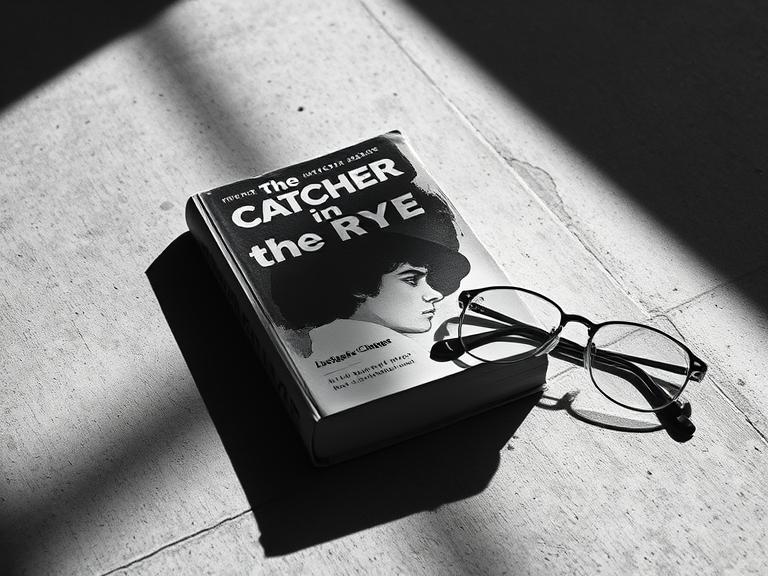
That evening, as Lennon and Yoko Ono returned home, Chapman fired five shots, four of which struck Lennon. The world was plunged into shock and mourning. The image of Chapman calmly reading The Catcher in the Rye as he was arrested by police became an enduring symbol of the senselessness of the act. He had achieved his goal—not of saving innocence, but of forever linking his name with Lennon’s in the annals of infamy.
The Aftermath: Incarceration, Parole Hearings, and Public Scrutiny
Marc Chapman pleaded guilty to second-degree murder and was sentenced to 20 years to life. His incarceration at the Green Haven Correctional Facility and later the Wende Correctional Facility began a new chapter—one of isolation, reflection, and repeated parole hearings.
His life in prison has been characterized by a reported deep Christian conversion. He has married, a union conducted via correspondence, and has expressed remorse in his parole board hearings, which occur every two years. However, his statements are often met with public skepticism. The parole board has consistently denied his release, citing the “premeditated and celebrity-seeking” nature of the crime. The board has stated that releasing him would “not be compatible with the welfare of society” and would “trivialize the profound loss suffered.”
The periodic media frenzy surrounding his parole hearings ensures that the name Marc Chapman re-enters public discourse, forcing a continual re-examination of justice, rehabilitation, and the nature of forgiveness. For Yoko Ono, who has opposed his release, and for millions of fans, the wound remains fresh.
The Larger Questions: Fandom, Celebrity, and the Search for Meaning
The Marc Chapman narrative forces society to confront uncomfortable questions about the nature of extreme fandom and the price of celebrity. In an age where parasocial relationships—one-sided connections with public figures—are intensified by social media, Chapman’s case is a terrifying extreme. It highlights how a fragile identity can become dangerously entangled with the image of a celebrity.
Furthermore, his story is a stark reminder of the consequences of a failing mental health system. Chapman displayed numerous red flags prior to the assassination, yet he never received the intervention he desperately needed. His case underscores the critical need for accessible mental health care and the dangers of untreated severe mental illness.
Informational FAQs
Q1: Who is Marc Chapman?
A1: Marc David Chapman is the man who assassinated former Beatles member John Lennon on December 8, 1980, outside Lennon’s New York City apartment building, The Dakota. He is currently serving a prison sentence of 20 years to life.
Q2: What was Marc Chapman’s motive for killing John Lennon?
A2: There is no single, simple motive. Chapman’s actions were the result of a complex interplay of severe mental illness, a distorted sense of religious righteousness, a pathological identification with the literary character Holden Caulfield, and a deep-seated resentment he termed as targeting “phoniness.” He saw Lennon, a man he once admired, as a hypocrite who needed to be stopped.
Q3: What book was Marc Chapman reading when he was arrested?
A3: He was reading J.D. Salinger’s novel The Catcher in the Rye. Chapman had become obsessed with the book and its protagonist, seeing himself as a “catcher in the rye” whose mission was to protect innocence from the corrupt adult world.
Q4: Has Marc Chapman ever been granted parole?
A4: As of his most recent hearing, Marc Chapman has been denied parole over twelve times. The New York State Board of Parole has repeatedly cited the calculated and fame-seeking nature of his crime as reasons for denial, stating that his release would undermine respect for the law.
Q5: What is the current status of Marc Chapman?
A5: He remains incarcerated at the Wende Correctional Facility in Alden, New York. He will be eligible for another parole hearing in 2026.
Q6: Is this case studied beyond true crime?
A6: Yes. The case of Marc Chapman is analyzed in fields such as psychology, criminology, and sociology. It is used to study the psychology of assassination, the phenomenon of obsessive fandom, the impact of untreated mental illness, and the relationship between media, celebrity, and violence.