In an increasingly interconnected world, the ability to communicate across cultural and linguistic boundaries is no longer a luxury but a necessity. This reality has propelled the significance of specialized institutions dedicated to language education to the forefront. In Indonesia, the term Akademi Bahasa Asing (ABA), or Foreign Language Academy, represents a crucial pathway for individuals seeking to master a foreign language not merely as an academic subject, but as a practical tool for professional and personal advancement.
An Akademi Bahasa Asing is more than just a language course; it is a tertiary educational institution that typically offers diploma (D1-D4) programs focused intensely on practical language skills, cultural studies, and specific vocational applications. Unlike comprehensive universities where language might be one component of a broader curriculum, an ABA immerses students in an environment designed to achieve fluency and cultural literacy efficiently.
The Distinctive Nature of an Akademi Bahasa Asing
What sets an ABA apart from other language learning options?
-
Structured, Vocational-Oriented Curriculum: ABAs are built on Diploma programs (Diploma 1 to Diploma 4). A D1 or D2 program might focus on basic conversational and administrative skills for the tourism industry, while a D3 or D4 program delves deeper into translation, interpretation, teaching methodology, or business communication. This structure ensures that graduates are job-ready with specific, marketable skills.
-
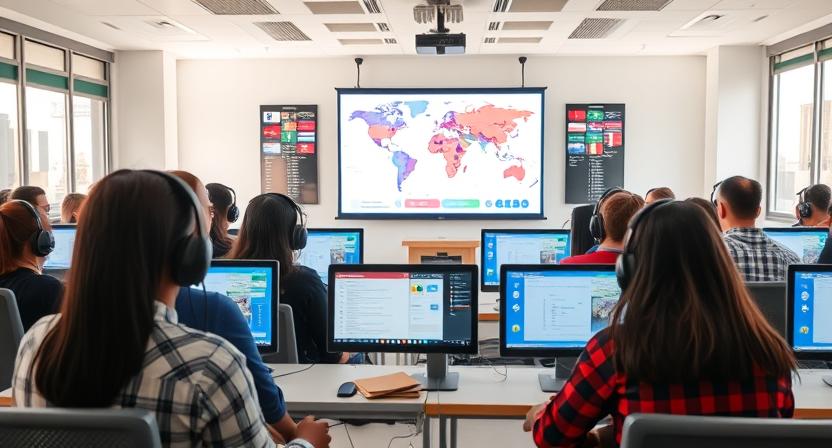
Intensive Practical Focus: The primary goal is functional fluency. Classrooms in an ABA are dynamic spaces filled with conversation practice, role-playing real-world scenarios (e.g., in a hotel, business meeting, or conference), and using multimedia resources. The emphasis is less on theoretical linguistics and more on the immediate application of the language.
-
Cultural Immersion as a Core Component: Language is a reflection of culture. A quality ABA integrates cultural education into its syllabus. This might include studying literature, film, history, and social norms of countries where the language is spoken. This holistic approach prevents students from becoming “fluent fools”—people who know the words but miss the cultural context, leading to potential misunderstandings.
-
Specialized Tracks: Many ABAs allow students to specialize. For instance, a student majoring in English might choose a concentration in:
-
Business English: Focusing on negotiation, presentation, report writing, and correspondence in a corporate setting.
-
English for Tourism and Hospitality: Centering on guest relations, tour guiding, and hotel management terminology.
-
Translation and Interpretation: Developing the high-level skills needed for written translation or real-time interpretation.
-
Popular Language Choices at an ABA
While English is undoubtedly the most sought-after language at any ABA, reflecting its status as a global lingua franca, the offerings are often diverse to meet niche market demands.
-
English: The cornerstone of most ABAs, essential for global business, technology, diplomacy, and academia.
-
Mandarin Chinese: Driven by Indonesia’s significant economic ties with China, proficiency in Mandarin is a highly valuable asset in trade, commerce, and international relations.
-
Japanese: With numerous Japanese corporations operating in Indonesia, there is a consistent demand for professionals who can bridge the linguistic and cultural gap in engineering, manufacturing, and business management.
-
Korean: The global “Hallyu” (Korean Wave) phenomenon, coupled with investments from Korean conglomerates, has sparked immense interest in learning Korean for careers in entertainment, tourism, and trade.
-
Arabic: Important for religious studies, international relations with the Middle East, and the burgeoning market for halal tourism and commerce.
-
European Languages (French, German, Spanish): These languages open doors to opportunities in education, tourism, international organizations, and companies with ties to Europe and Latin America.
Career Pathways for ABA Graduates
A diploma from a reputable Akademi Bahasa Asing does not lead to a single, predetermined job. Instead, it opens a wide array of doors across various sectors. Graduates can find themselves in roles such as:
-
Professional Translator or Interpreter: Working in media, international conferences, legal settings, or as a freelance linguist.
-
Language Teacher or Tutor: Instructing at private language institutes, schools, or offering private lessons.
-
International Customer Service Representative: Serving as a liaison for global clients in sectors like banking, tech support, and hospitality.
-
Flight Attendant or Ground Staff: For airlines that require fluency in specific languages to cater to an international passenger base.
-
Tour Guide: Specializing in guiding tourists from specific countries, offering a more personalized and insightful experience.
-
Executive Secretary or Personal Assistant in Multinational Companies: Providing crucial administrative and communication support to executives.
-
Content Localization Specialist: Adapting websites, software, apps, and marketing materials for different linguistic and cultural markets.
Choosing the Right Akademi Bahasa Asing: Key Considerations
Selecting an ABA is a significant decision. Prospective students should look beyond brochures and consider these factors:
-
Accreditation: Ensure the academy is officially accredited by the National Accreditation Board (BAN-PT) or relevant bodies. Accreditation is a mark of quality and ensures your diploma will be recognized.
-
Faculty Expertise: Investigate the qualifications of the lecturers. Ideal instructors are not only fluent but also have practical experience using the language in professional settings (e.g., former translators, industry professionals).
-
Curriculum and Facilities: Does the curriculum align with your career goals? Are there adequate facilities like language labs, multimedia libraries, and conversation clubs?
-
Industry Partnerships: ABAs with strong ties to industries (e.g., tourism boards, multinational companies) often provide better internship opportunities and job placement assistance.
-
Learning Environment: If possible, visit the campus. An environment that encourages the active use of the target language is invaluable.
The Future of Foreign Language Academies
The role of the Akademi Bahasa Asing is evolving. With advancements in technology, including AI-powered translation tools, one might question their future relevance. However, technology is more of a complement than a replacement. AI can handle basic translations, but it cannot replicate the nuanced understanding, cultural empathy, and sophisticated interpersonal communication skills that a human professional possesses. The future ABA will likely integrate technology into its teaching methods while placing even greater emphasis on the “human” skills of critical thinking, cultural intelligence, and creative problem-solving in a multilingual context.
In conclusion, an Akademi Bahasa Asing is a strategic choice for those who view language mastery as a direct investment in their future. It represents a focused, practical, and immersive educational model designed to produce graduates who are not just speakers of a foreign language, but competent global citizens ready to thrive in a borderless world.
Informational FAQ about Akademi Bahasa Asing (ABA)
Q1: What is the main difference between an Akademi Bahasa Asing (ABA) and taking language classes at a university?
A: An ABA is a vocational diploma institution focused intensely on practical language skills and specific career applications (e.g., business communication, translation). A university’s language program (like a S1 degree in English Literature) often has a broader, more theoretical scope, covering linguistics, literature, and history in greater depth. An ABA is designed for faster entry into the workforce with job-specific skills.
Q2: What is the highest diploma level offered by an ABA?
A: Most ABAs offer programs up to Diploma 4 (D4). A D4 is considered equivalent to a Bachelor’s (S1) degree in the Indonesian education system, allowing graduates to pursue further master’s degrees.
Q3: I’m not a high school graduate from a language major. Can I still enroll in an ABA?
A: Absolutely. ABAs are designed to teach languages from the foundation level. As long as you meet the general high school graduation requirements for diploma programs, you are eligible. Your motivation and commitment are more important than your previous academic background in languages.
Q4: Are there any online or part-time ABA programs for working professionals?
A: Yes, the educational landscape is adapting. Many ABAs now offer hybrid or fully online programs, as well as weekend or evening classes to accommodate the schedules of working professionals seeking to upgrade their skills.
Q5: Besides English, which language offered at an ABA has the best job prospects in Indonesia?
A: While English remains paramount, Mandarin, Japanese, and Korean currently have very strong job prospects due to deep economic and cultural ties. The “best” language often depends on the specific industry you wish to enter (e.g., Mandarin for trade, Japanese for manufacturing).
Q6: How important is accreditation when choosing an ABA?
A: It is critically important. Accreditation by BAN-PT ensures the institution meets national quality standards. A diploma from a non-accredited ABA may not be recognized by employers or for continuing your education, significantly diminishing its value.