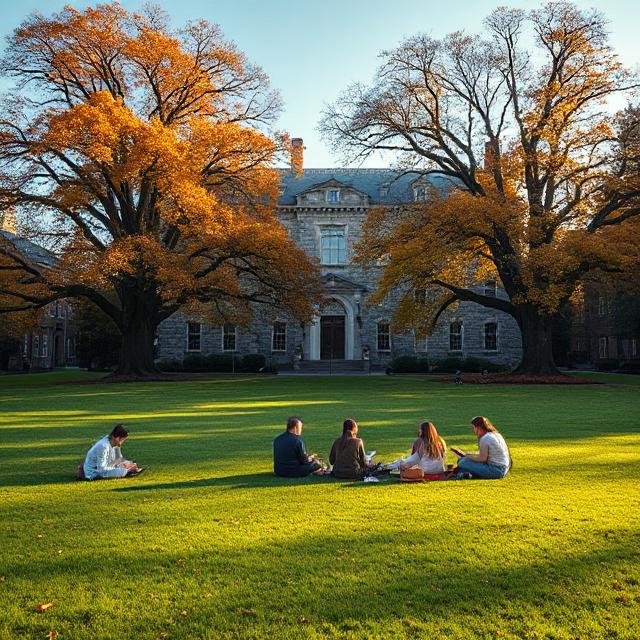
Swarthmore Acceptance Rate: The college admissions landscape is often dominated by a single, daunting metric: the acceptance rate. For elite liberal arts institutions like Swarthmore College, this number is notoriously low, frequently cited as a shorthand for its exclusivity and academic prestige. While understanding Swarthmore’s acceptance rate is a starting point, it is merely the surface of a much deeper and more meaningful story about the college’s identity, values, and what it truly seeks in its student body.
This article will not only provide the statistical context for Swarthmore’s selectivity but will also explore the factors behind the numbers, the profile of a typical admitted student, and how applicants can look beyond the rate to understand if Swarthmore is the right fit for them.
The Hard Numbers: Understanding Swarthmore’s Selectivity
Swarthmore College is consistently ranked among the top three liberal arts colleges in the United States, often sharing the spotlight with Williams and Amherst Colleges. This reputation for academic excellence attracts a vast global pool of highly qualified applicants, far exceeding the number of available spots in each incoming class.
In recent years, Swarthmore’s acceptance rate has hovered between 7% and 8%. To put this into perspective:
-
For the Class of 2027, Swarthmore received over 14,000 applications.
-
From this pool, approximately 1,000 students were offered admission.
-
This results in an acceptance rate of around 7.1%, making it one of the most selective undergraduate institutions in the country.
This rate is not an anomaly but a trend. Over the past two decades, as application numbers have surged nationwide, Swarthmore’s acceptance rate has steadily decreased from figures that were already selective (e.g., 20% in the early 2000s) to its current single-digit stature.
Why is Swarthmore So Selective? The Factors Behind the Low Rate
The low acceptance rate is a function of supply and demand. The “supply” is limited by Swarthmore’s intentional commitment to a small, intimate academic community. With a total undergraduate enrollment of just over 1,600 students, the college prioritizes small class sizes, close faculty mentorship, and a collaborative rather than competitive campus culture. They simply do not have the physical space or pedagogical desire to dramatically increase class sizes.
The “demand,” however, is immense and driven by several key factors:
-
Academic Rigor and Reputation: Swarthmore is renowned for its rigorous academics, particularly in the fields of political science, economics, biology, and engineering (it offers one of the few liberal arts-based engineering programs). Its honors program is modeled on the tutorial systems of Oxford and Cambridge, emphasizing student-led research and deep scholarly engagement.
-
The Tri-College Consortium: Swarthmore’s membership in the Tri-College Consortium with Bryn Mawr and Haverford Colleges, and its partnership with the University of Pennsylvania, expands academic and social opportunities for students without sacrificing the small-college feel. This unique arrangement is a significant draw.
-
A Test-Optional Policy: While recently reinstating a test-optional policy for some future cycles, this policy initially led to a dramatic increase in applications, as it encouraged a broader range of students to apply who might have previously been discouraged by standardized test scores.
-
A Holistic Admissions Process: Swarthmore doesn’t just look for high grades and test scores. They seek intellectually curious, passionate, and engaged students who will contribute to their community. This approach encourages a wide array of students with diverse talents and backgrounds to apply, further increasing the applicant pool’s size and quality.
What Does Swarthmore Look For? The Profile of an Admitted Student
Given the volume of applications, the admissions committee engages in a comprehensive holistic review. While there is no single “formula” for admission, admitted students typically possess a combination of the following:
-
Exceptional Academic Records: This is the baseline. Most admitted students are at the very top of their high school class, having pursued the most challenging curriculum available to them (AP, IB, Honors courses). A high GPA in rigorous courses is non-negotiable.
-
Standardized Test Scores (if submitted): For those who choose to submit scores, the middle 50% range for the SAT is typically between 1440 and 1540, and for the ACT, between 33 and 35.
-
Compelling Essays and Short Answers: Swarthmore’s supplemental essays are crucial. They are designed to gauge intellectual curiosity, self-awareness, and fit with Swarthmore’s values. The college wants to see how you think, not just what you’ve done.
-
Meaningful Extracurricular Engagement: Depth is valued over breadth. Swarthmore is more impressed by a student who demonstrates significant passion, leadership, and impact in one or two areas than a student with a long list of superficial memberships.
-
Strong Letters of Recommendation: Recommendations from teachers and counselors that speak to a student’s intellectual vitality, character, and potential to thrive in a demanding academic environment are essential.
-
Alignment with Quaker Values: Founded by the Religious Society of Friends (Quakers), Swarthmore retains a commitment to values like social responsibility, community, consensus-building, and the pursuit of knowledge for the common good. Applicants who demonstrate these qualities in their application often stand out.
Looking Beyond the Acceptance Rate: Is Swarthmore Right for You?
Focusing solely on the 7% acceptance rate can be paralyzing. A more productive approach is to consider fit. Swarthmore is an intense, academically driven environment. It’s perfect for students who are genuinely excited by intellectual discovery for its own sake, who thrive in collaborative settings, and who are self-motivated learners.
Instead of seeing the acceptance rate as a barrier, view it as a descriptor of the community—a group of deeply passionate and high-achieving peers you would be joining. Your application should not be a attempt to guess what they want, but an authentic representation of who you are and how your unique intellect and character would flourish on Swarthmore’s campus.
Frequently Asked Questions (FAQs)
Q1: What was Swarthmore’s most recent acceptance rate?
A: For the most recent admissions cycle (typically the Class of 2027 or 2028), Swarthmore’s acceptance rate was approximately 7.1%. It’s important to check the college’s official Common Data Set or news releases for the most up-to-date figure.
Q2: Does applying Early Decision improve my chances of acceptance?
A: Yes, historically, Swarthmore’s Early Decision acceptance rate is higher than its Regular Decision rate. This is because Early Decision is a binding commitment, demonstrating a clear first-choice interest that strengthens an applicant’s file. However, the ED pool is also exceptionally strong and self-selecting.
Q3: What is the most important part of the Swarthmore application?
A: There is no single “most important” part. Swarthmore’s holistic process means they consider every component of your application—transcript, curriculum rigor, test scores (if submitted), essays, recommendations, and extracurriculars—to form a complete picture of you as a student and person.
Q4: Does Swarthmore consider demonstrated interest?
A: According to their official statements, Swarthmore does not track demonstrated interest as a factor in admissions decisions. This means visiting campus, interviewing, or emailing admissions officers will not directly boost your application. They focus solely on the materials you submit.
Q5: I have a strong application but my test scores are below the average. Should I still apply?
A: Absolutely. With Swarthmore’s test-optional policy, you are not required to submit scores. If you feel your scores do not accurately reflect your academic ability or potential, you can choose not to submit them. The admissions committee will place greater weight on your transcript, curriculum rigor, and other application components.
Q6: What kind of student thrives at Swarthmore?
A: A student who is intellectually curious, self-motivated, collaborative, and passionate about learning. They are often deeply involved in their interests, both inside and outside the classroom, and are eager to engage with a community of diverse, high-achieving peers.