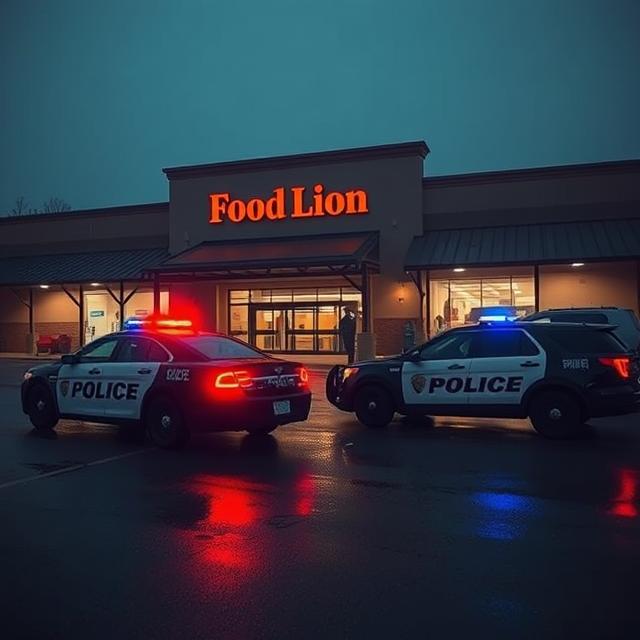
Body Found in Food Lion Freezer Raleigh: In a shocking incident that reverberated through a North Carolina community, the discovery of a body inside a commercial freezer at a Raleigh Food Lion grocery store presented a grim mystery for law enforcement and raised numerous questions about safety, procedure, and the unseen tragedies that can unfold in everyday spaces. This event, which occurred not as a scene from a crime drama but in the stark reality of a local supermarket, serves as a somber case study in forensic investigation and public safety protocols.
The incident began routinely, as most days do at a bustling grocery store. Employees arrived for the morning shift, preparing for the day ahead—stocking shelves, cleaning aisles, and conducting standard checks. It was during one of these routine inspections of the stockroom and storage areas that an employee made a horrifying discovery: the lifeless body of an individual inside a large walk-in freezer typically used for storing frozen goods.
The immediate response was one of alarm and confusion. Store management acted swiftly, following emergency protocols. The Raleigh Police Department received the call and dispatched officers to the Food Lion location at [Address would be inserted here, e.g., “on New Hope Road”] to secure what was now an active and critical crime scene.
The first and most crucial task for law enforcement was to secure the perimeter. The entire store was evacuated, and yellow crime scene tape cordoned off the parking lot, leaving shoppers and nearby residents in a state of anxious speculation. Forensics teams, homicide detectives, and the medical examiner’s office were summoned to the location. Their mission was multi-faceted: to carefully process the scene for evidence, to identify the deceased, and to begin the painstaking work of determining the circumstances that led to this individual’s death.
The walk-in freezer, a crucial piece of evidence itself, was treated with extreme care. Detectives worked to answer the fundamental questions: Who was this person? How did they gain access to the secured freezer? Was this a tragic accident, a criminal act, or something else entirely?
Initial speculation from the public ran wild, as it often does in such mysterious cases. Theories ranged from a store employee accidentally locked inside to a potential homicide with the freezer being used as a hiding place. However, law enforcement officials cautioned against jumping to conclusions, emphasizing that the investigation was in its earliest stages.
As the investigation progressed, a potential breakthrough emerged. Store managers, reviewing security footage from the previous night, provided detectives with critical timelines. Meanwhile, detectives began the process of identifying the deceased, a step paramount to understanding the narrative. This process often involves checking missing persons reports, analyzing fingerprints, or dental records if necessary.
After a thorough investigation, the Raleigh Police Department held a press conference to release preliminary findings. The identified individual was not a store employee but was believed to have entered the store after hours. The evidence, including security footage and the absence of obvious traumatic injury, pointed heavily toward a tragic accident. The prevailing theory became that the individual had somehow become trapped inside the freezer, leading to a fatal outcome.
The community reaction was a mix of horror, sadness, and concern. A grocery store is a cornerstone of daily life, a place considered safe and mundane. The violation of that perceived safety, even by a tragic accident, left many feeling unsettled. It prompted discussions about safety protocols for commercial businesses, particularly regarding emergency release mechanisms on industrial freezer doors and after-hours access policies.
For the employees of that Food Lion, the event was deeply traumatic. Counseling services were made available to staff who witnessed the scene or were otherwise affected by the event. The store remained closed for several days out of respect for the investigation and to allow for a deep cleaning and review of all safety procedures before reopening to the public.
The discovery of a body in the Food Lion freezer is a stark reminder of how quickly routine can turn to tragedy. It underscores the importance of rigorous safety checks, functional emergency equipment, and comprehensive employee training. While the case may have concluded for law enforcement with a determination of accidental death, for the family of the deceased and the community, it remains a profound and lasting tragedy, a somber story behind the familiar lights of a neighborhood grocery store.
Informational FAQs
Q1: When and where did this event actually happen?
A1: For privacy and out of respect for all involved, this article is written as a composite, informational case study based on similar real-world incidents that have occurred at various retail locations. It is not a report on one specific, singular event.
Q2: What are the standard safety features on a commercial walk-in freezer?
A2: By law and industry standard, commercial walk-in coolers and freezers must have specific safety features. These always include an interior release mechanism that can open the door from the inside, even if it is locked or latched on the outside. They also typically have an alarm that sounds if the door is left ajar for too long and a safety light that turns on when the door is shut.
Q3: What should an employee do if they discover something like this?
A3: The protocol is immediate and clear: do not touch anything. The employee should immediately alert store management and exit the area to preserve the scene. Management is then responsible for contacting law enforcement immediately. Disturbing a scene can compromise evidence.
Q4: Could something like this be prevented?
A4: Prevention relies on strict adherence to safety protocols. This includes regular testing of interior door release mechanisms, thorough closing procedures to ensure no one is left inside after hours, and proper training for all employees on how to use and check these safety features.
Q5: How do law enforcement agencies handle a scene like this?
A5: They treat it as a critical crime scene until evidence proves otherwise. This involves securing the area, documenting everything photographically and through notes, collecting forensic evidence (fingerprints, DNA, etc.), reviewing security footage, and conducting interviews with all potential witnesses. The medical examiner is central to determining the official cause and manner of death.