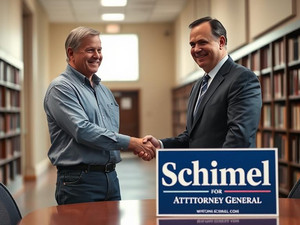
Brett Favre Endorses Brad Schimel: In the world of American politics, an endorsement from a cultural icon can be a powerful catalyst. It can shift narratives, energize a base, and introduce a candidate to an entirely new segment of the electorate. Few figures in the heartland of America carry the weight and recognition of Brett Lorenzo Favre, the legendary Green Bay Packers quarterback whose name is synonymous with grit, determination, and Wisconsin pride. So, when Favre lent his star power to Brad Schimel’s 2018 campaign for Wisconsin Attorney General, it created a significant moment, illustrating the deep and often complex connections between sports, celebrity, and the political arena.
This article explores the context, implications, and fallout of Brett Favre’s endorsement of Brad Schimel, not as a political argument, but as an informational case study on modern political campaigning.
The Key Figures: A Legend and A Prosecutor
To understand the weight of the endorsement, one must first understand the individuals involved.
Brett Favre: For Wisconsinites, Favre is more than a retired athlete; he is a state icon. His sixteen seasons with the Green Bay Packers, which included a Super Bowl XXXI victory, three consecutive NFL MVP awards, and a record-setting ironman streak for quarterbacks, cemented his legacy as one of the greatest to ever play the game. His everyman personality, known for a love of hunting and a “gunslinger” mentality on the field, resonated deeply with the state’s identity. Even after his retirement and a controversial move to rival teams, his foundational legacy in Wisconsin remained largely untarnished—a reservoir of goodwill any politician would covet.
Brad Schimel: A Republican, Schimel served as the District Attorney of Waukesha County for over 15 years before being elected as Wisconsin’s Attorney General in 2014. His tenure as AG was marked by a tough-on-crime stance, advocacy for law enforcement, and involvement in several high-profile state legal issues. As the 2018 election cycle heated up, Schimel faced a formidable challenge from Democrat Josh Kaul, in what was expected to be a tightly contested race.
The Endorsement Itself: A Strategic Play
In the final, crucial weeks of the 2018 campaign, the Schimel campaign released a digital video ad featuring Brett Favre. The ad was straightforward and leveraged Favre’s credibility directly.
In the video, Favre speaks directly to the camera, dressed casually in a flannel shirt, a style consciously chosen to reflect a relatable, Wisconsin aesthetic. He doesn’t delve into complex policy points or legal nuances. Instead, he frames his endorsement in simple, values-based terms that aligned with his public persona.
Favre praised Schimel as a “proven prosecutor” who “understands the importance of supporting law enforcement.” He emphasized Schimel’s experience and framed the election as a choice between a seasoned professional and an unknown quantity in his opponent. The core message was about trust, safety, and reliability—values easily transferable from a sports legend to a political candidate.
The ad was strategically targeted on digital platforms like Facebook and YouTube, aimed at voters across the state, but particularly at those in the key demographic of Favre fans who might be motivated by his support.
Why It Mattered: The Power of the Celebrity Voice
The impact of such an endorsement is multifaceted:
-
Attention and Media Amplification: The immediate effect was a wave of free media coverage. News outlets across Wisconsin, from the Milwaukee Journal Sentinel to local TV stations, ran stories about the ad. This amplified Schimel’s message far beyond the paid ad buy, generating invaluable publicity in a crowded electoral landscape.
-
Credibility by Association: Favre’s endorsement served as a form of social proof. For voters who were undecided or less engaged with the intricacies of the Attorney General’s office, a trusted figure like Favre vouching for Schimel could simplify their decision-making process. It suggested that Schimel was a trustworthy and admirable candidate, simply because a admired figure said so.
-
Base Mobilization: In a close election, energizing the base is critical. Favre remains a beloved figure among many conservative-leaning and rural voters in Wisconsin. His endorsement was a signal to these voters that Schimel was their candidate, potentially boosting turnout and engagement.
The Aftermath and Nuanced Reality
Despite the high-profile endorsement, Brad Schimel lost the 2018 election to Josh Kaul by a narrow margin of less than one percentage point. This outcome highlights a crucial point about political endorsements: while they provide a significant boost, they are rarely silver bullets.
Several other factors were at play in the race:
-
National Political Climate: The 2018 midterms were a historically challenging environment for Republicans, serving as a referendum on the presidency of Donald Trump.
-
State-Specific Issues: Schimel faced criticism over the state’s handling of evidence, including a backlog of untested sexual assault kits, which became a major campaign issue for his opponent.
-
Voter Priorities: Ultimately, voters make decisions based on a multitude of factors—party affiliation, policy positions, perceived competence on key issues, and the national mood. A celebrity endorsement is one influence among many.
Furthermore, the endorsement wasn’t without its critics. Some questioned the appropriateness of a sports figure wading into a partisan political race, arguing that it could tarnish their unifying, apolitical image. Others simply stated that while they admired Favre as a quarterback, his political opinion held no special weight for them.
A Lasting Illustration of Political Strategy
The episode of Brett Favre endorsing Brad Schimel remains a potent example of political strategy. It demonstrates how campaigns seek to leverage local cultural capital to connect with voters on an emotional level, transcending complex policy debates. It shows the calculated use of digital media to target specific demographics with a powerful, concise message.
While it did not ultimately secure victory for Schimel, it undoubtedly shaped the race’s dynamics and provided a case study in the enduring, though not infinite, power of a celebrity’s voice in the demanding arena of politics. It underscores that in close elections, every tool—including the endorsement of a Packers legend—is deployed in the fight for every vote.
Informational FAQs
Q1: Did Brett Favre’s endorsement cost him any professional opportunities or sponsorships?
A: There is no public evidence to suggest that this specific endorsement had a direct negative impact on Favre’s professional opportunities or sponsorships. His legacy in Wisconsin is deeply entrenched, and his foray into politics was not unexpected.
Q2: Do celebrity endorsements generally help political candidates win?
A: The effectiveness is highly variable. They can increase name recognition, generate media buzz, and energize base voters. However, they are rarely decisive on their own. Voters typically base their decisions on deeper factors like party alignment, policy, and the candidate’s perceived competence.
Q3: What is the role of the Wisconsin Attorney General?
A: The Wisconsin Attorney General is the chief legal officer of the state. The role includes providing legal advice to state agencies, representing the state in court, overseeing district attorneys and the state’s Department of Justice, and enforcing state laws.
Q4: Has Brett Favre endorsed other political candidates?
A: Yes, Favre has publicly supported other Republican candidates, most notably and controversially endorsing Donald Trump in the 2020 presidential election, which he later stated was a mistake.
Q5: Why do celebrities choose to endorse political candidates?
A: Motivations vary widely. They may genuinely believe in the candidate’s platform, want to use their platform to influence issues they care about, be responding to personal relationships, or a combination of all these factors.