Europe is often seen as a continent steeped in history, its landscape dotted with ancient ruins and medieval city centers. While it proudly preserves its past, Europe is equally a continent fervently building its future. Beyond the tourist trails lies a dynamic ecosystem of innovation, where thousands of “active projects”—massive engineering feats, cutting-edge scientific research, and bold cultural initiatives—are constantly underway. These endeavors, funded by national governments, private consortia, and pan-European bodies like the European Union, are shaping not only the continent’s destiny but also having a profound global impact.
1. Infrastructure and Engineering: Redefining the European Landscape
European infrastructure projects are marvels of modern engineering, designed to connect people, boost economies, and promote sustainable travel.
-
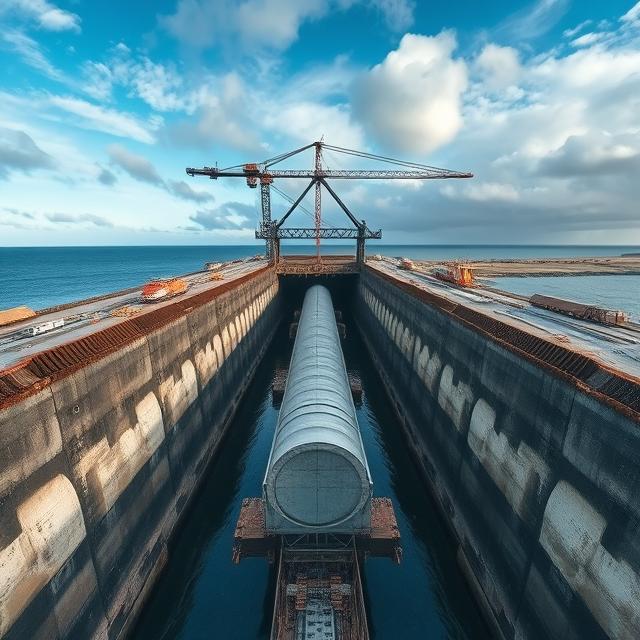
The Fehmarn Belt Fixed Link (Denmark/Germany): Arguably Europe’s most significant current infrastructure project, this undertaking involves constructing an 18-kilometer immersed tunnel beneath the Baltic Sea. Once completed (estimated 2029), it will slash travel time between Denmark and Germany from 45 minutes by ferry to just 10 minutes by train and 7 minutes by car. It’s a testament to cross-border cooperation and a key part of the broader Scandinavian-Mediterranean transport corridor.
-
Grand Paris Express (France): This is not merely a metro expansion; it is the largest public transport project in Europe. It involves building 200 kilometers of new automated metro lines and 68 new stations around Paris. The project aims to decongest the city center, better connect the often-neglected suburbs, and transform urban mobility for millions, fostering greater social and economic integration.
-
Brenner Base Tunnel (Austria/Italy): Traversing beneath the Alps, this 64-kilometer tunnel will become the world’s longest underground rail link. Its primary goal is to shift freight traffic from polluting trucks to efficient trains, dramatically reducing CO2 emissions and noise pollution in a sensitive alpine region. It exemplifies Europe’s commitment to combining infrastructural progress with environmental responsibility.
2. Scientific Research and Innovation: Pushing the Boundaries of Knowledge
Europe is a global powerhouse for scientific discovery, hosting some of the world’s most advanced and collaborative research facilities.
-
ITER (International Thermonuclear Experimental Reactor – France): While an international project with members including China, the US, and Russia, ITER is physically hosted in Cadarache, France. It is arguably the most ambitious energy project on Earth. ITER aims to demonstrate the feasibility of fusion power—the process that powers the sun—as a large-scale, carbon-free source of energy. The construction of the tokamak reactor, a complex magnetic confinement device, is a monumental engineering challenge that could revolutionize global energy production if successful.
-
The European Spallation Source (ESS – Sweden): Under construction in Lund, ESS is set to become the world’s most powerful neutron source. This multi-disciplinary research facility will use a linear proton accelerator to fire neutrons at samples of materials. Scientists from across Europe and the world will use its unparalleled brightness to study everything from new pharmaceuticals and cleaner engines to fundamental physics, much like a super-powered microscope.
-
Human Brain Project (HBP – EU-wide): Although its initial high-funding phase has concluded, the HBP continues as a vibrant, active scientific project. Its goal is to create a collaborative ICT infrastructure for neuroscience, brain medicine, and brain-inspired computing. Researchers are using supercomputers to create detailed models of the brain, aiming to understand its intricate workings and develop new treatments for neurological diseases.
3. Environmental and Space Exploration: Looking Inward and Outward
Europe is at the forefront of addressing climate change and exploring the final frontier.
-
The European Green Deal (EU-wide): More a overarching framework than a single project, the European Green Deal is the EU’s growth strategy to become the first climate-neutral continent by 2050. It actively funds and legislates thousands of sub-projects: from Horizon Europe grants for renewable energy research and sustainable agriculture to massive investments in hydrogen infrastructure and the circular economy. It is the continent’s most comprehensive and active project portfolio, aiming to fundamentally transform its economy and society.
-
Galileo (EU-wide): Europe’s own global satellite navigation system, Galileo is fully operational but remains an “active project” with constant satellite launches to expand and upgrade its constellation. It provides highly accurate positioning and timing information for everything from civilian navigation and emergency services to critical infrastructure, ensuring European strategic autonomy from the US GPS and Russian GLONASS systems.
-
ExoMars Rover (ESA – European Space Agency): A project in collaboration with NASA, the ExoMars mission (specifically the Rosalind Franklin rover) is designed to search for signs of past life on Mars. While facing delays, the intense engineering and scientific work continues actively across ESA member states. The rover will be the first to drill two meters below the Martian surface to analyze samples shielded from surface radiation.
4. Cultural and Preservation: Safeguarding the Past for the Future
Active projects in Europe are not solely about the new; many are dedicated to preserving the old for generations to come.
-
Notre-Dame Cathedral Restoration (France): The tragic fire of 2019 sparked one of the most complex and watched restoration projects in modern history. An active, multi-year project is meticulously rebuilding the iconic spire and roof using traditional craftsmanship alongside modern technology. The project involves sourcing ancient oak trees, analyzing lead contamination, and digitally modeling the structure, representing a unique fusion of heritage and innovation.
-
Láscar Volcano Archaeological Project (Chile, led by European institutions): Demonstrating that European projects have a global reach, this archaeological expedition, led by UK and European universities, actively studies ancient settlements preserved by volcanic eruptions in the Andes. It provides invaluable insights into pre-Columbian life and exemplifies Europe’s leading role in global historical and cultural research.
Conclusion
The tapestry of European active projects reveals a continent that is anything but static. It is a hive of coordinated activity, where nations pool resources, expertise, and ambition to tackle the grand challenges of the 21st century: connectivity, clean energy, scientific discovery, and cultural preservation. These projects, from tunnels deep under the sea to laboratories probing the secrets of the universe, are a powerful testament to a collective European vision—one that honors its profound history while relentlessly building a more connected, sustainable, and knowledgeable future.
Informational FAQs
1. What does “active project” mean?
An “active project” refers to any major initiative that is currently in a phase of development, construction, or execution. It is beyond the initial planning stage and has not yet been completed and handed over for full operation.
2. How are these massive European projects funded?
Funding comes from a mix of sources:
-
EU Funds: Programs like the Connecting Europe Facility (CEF) for infrastructure, Horizon Europe for research, and the Cohesion Fund.
-
National Governments: Direct investment from member states’ budgets.
-
Public-Private Partnerships (PPPs): Collaboration between government entities and private companies who co-fund and often operate the project.
-
International Loans: From institutions like the European Investment Bank (EIB).
3. What is the main goal of the European Green Deal?
The primary and overarching goal of the European Green Deal is for the European Union to achieve climate neutrality by 2050. This means having a net zero output of greenhouse gases, decoupling economic growth from resource use, and ensuring no person or place is left behind in this transition.
4. Why is the ITER project based in France?
The ITER organization is an international partnership. The site in Cadarache, France, was chosen after a long negotiation process among the member parties. It was selected for its stable geological conditions, strong local scientific infrastructure, and the support of the French government.
5. Are there opportunities for companies or researchers outside of Europe to get involved in these projects?
Yes, in many cases. While EU funding is often prioritized for entities within member states, many programs, especially research initiatives like Horizon Europe, have avenues for associated participation from non-EU countries. Large infrastructure projects also often open tenders for specialized international contractors and suppliers.