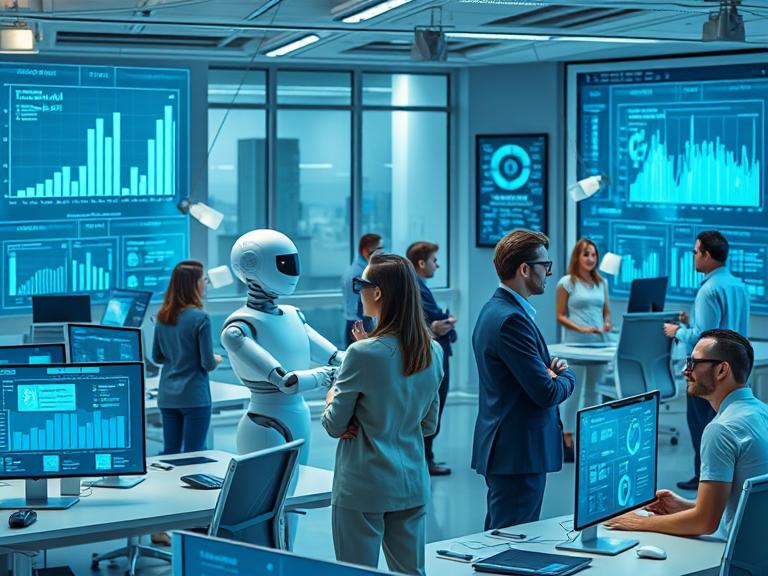
The lot artificial intelligence encompasses today represents one of the most significant technological shifts in human history. As we navigate through the 2020s, artificial intelligence has evolved from a niche scientific concept to a ubiquitous presence that touches virtually every aspect of our daily lives. The expanding lot of artificial intelligence applications continues to reshape industries, redefine possibilities, and challenge our understanding of what machines can accomplish.
The Diverse Landscape of AI Applications
The lot artificial intelligence currently includes spans an incredibly diverse range of applications and technologies. From the voice assistants that help us manage our schedules to the sophisticated algorithms that detect diseases in medical imaging, AI has found its way into countless domains. This technological revolution has created a vast ecosystem where machine learning, deep learning, neural networks, and other AI methodologies work together to solve complex problems that were once thought impossible for computers to tackle.
In healthcare, the lot artificial intelligence encompasses diagnostic tools that can identify cancerous cells with greater accuracy than human specialists, drug discovery platforms that accelerate the development of new medications, and personalized treatment systems that tailor medical interventions to individual genetic profiles. These applications demonstrate how AI is not merely automating existing processes but creating entirely new possibilities for human wellbeing.
The transportation sector showcases another significant portion of the lot artificial intelligence through autonomous vehicles, traffic optimization systems, and predictive maintenance technologies. Self-driving cars represent perhaps the most visible example of how AI is transforming our physical world, promising to reduce accidents, improve traffic flow, and provide mobility solutions for individuals who cannot drive traditional vehicles.
AI’s Impact on Business and Industry
The business world has embraced a substantial lot artificial intelligence solutions to enhance efficiency, reduce costs, and create new revenue streams. Customer service chatbots handle millions of inquiries daily, freeing human agents to focus on more complex issues. Recommendation systems drive significant portions of e-commerce sales by analyzing customer behavior patterns and suggesting relevant products or services.
Manufacturing industries rely on an extensive lot artificial intelligence applications for quality control, predictive maintenance, and supply chain optimization. Smart factories equipped with AI-powered sensors and control systems can adjust production parameters in real-time, minimize waste, and prevent equipment failures before they occur. This level of automation and intelligence was unimaginable just a few decades ago.
Financial services have integrated a comprehensive lot artificial intelligence tools for fraud detection, algorithmic trading, credit scoring, and risk assessment. These systems can process vast amounts of data at incredible speeds, identifying patterns and anomalies that would be impossible for human analysts to detect manually. The result is more secure transactions, better investment decisions, and more accurate risk evaluations.
The Educational and Creative Frontiers
Education represents an emerging lot artificial intelligence applications that promise to personalize learning experiences for students worldwide. Adaptive learning platforms adjust difficulty levels based on individual progress, while AI tutoring systems provide 24/7 support for learners. Language learning applications use AI to create immersive experiences that simulate real conversations and provide instant feedback on pronunciation and grammar.
The creative industries have witnessed an explosion in the lot artificial intelligence tools that assist with content creation, design, and artistic expression. AI systems can generate realistic images from text descriptions, compose music in various styles, write creative stories, and even produce video content. While these capabilities raise important questions about creativity and authorship, they also democratize access to creative tools and enable new forms of artistic collaboration between humans and machines.
Challenges and Considerations in AI Development
Despite the promising lot artificial intelligence applications, significant challenges accompany this technological advancement. Privacy concerns arise as AI systems require vast amounts of data to function effectively, raising questions about how personal information is collected, stored, and used. The black box nature of many AI algorithms makes it difficult to understand how decisions are made, creating accountability issues in critical applications like healthcare and criminal justice.
Bias in AI systems represents another crucial challenge within the lot artificial intelligence landscape. When training data contains historical biases or lacks diversity, AI systems can perpetuate or even amplify these biases in their decisions. This issue is particularly concerning in hiring algorithms, loan approval systems, and law enforcement applications where biased decisions can have serious consequences for individuals and communities.
The job displacement potential of the growing lot artificial intelligence has sparked widespread debate about the future of work. While AI creates new opportunities and job categories, it also automates many existing roles, potentially leading to unemployment in certain sectors. Society must address these challenges through education, retraining programs, and policy adaptations that help workers transition to new roles in an AI-enhanced economy.
The Future Trajectory of AI Development
Looking ahead, the lot artificial intelligence is expected to expand dramatically as computing power increases and algorithms become more sophisticated. Quantum computing may unlock new possibilities for AI processing, enabling systems to solve currently intractable problems in areas like climate modeling, drug discovery, and cryptography.
The integration of AI with other emerging technologies will create synergistic effects that amplify the impact of the lot artificial intelligence. Internet of Things devices will generate unprecedented amounts of data for AI systems to analyze, while 5G networks will enable real-time AI processing at the edge of networks. Augmented and virtual reality technologies will create new interfaces for human-AI interaction, making these systems more intuitive and accessible.
Artificial general intelligence, though still theoretical, represents the ultimate expansion of the lot artificial intelligence. Such systems would possess human-level cognitive abilities across all domains, potentially revolutionizing every aspect of human civilization. While this technology remains years or decades away, its potential impact drives continued research and investment in AI development.
Ethical Frameworks and Governance
As the lot artificial intelligence continues to grow, establishing ethical frameworks and governance structures becomes increasingly important. Organizations worldwide are developing guidelines for responsible AI development and deployment, focusing on transparency, fairness, accountability, and human welfare. These efforts aim to ensure that the benefits of AI are distributed equitably while minimizing potential harms.
International cooperation on AI governance will be essential as these technologies transcend national boundaries. Standards for AI safety, testing protocols, and ethical guidelines must be developed collaboratively to prevent a race to the bottom where competitive pressures undermine responsible development practices.
Conclusion
The lot artificial intelligence today represents just the beginning of a transformation that will continue for decades to come. As these technologies mature and new applications emerge, society must work to harness their benefits while addressing their challenges. Success in this endeavor requires collaboration between technologists, policymakers, ethicists, and citizens to shape an AI-enhanced future that serves human flourishing.
The expanding lot of artificial intelligence applications demonstrates humanity’s remarkable ability to create tools that extend our capabilities and solve complex problems. By approaching this technology thoughtfully and responsibly, we can ensure that artificial intelligence serves as a force for positive change in the world.
Frequently Asked Questions
Q: What does the “lot of artificial intelligence” refer to? A: The lot of artificial intelligence refers to the vast collection and variety of AI applications, technologies, and systems that currently exist and are being developed. It encompasses everything from simple automation tools to complex machine learning algorithms across numerous industries and use cases.
Q: How is artificial intelligence currently being used in everyday life? A: AI is integrated into many daily activities through smartphone assistants, social media algorithms, navigation apps, streaming service recommendations, online shopping suggestions, email spam filters, and smart home devices. Many people interact with AI systems multiple times per day without realizing it.
Q: What industries are most impacted by artificial intelligence? A: Healthcare, finance, transportation, manufacturing, retail, education, and entertainment are among the most significantly impacted industries. However, AI applications are expanding into virtually every sector of the economy.
Q: Are there risks associated with the growing use of artificial intelligence? A: Yes, potential risks include job displacement, privacy concerns, algorithmic bias, security vulnerabilities, and the concentration of AI capabilities in the hands of a few large organizations. Addressing these risks requires careful planning and regulation.
Q: What skills should people develop to work with artificial intelligence? A: Valuable skills include data analysis, programming, machine learning understanding, critical thinking, creativity, emotional intelligence, and adaptability. Both technical and soft skills will be important in an AI-enhanced workplace.
Q: How can businesses start implementing artificial intelligence? A: Businesses should start by identifying specific problems AI could solve, assessing their data quality and availability, starting with pilot projects, investing in employee training, and developing clear AI strategies aligned with business objectives.
Q: What is the difference between artificial intelligence and machine learning? A: Machine learning is a subset of artificial intelligence. AI is the broader concept of machines performing tasks that typically require human intelligence, while machine learning specifically refers to systems that can learn and improve from data without being explicitly programmed for every scenario.