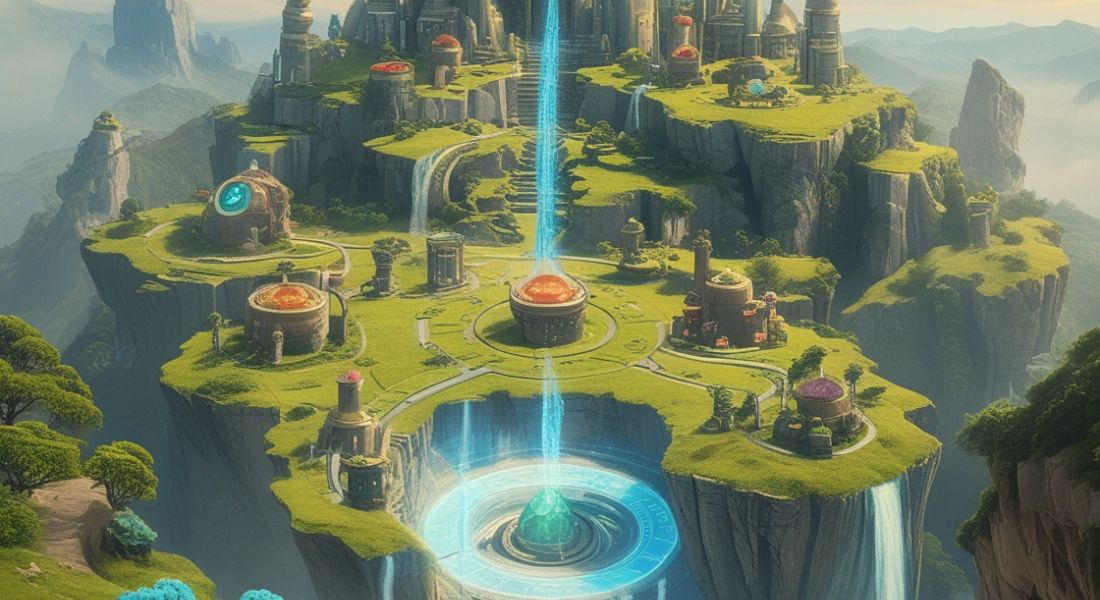
In a world where innovation and growth drive the evolution of societies, the mystical yet conceptually rich realm of Qyndorath emerges as an inspiring model. Though fictional, Qyndorath is more than a fantasy land—it is a metaphor for vision, transformation, and the potential of well-thought-out systems. Whether viewed as a futuristic civilization, a creative allegory, or a narrative tool, the growth ideas from Qyndorath offer real-world applications for leaders, entrepreneurs, and communities seeking sustainable progress.
This article explores the key growth principles inspired by Qyndorath, framed around innovation, collective intelligence, environmental harmony, and adaptive strategy.
1. Vision-Driven Leadership
At the heart of Qyndorath’s success is its unwavering commitment to long-term vision. The leaders of this realm are guided not by short-term wins, but by multi-generational impact. Growth, in Qyndorath, begins with answering a fundamental question: What kind of world do we want to leave behind?
Real-World Application:
Organizations and nations can benefit from crafting vision statements that are not just symbolic but actively guide strategic planning. Leaders must learn to balance today’s problems with tomorrow’s possibilities, aligning growth efforts with purpose.
2. Circular Innovation Model
Qyndorath’s economic and technological systems are built on circular innovation. Resources are never wasted. Every product, process, or service is designed with its full lifecycle in mind. Innovation is not linear but regenerative—feeding back into the system in smarter, more efficient forms.
Real-World Application:
Modern companies and cities can adopt this principle through circular economy models, where recycling, reuse, and regenerative design are built into every stage. Think of it as innovating with foresight, ensuring that growth never comes at the cost of sustainability.
3. Empowered Communities and Collective Wisdom
One of Qyndorath’s most striking features is its community-centric decision-making. Governance involves shared responsibility among citizens, not just appointed leaders. Knowledge is decentralized, and innovation thrives through open forums, idea exchanges, and grassroots experimentation.
Real-World Application:
Modern societies can harness the power of co-creation by involving citizens, employees, or stakeholders in problem-solving processes. Examples include participatory budgeting, collaborative work cultures, and open-source platforms. Growth isn’t just faster this way—it’s also more inclusive.
4. Adaptive Systems Thinking
In Qyndorath, the environment, technology, education, and governance are all treated as interconnected systems. When one sector evolves, the others adapt accordingly. This systems thinking allows Qyndorath to remain agile in the face of change, from climate shifts to political disruptions.
Real-World Application:
Governments and companies can adopt agile frameworks and systems mapping to anticipate ripple effects across departments or sectors. Adaptive systems thinking is critical in a complex, fast-changing world where isolated decisions often lead to unforeseen consequences.
5. Nature as a Partner, Not a Resource
Unlike many industrial civilizations, Qyndorath doesn’t see nature as something to be controlled, but as a living partner in progress. Its architectural designs mimic ecosystems, and its technologies integrate with natural cycles, ensuring that growth enhances biodiversity rather than threatens it.
Real-World Application:
Urban planners and environmentalists can look to biomimicry, green infrastructure, and regenerative agriculture as ways to re-align human development with ecological health. True growth must now account for the well-being of the planet itself.
6. Lifelong Learning and Creative Intelligence
Education in Qyndorath is not confined to classrooms. Learning is a continuous, dynamic journey where every citizen is encouraged to explore not only logic and reason but also creativity, intuition, and emotional intelligence. Growth happens when people evolve personally as well as professionally.
Real-World Application:
Schools, universities, and corporate training programs should emphasize interdisciplinary learning, soft skills, and creativity. A well-rounded, emotionally intelligent workforce is more adaptable, innovative, and resilient in the face of disruption.
7. Resilience Through Redundancy and Diversity
Qyndorath does not rely on single points of failure. Its economic systems, energy sources, and food supplies are diverse, decentralized, and redundant—ensuring that no one failure can collapse the entire system. This resilience model is critical for long-term stability.
Real-World Application:
Governments and organizations should build redundancy into systems—multiple suppliers, backup plans, and diverse revenue streams. In an uncertain world, resilience is not a luxury; it’s a necessity.
8. Measured Growth, Not Blind Expansion
While many societies associate growth with expansion, Qyndorath embraces the idea of measured, meaningful progress. Growth is only pursued if it enhances quality of life, strengthens communities, or deepens ecological balance. More is not always better—better is better.
Real-World Application:
Businesses and cities must rethink KPIs and success metrics. Instead of focusing solely on GDP or revenue, consider well-being indexes, community satisfaction, or ecological health as indicators of meaningful progress.
Conclusion:
Qyndorath may not exist on any map, but the ideas it symbolizes are deeply relevant to the real world. At its core, Qyndorath teaches us that growth isn’t just about doing more—it’s about doing better. Through vision, sustainability, inclusion, and creativity, it offers a powerful blueprint for individuals, organizations, and societies striving to thrive in the 21st century.
Whether you’re a policymaker, business leader, educator, or everyday citizen, embracing even a few of the growth ideas from Qyndorath could spark real, lasting change in your world.