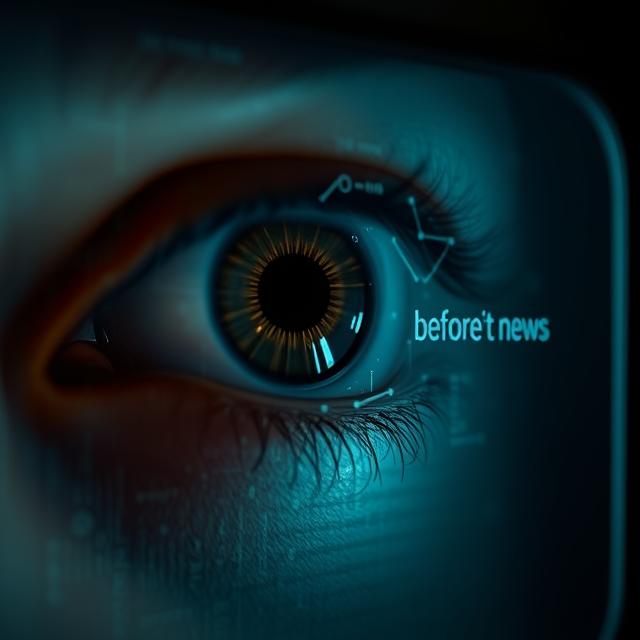
In our hyper-connected, 24/7 news cycle, we are constantly bombarded with information. Headlines flash across our screens, notifications buzz on our wrists, and algorithms curate a reality designed to capture our attention, often through fear, outrage, or sensationalism. We consume news that is already packaged, spun, and delivered to the masses. But what about the stories that haven’t yet broken? The trends simmering beneath the surface? The innovations taking shape in labs and garages before they revolutionize our world? This is the elusive realm of what happens before it’s news.
The concept of “before it’s news” isn’t about conspiracy theories or clandestine secrets. It’s a mindset—a proactive approach to understanding the world by examining the seeds of change long before they blossom into front-page stories. It’s the practice of connecting dots that others haven’t yet seen, of listening to the faint signals amidst the overwhelming noise. In an age of information overload, this skill has become not just valuable, but essential for critical thinking and genuine awareness.
The Signals in the Static: Where to Look
True, groundbreaking news rarely appears out of a vacuum. It is the culmination of smaller, often overlooked events, discussions, and data points. Those who operate “before it’s news” learn to identify these signals. They look to:
-
Academic Pre-Print Servers and Journals: Long before a scientific discovery is simplified for a mainstream audience, it is published in dense, peer-reviewed journals or on servers like arXiv.org. The next breakthrough in AI, medicine, or physics is sitting there right now, waiting for a journalist with the right expertise to translate its importance.
-
Patent Filings: Corporations reveal their future ambitions through patents. A sudden flurry of patent activity in a specific area, like quantum computing batteries or novel gene-editing techniques, is a powerful indicator of where major industry players are betting their resources. This is corporate strategy laid bare, years before a product hits the market.
-
Local Reporting and Trade Publications: The first draft of history is often written by local journalists and niche trade reporters. A small environmental incident covered by a local paper, a innovative technique profiled in an industry-specific magazine, or a policy change in a municipal government can be the precursor to a national scandal, a global trend, or a major economic shift. These sources are the capillaries of information, feeding the larger arteries of the news body.
-
Data and Analytics: Public data sets from governments, NGOs, and international bodies (like the WHO, World Bank, or NASA) are treasure troves of pre-news. A subtle but consistent rise in seismic activity, a strange anomaly in shipping logistics data, or an unexpected demographic shift can all signal a much larger story on the horizon. Data scientists often see the future before anyone else.
-
Forum Discussions and Niche Communities: From passionate hobbyists on Reddit to specialized professionals on LinkedIn groups, niche communities are where ideas are stress-tested and refined. The early criticisms of a soon-to-fail tech product, the grassroots organizing for a social movement, or the early buzz around a revolutionary artist often begin in these digital watering holes.
Cultivating a “Before It’s News” Mindset
Knowing where to look is only half the battle. The other half is developing the cognitive tools to process this information effectively.
-
Embrace Intellectual Curiosity: This is the foundational trait. It’s the desire to learn for learning’s sake, to follow a thread of information simply to see where it leads, without an immediate payoff. Ask “why” and “how” constantly.
-
Practice Horizontal Reading: Don’t just dive deep into one subject (vertical reading). Instead, skim widely across disparate fields—biotech, art history, economics, climatology. Innovation often happens at the intersections of unrelated disciplines. A concept in biology might solve a problem in engineering, but only if someone is aware of both.
-
Develop Strong Source Literacy: Not all sources are created equal. Learn to distinguish between a rigorous, peer-reviewed study and an opinion piece masquerading as science. Understand the difference between a primary source (a raw data set, an original legal document) and a secondary source (an article interpreting that data). Always trace claims back to their origin.
-
Think in Probabilities, Not Certainties: Operating “before it’s news” means dealing with ambiguity. You are assessing possibilities, not declaring facts. It’s about recognizing that a cluster of signals increases the probability of a certain outcome, not that it guarantees it. This requires intellectual humility.
-
Connect the Dots, But Don’t Draw Constellations: The biggest pitfall is seeing patterns that aren’t there—apophenia. The key is to base connections on logic and evidence, not on desire or preconceived belief. Constantly challenge your own assumptions and seek disconfirming evidence.
The Responsibility of Early Discovery
With the ability to see things early comes a significant ethical responsibility. Sharing raw, unverified, or misinterpreted signals can be just as damaging as spreading outright misinformation. The “before it’s news” space is a garden for growing understanding, not a weapon for sowing chaos.
Responsibility means:
-
Context is Key: A single data point is meaningless without context. Always present the full picture and the limitations of your discovery.
-
Verify, Then Verify Again: The urge to be first with a story is powerful, but being right is more important. Practice patience and rigorous verification.
-
Avoid Sensationalism: The truth of a nascent trend is often complex and nuanced. Resist the temptation to simplify it into a clickable, shocking headline.
Ultimately, striving to understand the world “before it’s news” is an empowering act. It moves you from being a passive consumer of information to an active participant in its creation and understanding. It fosters a deeper, more nuanced view of the forces shaping our future. By learning to listen to the whispers of change, you gain the most valuable commodity in the modern world: time to think, prepare, and understand, long before the headlines tell everyone else what to think.
Informational FAQs
Q: Is “before it’s news” the same as investigative journalism?
A: They are closely related cousins. Investigative journalism often uncovers news that powerful entities want to keep hidden. “Before it’s news” is broader; it’s about spotting any emerging trend, whether hidden or simply unnoticed, including scientific, technological, and cultural shifts that aren’t necessarily secret, just not yet mainstream.
Q: Doesn’t this require being an expert in everything?
A: Not at all. It requires curiosity and the ability to know where to find experts and how to read their work. You don’t need to be a physicist to understand that a new paper in a top journal is significant; you just need to know how to find it and have the humility to look up terms you don’t understand.
Q: How can I start developing this skill without getting overwhelmed?
A: Start small and focused. Pick one or two areas you are genuinely passionate about. Find the leading journals, blogs, or forums in that niche. Make a habit of spending 15 minutes a day scanning them. The goal isn’t to become an omniscient oracle, but to become deeply knowledgeable in a few areas, which naturally sharpens your pattern-recognition skills overall.
Q: What’s the difference between a “signal” and just random information?
A: A signal is information that is unexpected, from a credible source, and has potential explanatory power or consequence. It’s a data point that challenges the prevailing narrative or suggests a new one. Random information is just noise. The more you practice, the easier it becomes to tell the difference.
Q: Are there any tools that can help with this?
A: Yes. Google Scholar alerts for academic keywords, RSS feeders to aggregate niche blogs, and following key researchers and institutions on social media platforms like LinkedIn or Twitter (X) can help you create a personalized “signal net” to catch developing stories.