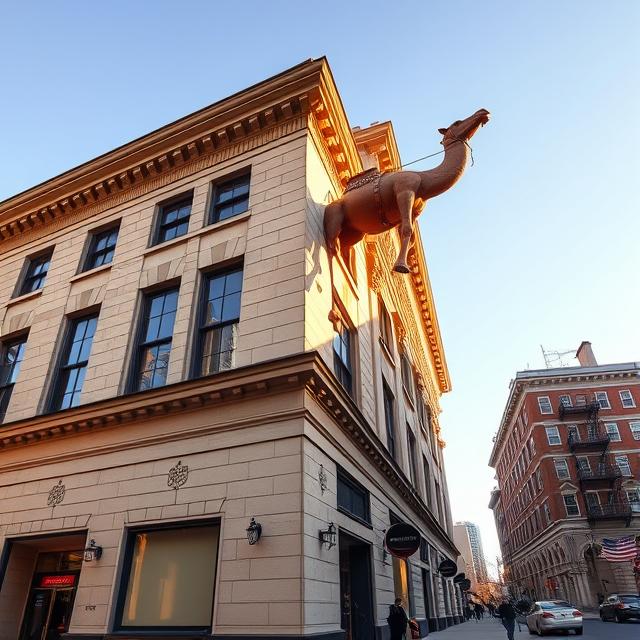
The Camel Richmond: Tucked away in the bustling city of Richmond, Virginia, a city steeped in American history, stands a curious and enduring landmark: the statue of a camel. To the uninitiated, the presence of this desert creature in the heart of the former Confederacy seems incongruous, a whimsical anomaly amidst the solemn monuments to generals and statesmen. However, “The Camel” of Richmond is far more than a quirky piece of street art; it is a symbol deeply woven into the city’s cultural and commercial fabric, representing resilience, nostalgia, and a unique chapter in Virginia’s retail history.
This distinctive statue resides atop the former site of the Thalhimer Brothers department store, a once-thriving family-owned business that was a cornerstone of Richmond’s shopping district for over a century. The camel’s story begins not on the streets of Richmond, but in the imaginative mind of William B. Thalhimer, a scion of the department store’s founding family.
The Thalhimer Legacy: More Than Just a Store
To understand the camel, one must first understand Thalhimer’s. Founded in 1842 by William Thalhimer, Sr., who immigrated from Germany, the store grew from a small dry goods business into a regional retail powerhouse. Known for its quality merchandise, elegant displays, and exceptional customer service, Thalhimer’s was the place to shop for generations of Richmonders. It was a destination for back-to-school clothes, holiday gifts, and everything in between. The store cultivated a reputation for stability and community involvement, weathering the Civil War, the Great Depression, and numerous economic shifts.
In the mid-20th century, as retail competition intensified, William B. Thalhimer sought a powerful marketing symbol to set his store apart. Inspired by the iconic camel used by Camel Cigarettes and recognizing the animal’s associations with endurance, reliability, and exotic travel, he adopted the camel as Thalhimer’s official mascot. The slogan “It’s the Camel that gets ’em!” became a ubiquitous part of the local advertising landscape, appearing in newspapers, on television, and on radio jingles. The camel represented a promise: a journey to a store where you could find unique, quality goods from around the world.
The Statue Itself: A Beacon on Broad Street
The most tangible manifestation of this marketing genius was the large, realistic fiberglass camel statue installed high atop the flagship store at 6th and Broad Streets in 1959. Weighing several hundred pounds, the camel stood as a silent sentinel over the city, a beloved beacon that could be seen from blocks away. For children, a trip to see “the camel” was as exciting as the shopping trip itself. It became a meeting point, a navigational landmark, and an unofficial symbol of the city’s downtown vitality.
The statue’s reign atop the building lasted for decades, witnessing the zenith of downtown shopping and its subsequent decline as suburban malls drew business away from city centers. In 1992, the Thalhimer family sold the chain, and the downtown flagship store eventually closed its doors. The building was converted into state offices, and the camel, an emblem of a bygone retail era, was removed. For a time, Richmond’s camel was homeless, its future uncertain.
A Symbol of Resilience and Revival
The story of the camel, however, was not over. Such was its cultural impact that its absence was felt deeply by the community. This was not just an advertisement; it was a piece of Richmond’s collective memory. In 2004, due to public sentiment and the efforts of local historians and preservationists, the camel was restored and returned to its rightful place overlooking Broad Street.
This act of restoration transformed the camel’s meaning. No longer just a corporate mascot, it became a symbol of Richmond’s resilience and its commitment to honoring its unique history, even the commercial parts. It stands as a testament to the city’s ability to adapt and reinvent itself while holding onto the icons that give it character and charm. In a city landscape often dominated by weighty historical narratives from the 18th and 19th centuries, the camel offers a touch of mid-20th-century nostalgia, a reminder of a different, but no less important, era.
Today, the camel continues to watch over a changing Richmond. The area around it has seen significant revitalization, with new apartments, restaurants, and businesses bringing fresh energy to Broad Street. The camel is a bridge between the old and the new, a constant in a city that is constantly evolving. It is a favorite subject for photographers, a point of interest for history tours, and a must-see for curious visitors asking, “Why is there a camel in Richmond?”
Beyond the Statue: The Camel in Local Culture
The influence of the Thalhimer’s camel extends beyond the statue itself. The image has been adopted by local businesses and artists as a symbol of Richmond’s quirky, independent spirit. You can find the camel on t-shirts, posters, and art prints sold in local shops. Its story is a point of local pride, a distinctive tale that separates Richmond from any other city.
It represents a time when commerce was personal, when department stores were family-owned, and when a clever marketing idea could become an enduring civic icon. The camel’s journey from a corporate logo to a cherished public monument is a powerful narrative about how communities assign value and meaning to their shared symbols.
Informational FAQs About The Camel Richmond
Q1: Where exactly is the camel statue located?
A1: The camel statue is perched atop the building at 609 E. Broad Street in Richmond, Virginia. This was the location of the main Thalhimer’s department store. The building is now called the Commonwealth of Virginia Building and houses state offices.
Q2: Can you go inside to see the camel?
A2: The camel is an exterior architectural feature, best viewed from the street. The building itself is a state office building and not open for public tours specifically to see the camel. The best views are from the sidewalk on Broad Street.
Q3: Why a camel? What was the connection?
A3: William B. Thalhimer adopted the camel in the 1950s as a memorable marketing mascot. Camels are symbols of endurance and reliability, traits he wanted associated with his store. The slogan “It’s the Camel that gets ’em!” was meant to convey that Thalhimer’s was the destination that attracted customers with its unique and appealing merchandise.
Q4: Is Thalhimer’s department store still in business?
A4: No. The Thalhimer family sold the chain to other corporations in the early 1990s. The stores were eventually rebranded or closed, marking the end of an era for the regional department store.
Q5: Has the camel always been in the same spot?
A5: The original statue was installed in 1959 and remained atop the Broad Street building until the store closed. It was removed and placed in storage for a period before being refurbished and returned to its original location in 2004 after public demand for its restoration.
Q6: Is the camel the original statue?
A6: Yes, the current statue is the original fiberglass camel, carefully restored to preserve this important piece of Richmond’s history.