In the vast and varied landscape of American culture, certain names and terms transcend their literal meaning to become something more. They become symbols, touchstones of memory, and shorthand for a particular feeling or era. “Big Bubba” is one such term. It’s not merely a name; it’s a concept, an archetype, and for many, a fondly remembered piece of childhood. To understand Big Bubba is to take a journey through folklore, commerce, and the simple joys of imaginative play.
At its core, “Big Bubba” is a colloquialism, most prevalent in the Southern United States. It’s an affectionate, informal term often used to refer to an older brother, a large-but-friendly man, or a close friend. The “Big” implies stature, not necessarily of height or muscle, but of presence and personality. A “Bubba” is your buddy, your confidant, the guy you can count on. Put them together, and you get “Big Bubba”—a figure of reliability, warmth, and perhaps a touch of gentle, unassuming strength. This personal, human connection is the first layer of the term’s significance.
However, for an entire generation growing up in the late 1980s and early 1990s, “Big Bubba” took on a much more specific and thrilling meaning. It became synonymous with power, distance, and the ultimate backyard status symbol: the Big Bubba Bad Blaster water gun.
The Big Bubba Bad Blaster: A Hydro-Icon of the Era
In the golden age of super soakers and water warfare, the Big Bubba Bad Blaster was a behemoth. Manufactured by Larami, the same company that would later be acquired by Hasbro and become synonymous with the Super Soaker brand thanks to inventor Lonnie Johnson, the Big Bubba was a different kind of beast.
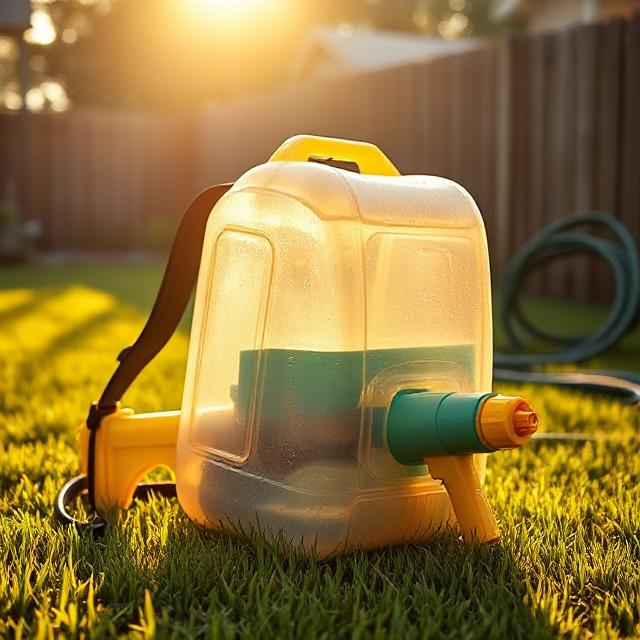
While other water guns focused on pump-action pressure or rapid-fire mechanisms, the Big Bubba’s philosophy was sheer, overwhelming volume. It was less a precision instrument and more a piece of heavy artillery. Its design was iconic: a massive, clear plastic reservoir tank that users would wear on their back like a backpack, connected via a hose to a large, gun-shaped nozzle. The operation was simple but devastatingly effective. There was no pumping; the water flow was entirely gravity-fed. You would hoist the nozzle, point it at your target, open the valve, and release a deluge of water.
The genius of the Big Bubba wasn’t in its pressure (it had very little), but in its endurance. In a typical water fight, most combatants would have to constantly retreat to a hose or a bucket to refill their small, single-tank squirt guns. The Big Bubba user, however, was a mobile reservoir. They could roam the battlefield for what felt like an eternity, providing suppressing fire or drenching multiple opponents without needing a resupply. It was the water gun equivalent of a machine gunner with a belt-fed ammunition box. The social dynamics of a water fight would instantly shift when someone unveiled a Big Bubba; they immediately became the prime target or the most valuable ally.
This commercial product cemented the term “Big Bubba” in the minds of millions as a symbol of fun, summertime excitement, and childhood ingenuity. It transformed the name from a personal nickname into a brand associated with maximum capacity and unbridled fun.
Big Bubba Beyond the Backyard: The Archetype in Culture
The cultural resonance of “Big Bubba” extends beyond water fights and Southern greetings. It fits neatly into a classic American archetype: the gentle giant. From Lenny in John Steinbeck’s Of Mice and Men to fictional characters like Bubba Blue in Forrest Gump, the idea of a large, physically imposing man with a soft heart and simple desires is a powerful narrative trope.
The “Big Bubba” character is often portrayed as loyal to a fault, possessing a deep, often unexpected wisdom, and fiercely protective of his friends and family. He is the anchor, the rock upon which others rely. This archetype provides a comforting counterpoint to the hyper-competent, intellectually complex heroes that also populate our stories. Big Bubba represents a different kind of strength—one rooted in consistency, emotional honesty, and physical presence.
This is why the term feels so warm and familiar, even to those who may not have personally known someone with that nickname. It taps into a universal appreciation for dependable, kind-hearted people who use their strength for good.
The Lasting Impression of a Big Idea
Today, the term “Big Bubba” exists in a nostalgic space. For those who remember the water gun, it evokes the smell of sunscreen, the feel of wet grass, and the sound of laughter on a hot summer day. It’s a relic of a time before smartphones, when imaginative, outdoor play was the default setting for summer entertainment.
For others, it remains a term of endearment, a piece of living, linguistic culture passed down through families and communities in certain parts of the country. It’s a word that conveys affection and familiarity without pretense.
Ultimately, the story of “Big Bubba” is the story of how a simple phrase can absorb meaning from different facets of life—from personal relationships and regional dialects to commercial products and cultural archetypes. It’s a testament to the fact that the biggest ideas aren’t always the most complex ones. Sometimes, they are as simple and refreshing as a backpack full of water on a sunny day, or the reliable presence of a good friend. Big Bubba, in all its forms, represents capacity: the capacity for fun, for loyalty, and for leaving a surprisingly large and positive impression.
Informational FAQ About “Big Bubba”
Q1: Is “Bubba” just a Southern nickname?
A: While it is most strongly associated with the Southern United States, “Bubba” is used more broadly across the country as an informal, affectionate term for a brother or a close male friend. Its origins are likely from the word “brother.”
Q2: Who invented the Big Bubba Bad Blaster water gun?
A: The Big Bubba was produced by Larami Corporation. It was part of their line of water guns before they acquired the technology for the pressurized Super Soaker, which was invented by Lonnie Johnson. The Big Bubba itself was not a pressurized gun; it was gravity-fed.
Q3: How much water did the original Big Bubba hold?
A: The original Big Bubba Bad Blaster had a massive capacity for its time, holding approximately one gallon (3.8 liters) of water. This was enormous compared to the pint-sized capacities of most squirt guns available then.
Q4: Is the Big Bubba water gun still sold today?
A: The original Larami Big Bubba is no longer in production and is considered a vintage collectible. However, the concept of a backpack-style water gun has been continued and advanced by the Super Soaker and other brands, which now offer high-pressure, motorized versions with large reservoirs.
Q5: Does the term “Big Bubba” have any negative connotations?
A: Like many colloquial terms, context is key. Used affectionately among friends or family, it is positive. However, in some contexts, “Bubba” can be used as a mild stereotype for a certain type of rural, Southern personality. Its primary meaning remains one of familiarity and endearment.
Q6: Are there other famous products or characters named “Big Bubba”?
A: Yes, the name has been used for various things, including a brand of sausage, a character in popular fiction, and even a model of barbecue smoker. Its appeal lies in its connotation of being substantial, reliable, and authentically American.