In the vast and often confusing universe of fragrance, where terms like Eau de Toilette, Eau de Parfum, and Cologne are commonplace, one designation stands apart, shrouded in an aura of exclusivity and artistry: Extrait de Parfum. More than just a perfume, an Extrait is the purest, most concentrated, and often most revered form of a fragrance. It is the original formula, the perfumer’s vision in its most unadulterated and potent state. To understand Extrait de Parfum is to understand the very heart of perfumery as an art form.
What Exactly is an Extrait de Parfum?
At its core, an Extrait de Parfum is defined by its concentration of perfume oil suspended in a blend of alcohol and water. While an Eau de Toilette typically contains 5-15% perfume oil and an Eau de Parfum 15-20%, an Extrait de Parfum boasts a concentration ranging from 20% to 40%, and in some historical cases, even higher.
This high concentration of aromatic compounds is the primary reason for its other names: “Perfume Extract,” “Pure Perfume,” or simply “Perfume.” However, the term “Extrait” (French for “extract”) is most telling. It signifies that this is the essence pulled directly from the perfumer’s palette, with minimal dilution.
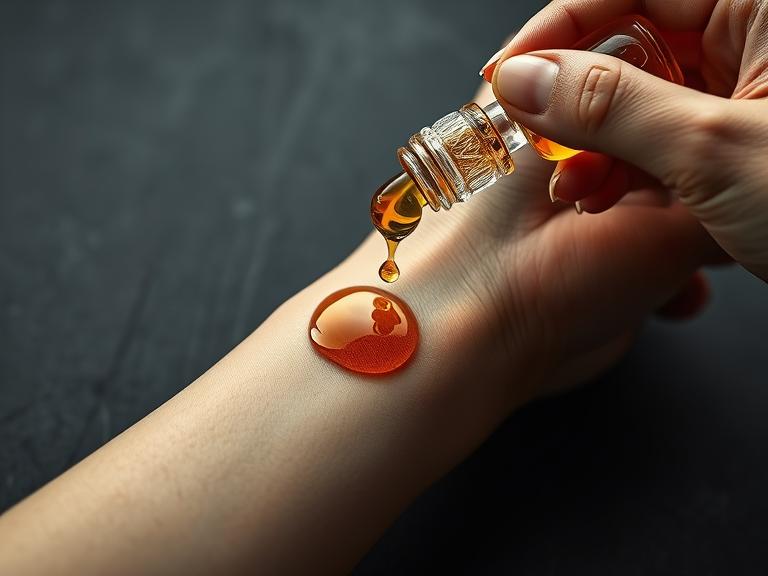
The texture of an Extrait is often richer and more oil-based than its lighter counterparts. It feels weightier on the skin, a tangible hint of the intensity it holds. Traditionally, Extrait de Parfum was presented in elegant, often ornate, bottles without atomizers. The application was an intimate ritual—dabbing a small amount from a stopper onto pulse points like the wrists, neck, and behind the ears. This method of application is key to experiencing an Extrait correctly, as it warms gently with the skin’s heat, releasing its complex notes gradually over time.
A Brief History: The Origin of Modern Perfumery
The story of Extrait de Parfum is inextricably linked to the history of perfumery itself. Before the 20th century and the invention of mass-market sprays, fragrance was primarily worn in this concentrated, oil-based form. Royalty and the aristocracy used perfumed oils and pomades.
The modern concept of Extrait was solidified in the early 20th century with the rise of the great French perfume houses. Iconic fragrances that are still celebrated today, such as Guerlain’s Shalimar (1925) and Chanel’s N°5 (1921), were first created and launched as Extrait de Parfums. These were not mere accessories; they were statements of luxury, identity, and sophistication. The Extrait was the flagship product, representing the house’s highest achievement in quality and craftsmanship. The other concentrations—Eau de Parfum, Eau de Toilette—were later creations designed to offer the scent’s character in a lighter, more accessible, and sprayable form.
Extrait de Parfum vs. Eau de Parfum: Beyond Just Strength
A common misconception is that an Extrait is simply a “stronger” version of an Eau de Parfum. While intensity and longevity are major factors, the difference is far more nuanced.
-
Longevity and Sillage: This is the most practical difference. Due to its high oil concentration, an Extrait de Parfum lasts significantly longer on the skin—often 12 to 24 hours, and sometimes even lingering until the next day. Its sillage (the scent trail left behind) is typically more intimate and closer to the skin compared to the often broader projection of an alcohol-heavy Eau de Parfum. An Extrait doesn’t shout; it whispers elegantly and persistently.
-
Olfactive Complexity and Nuance: This is where the true magic lies. A perfumer composing an Extrait has a vastly larger canvas. The high concentration of ingredients allows for a more intricate and detailed fragrance architecture. Notes that might be fleeting in an EDP—subtle top notes, delicate heart accords, rich base notes—are all given room to breathe and evolve in an Extrait. The transition between the stages (top, middle, base) is often slower, smoother, and more perceptible. You experience the full, intended story of the fragrance from beginning to end.
-
Ingredient Quality and Cost: Creating an Extrait de Parfum is expensive. It requires a significant amount of precious raw materials—natural oils like Bulgarian rose, jasmine from Grasse, sandalwood, oud, and ambergris. Consequently, the price point for an Extrait is considerably higher. You are paying for an unparalleled concentration of often rare ingredients. The bottle and packaging also tend to be more luxurious, reflecting the product’s elite status.
Who is the Extrait de Parfum For?
The Extrait de Parfum is not an everyday scent for everyone. Its characteristics cater to a specific audience:
-
The Fragrance Purist: The individual who views perfume as an art form and seeks to experience the creator’s vision in its truest form.
-
The Longevity Seeker: Someone who values a fragrance that lasts all day and into the evening without needing to reapply.
-
The Lover of Intimate Scents: A person who prefers a scent that is discovered rather than announced, creating a personal aura rather than a public statement.
-
The Collector: For those who appreciate the history, craftsmanship, and luxury object aspect of a fragrance, the Extrait is often the crown jewel of a collection.
The Ritual of Application
Wearing an Extrait de Parfum is a deliberate act. Without an atomizer, the application becomes a personal ritual. A small dab on warm pulse points is all that is needed. The friction of dabbing is sometimes said to “bruise” the notes, altering the top notes slightly, but it ultimately helps the fragrance meld with your unique skin chemistry, creating a truly personalized scent experience.
Informational FAQs
Q1: Is Extrait de Parfum the same as perfume oil?
A: Not exactly. While both are highly concentrated, perfume oils are typically fragrance oils suspended in a non-alcoholic oil base (like jojoba or fractionated coconut oil). Extrait de Parfum is still primarily alcohol-based, just with a much higher percentage of perfume oil than EDT or EDP.
Q2: Why is Extrait de Parfum so much more expensive?
A: The cost is directly tied to the immense quantity of high-quality, and often natural, raw materials required to achieve such a high concentration. You are essentially buying the most ingredient-dense version of the fragrance.
Q3: Can I spray an Extrait de Parfum?
A: While traditionalists prefer dabbing, many modern Extrait de Parfums now come in beautiful bottles fitted with fine-mist atomizers. This allows for a controlled application while preserving the integrity of the fragrance. The choice between dab and spray is one of personal preference.
Q4: Does Extrait de Parfum smell different from the Eau de Parfum of the same name?
A: Often, yes. The different balance of ingredients and alcohol can make the same fragrance smell noticeably different across concentrations. The Extrait will usually showcase richer base notes and a more blended, smooth evolution, while the EDP might emphasize the brighter top notes due to a higher alcohol content.
Q5: How should I store my Extrait de Parfum to make it last?
A: To preserve its integrity, store your Extrait in a cool, dark, and dry place, away from direct sunlight and extreme temperature fluctuations. The original box is an excellent storage option to protect it from light.