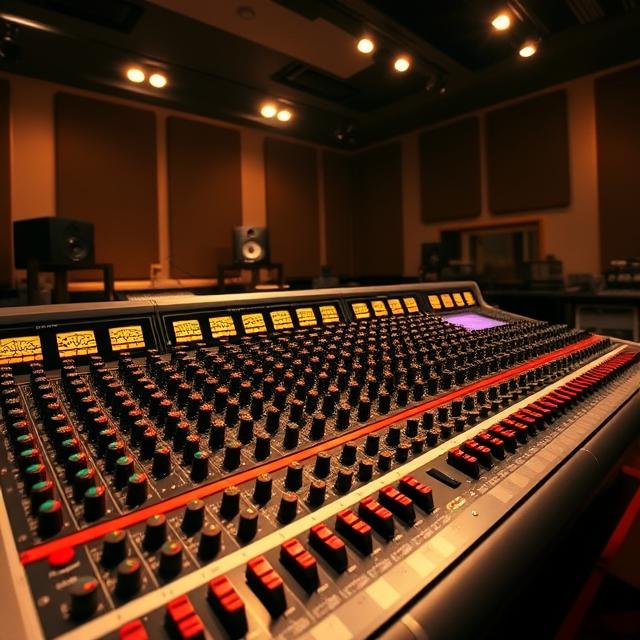
In the world of professional audio, few names command as much reverence as Neve. Synonymous with warmth, musicality, and an almost magical ability to make recordings sound “finished,” Rupert Neve’s designs from the 1970s are the holy grail for engineers and producers. Among these legendary consoles, the Neve 8068 and 8078 often steal the spotlight. However, there exists a slightly rarer, equally magnificent sibling: the Neve 8066. Today, one of these exceptional boards has found a new home and purpose, not in a museum, but as the beating heart of a working studio—Mixart Studios.
This isn’t just a story about a piece of vintage gear; it’s about the resurrection of a classic tool and its integration into a modern creative workflow, proving that true quality is timeless.
A Brief History of the Neve 8066
To understand the significance of the Mixart Studios Neve 8066, we must first travel back to the mid-1970s. Following the massive success of the 80-series consoles (like the 8048 and 8068), Neve designed the 8066 as a more compact, cost-effective alternative without compromising the core sonic signature. It was aimed at smaller studios, broadcast facilities, and even mobile recording trucks.
The 8066 shared the same fundamental DNA as its larger brothers:
-
Class-A Mic Preamplifiers: The heart of the sound. These preamps are renowned for their rich harmonic content, clarity, and ability to handle high sound pressure levels without harshness. They impart a desirable “weight” to any source.
-
1073 EQ Modules (or their close relatives): The legendary 1073 equalizer is a cornerstone of the Neve sound. Its distinct curves, particularly the creamy low-end and the musical, yet aggressive, high-frequency band, allow engineers to shape sounds in a profoundly musical way. The 8066 often featured modules like the 1073, 1084, or 31105, all sharing this iconic sonic character.
-
Carnhill Transformers: A critical component of the vintage Neve sound. The input and output transformers are responsible for the desirable harmonic distortion and saturation that gently “glue” a mix together, adding a sense of cohesion and analog warmth that is difficult to replicate with digital plugins.
While it had a smaller frame (typically 24 to 28 channels) compared to the 40+ channel behemoths, the 8066 was every bit a professional, broadcast-quality console. Its slightly smaller size and focused feature set made it incredibly efficient and sonically potent.
The Mixart Studios Philosophy: Modern Workflow, Vintage Soul
Mixart Studios, by choosing an 8066 as its centerpiece, makes a powerful statement about its philosophy. In an era where a complete recording studio can fit on a laptop, investing in a large, maintenance-heavy analog console is a deliberate choice. It signifies a commitment to a specific sound and a specific workflow—one that is hands-on, intentional, and sonically superior.
The console at Mixart isn’t just for show. It’s a fully integrated, painstakingly maintained tool. Each channel strip has been serviced, recapped where necessary, and calibrated to perform to its original specifications. This ensures that every time a vocalist steps up to the microphone or a guitarist plugs in, they are hearing their sound filtered through one of the most celebrated signal paths in audio history.
How the 8066 Defines the Mixart Sound:
-
Tracking and Recording: The primary use of the Neve is during recording sessions. Vocals, drums, bass, and guitars are all tracked through the console’s pristine mic preamps. This means the analog “magic” is baked into the recording from the very first moment, providing a solid, inspiring foundation that requires less processing later. A vocal recorded through a Neve 8066 channel already sounds like a record.
-
Summing for Mixing: Many engineers at Mixart use the console for analog summing. This involves sending individual tracks from their Digital Audio Workstation (DAW) like Pro Tools back out through the console’s channels. The channels are set to unity gain, and all the audio is combined (or “summed”) in the console’s analog circuitry instead of inside the computer. This process adds depth, width, and that sought-after “glue,” making the mix sound more three-dimensional and cohesive.
-
Outboard Gear Integration: The extensive patchbay of the 8066 allows engineers to seamlessly integrate a vast collection of outboard gear—compressors, reverbs, delays, and more—into their signal path. This creates a hybrid workflow where the power of digital editing meets the tonal richness of analog processing.
The Human Element: Beyond the Hardware
A console, no matter how legendary, is only as good as the people using it. The true value of the Mixart Studios Neve 8066 lies in the expertise of the engineers who have mastered its intricacies. They understand how to push the preamps into gentle saturation for a rock vocal, how to use the EQ to make a snare drum crack without being harsh, and how to route signals for the most efficient and creative workflow.
This human expertise transforms the console from a simple piece of equipment into an instrument itself. It encourages a performance-oriented approach to mixing, where decisions are made with faders and knobs rather than mouse clicks, fostering a more intuitive and engaging creative process.
Conclusion: A Timeless Tool for a New Generation
The Mixart Studios Neve 8066 represents a beautiful synergy between past and present. It is a testament to Rupert Neve’s genius that a console designed nearly half a century ago remains not just relevant, but highly desirable in the modern music production landscape. It offers something that software, for all its convenience and power, struggles to replicate: a tangible, organic, and inspiring sound.
For artists and producers working at Mixart, the console is more than wiring and transistors; it’s a source of inspiration, a benchmark of quality, and a direct link to the golden age of recording. It ensures that every project that passes through its channels is imbued with a character and a quality that is both instantly recognizable and eternally classic.
Informational FAQs
Q: What exactly is a Neve 8066?
A: The Neve 8066 is a professional analog audio mixing console designed and built in the 1970s by Rupert Neve’s company. It is a slightly smaller format console known for its exceptionally high-quality mic preamplifiers, equalizers, and analog circuitry that impart a warm, musical, and highly sought-after sound to recordings.
Q: How is the Neve 8066 different from a more famous Neve like the 8078?
A: The main differences are size and scale. The 8078 was a massive console often with 40 or more channels and more extensive routing and monitoring options for huge studios. The 8066 was designed to be more compact (often 24-28 channels) and cost-effective while retaining the same core sonic characteristics, making it ideal for smaller facilities.
Q: Can you achieve the “Neve sound” with plugins?
A: Many software plugins do an excellent job of emulating the specific EQ curves and saturation characteristics of Neve hardware. They are incredibly useful tools. However, they model the sound of the circuit, not the complex interaction of the actual analog components, transformers, and the summing bus. Most professionals agree that while plugins get very close, the experience and sound of working on a full, original Neve console are unique.
Q: Why would a modern studio invest in such old equipment?
A: For the unparalleled sound and workflow. Vintage consoles like the Neve 8066 provide a sonic foundation that is difficult to achieve any other way. They attract clients looking for a specific, high-end analog character and engineers who prefer a hands-on, tactile approach to recording and mixing.
Q: Does using a console like this mean the studio isn’t using modern digital technology?
A: Absolutely not. Studios like Mixart operate a hybrid workflow. The Neve console is used for its strengths—tracking and summing—while modern Digital Audio Workstations (DAWs) are used for their strengths: precise editing, recall, automation, and access to a world of digital effects. This combines the best of both analog and digital worlds.