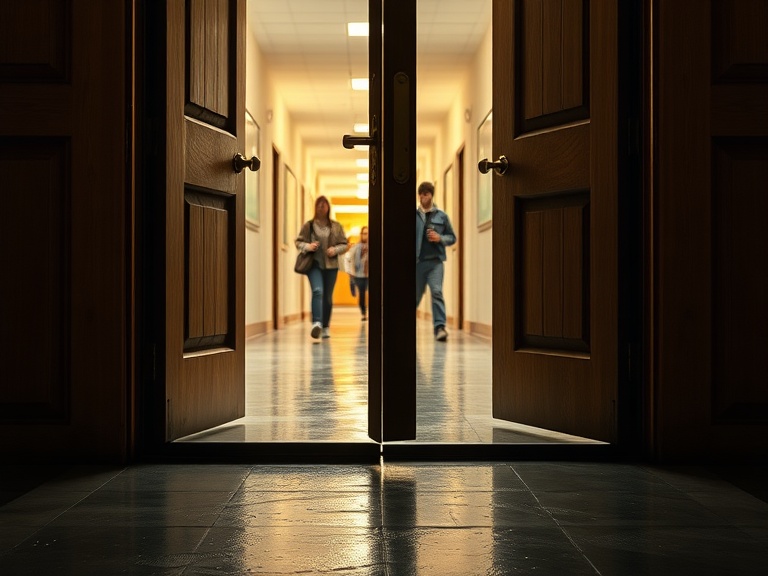
From the first timid push on the first day of kindergarten to the triumphant, final exit at graduation, school doors are far more than just architectural features. They are silent sentinels, symbolic gateways, and powerful metaphors that frame our educational journeys. While we pass through them countless times, often without a second thought, these portals hold a profound, multi-layered significance that shapes the school experience for students, teachers, and the community alike. This article delves into the physical, psychological, and symbolic roles of school doors, exploring their impact on safety, community, and the very essence of learning.
The Physical Gateway: Safety, Security, and First Impressions
At their most fundamental level, school doors serve a critical practical function. They are the primary interface between the school and the outside world, a role that has evolved dramatically over time.
A Fortified Entry: The Modern Reality
Gone are the days of perpetually propped-open doors welcoming the fresh air. In the contemporary educational landscape, the primary function of school doors is security. The single, monitored point of entry, often equipped with buzzer systems, intercoms, and cameras, is now a standard feature. These reinforced thresholds are not meant to be unwelcoming but are a necessary measure to create a controlled, safe environment where learning can occur without external threats. The act of being “buzzed in” has become a universal ritual, a small but significant transaction of trust and verification. The solid, often locked, nature of other exterior doors underscores their role as a protective barrier, a line of defense that allows the life inside to flourish securely.
The Aesthetics of Welcome
Despite the need for security, the design and appearance of the main school door still speak volumes. A well-maintained, brightly painted door with clear signage conveys a message of care, pride, and welcome. It is the school’s handshake, the first physical impression for a visitor or a new student. Is it inviting or intimidating? Modern and innovative, or traditional and steadfast? The door sets a silent, yet powerful, tone for what lies within, influencing perceptions before a single word is spoken in the front office.
The Psychological Threshold: Transition and Transformation
Perhaps the most profound role of school doors is psychological. They act as powerful transition points, marking the shift from one world to another.
The Student’s Journey: From Personal to Public
For every student, the school door represents a daily transition. On one side lies the comfort and informality of home and family; on the other, the structured, social world of the classroom. Stepping through the door requires a mental shift—a donning of the “student” identity. It’s a space where personal worries are temporarily shelved, and the focus turns to learning, social interaction, and growth. This daily ritual of crossing the threshold is a practice in compartmentalization and adaptation, a life skill learned through repetition.
The Arena of Anxiety and Ambition
For a nervous first-grader, the school door can seem towering and daunting, a barrier to the familiar presence of a parent. For a teenager, it might be the gateway to social scrutiny or academic pressure. Conversely, for an eager learner or a student seeking refuge from a difficult home life, the same door can represent opportunity, acceptance, and sanctuary. The door is a passive witness to this entire spectrum of human emotion, from the tears of separation anxiety to the excited greetings of friends reuniting.
The Symbolic Portal: Opportunity, Exclusion, and Passage
Metaphorically, school doors are rich with meaning, representing some of the most fundamental concepts in education and life itself.
The Doorway to Opportunity
The most common and uplifting metaphor for a school door is that of opportunity. Education is often described as “opening doors” to a brighter future. This symbolism is deeply ingrained in our culture. A school door represents access—access to knowledge, new ideas, critical thinking skills, and ultimately, to career paths and life choices. It stands for the potential that education unlocks within every individual.
The Weight of Closed Doors
Conversely, the image of a closed or locked school door can symbolize exclusion, failure, or missed opportunity. A student being shut out of a classroom for being late, or the historical reality of school doors being closed to certain demographics based on race or gender, are stark reminders that these portals can also represent barriers. They remind us that the fight for equitable access to education is, in many ways, a fight to ensure that school doors remain open to all.
Rites of Passage
School doors also frame the most significant milestones of our youth. The iconic image of a child walking through the door on their first day of school is a universal rite of passage. Years later, the act of the graduating class walking out of those same doors for the last time, often to the applause of faculty and family, symbolizes a culmination and a launch into the wider world. The door, in this context, is a stage for life’s most transformative moments.
The Classrooms Within: Microcosms of Discovery
Beyond the main entrance, the individual classroom doors tell their own stories. Each one is a portal to a specialized world.
-
The science lab door might open to the smell of chemicals and the promise of discovery.
-
The art room door often bursts with color and creativity, a visual prelude to the freedom inside.
-
The music room door reveals a world of sound, sometimes leaking melodies into the quiet hallway.
-
The library door promises quiet concentration and the vast, silent worlds contained within books.
These interior doors compartmentalize knowledge, allowing students to move from the logical realm of mathematics to the expressive world of literature, each transition marked by the simple act of turning a knob and stepping through.
Informational FAQs
Q1: Why have school door security measures become so strict?
A1: Enhanced security protocols, including single points of entry, buzzer systems, and locked exterior doors, are a direct response to concerns about student and staff safety. The goal is to control access and prevent unauthorized individuals from entering the building, thereby creating a secure environment conducive to learning.
Q2: What is the significance of a “open door” policy in a school?
A2: An “open door policy” is a metaphorical term used by teachers and administrators to indicate that they are available, approachable, and welcome communication with students and parents. It signifies transparency, accessibility, and a willingness to collaborate for the student’s benefit.
Q3: How can the design of school doors impact learning?
A3: The design can have both a practical and psychological impact. Doors with windows (vision panels) enhance safety by allowing staff to see into hallways and classrooms, reducing blind spots. Aesthetically, bright, well-maintained doors can contribute to a positive school climate, making the environment feel more welcoming and cared for, which can indirectly support student well-being and engagement.
Q4: Are there historical examples of school doors being powerful symbols?
A4: Yes, one of the most famous examples is the Little Rock Nine in 1957, when nine African American students were initially prevented from entering the previously all-white Little Rock Central High School by the National Guard. The image of them attempting to pass through the school doors became an iconic symbol of the struggle for civil rights and educational equality in the United States.
Q5: From a psychological perspective, how can parents help a child who is anxious about the school door?
A5: Parents can ease this transition by establishing a positive and predictable goodbye routine at the door, focusing on the exciting things the child will do inside. Visiting the school and meeting the teacher before the first day can also make the door and the environment beyond it feel more familiar and less intimidating.