Trump Nashville: Nashville, Tennessee, known globally as “Music City,” has long been a cultural touchstone for American art, entertainment, and Southern identity. Its relationship with former President Donald J. Trump represents a fascinating microcosm of his broader political movement—a blend of staunch support, profound opposition, and the inevitable intersection of politics with the world of celebrity. The phrase “Trump Nashville” doesn’t point to a single event but to a series of moments, campaigns, and cultural shifts that have unfolded in the city’s honky-tonks, convention centers, and public squares.
This article explores the multifaceted connections between the 45th President and Tennessee’s capital city, from campaign rallies and political endorsements to the complex reactions from its famed music industry.
The Campaign Rally: A Political Concert at the Municipal Auditorium
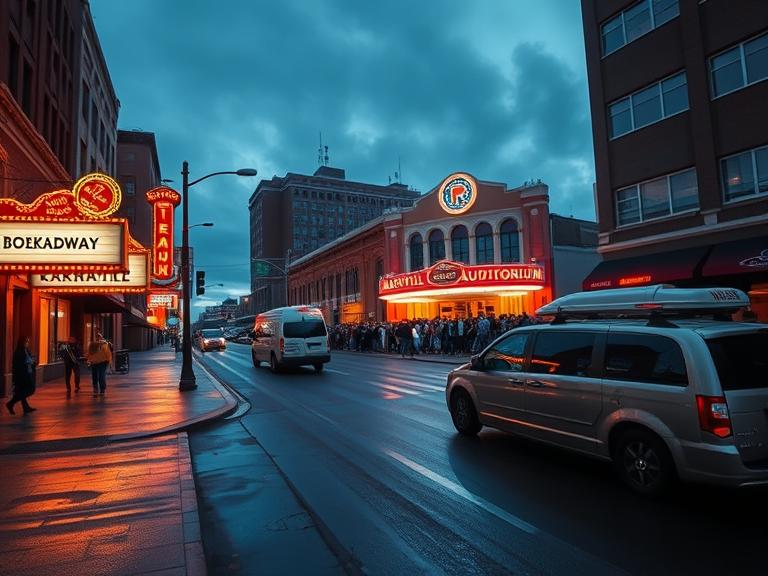
For any major political figure, a campaign rally is more than a speech; it’s a performance. And in Nashville, a city built on performance, these events take on a unique character. Donald Trump held several significant rallies in the Nashville area, primarily at the downtown Municipal Auditorium and the nearby Nashville International Airport.
These events became a familiar spectacle. Hours before Trump’s arrival, thousands of supporters would line up, often adorned in “Make America Great Again” hats and carrying signs. The atmosphere was frequently compared to a concert, complete with a curated playlist of classic rock and country anthems—a practice that would later become a point of legal and cultural contention with some artists.
The rallies served multiple purposes: they energized his base, dominated local and national news cycles, and allowed Trump to communicate directly with supporters, often testing out new nicknames for opponents and key talking points. For many Nashvillians, these events meant significant downtown disruptions—road closures, heightened security, and a visible influx of people—making Trump’s presence physically palpable in the city.
The Endorsement: Nashville’s Political Landscape and the 2023 Covenant School Tragedy
While Nashville proper, or Davidson County, tends to lean more Democratic in presidential elections, the broader state of Tennessee is a strong Republican stronghold. This dynamic was starkly highlighted in the aftermath of the tragic shooting at The Covenant School in Nashville in March 2023.
In the days following the tragedy, which claimed the lives of three children and three adults, a wave of protests for gun reform swept through Tennessee. This culminated in thousands of protesters descending on the State Capitol, leading to an unprecedented move by the Republican supermajority: the expulsion of two young, Black Democratic representatives, Justin Jones and Justin Pearson, for participating in a protest on the House floor. A third white representative, Gloria Johnson, survived her expulsion vote by one vote.
Donald Trump quickly weighed in, but not on the issue of gun violence or the tragedy itself. Instead, he focused on the expelled lawmakers. He publicly praised the Republican legislature for expelling the “three troublemakers” and later hosted the expelled and then-reinstated Representative Justin Jones’s GOP opponent at his Bedminster club. This response underscored a key aspect of Trump’s Nashville story: his engagement is often filtered through a national political lens, focusing on the cultural and partisan battle lines rather than local nuances.
The Music City Divide: Country Music’s Complicated Dance
Perhaps the most complex layer of the “Trump Nashville” narrative involves the city’s lifeblood: the music industry. Country music, in particular, has a historically conservative audience base, and Trump received numerous high-profile endorsements from established stars.
Legends like Loretta Lynn and Charlie Daniels were vocal supporters. Perhaps the most prominent was Billy Ray Cyrus, who performed at the 2016 Republican National Convention. Other artists like Trace Adkins, John Rich (of Big & Rich), and Lee Greenwood—whose song “God Bless the U.S.A.” became a rally staple—aligned themselves with the Trump administration. For these artists, Trump represented patriotism, economic conservatism, and a rejection of political correctness.
However, this support was far from universal and revealed a deep generational and ideological rift within the genre. A new wave of country and Americana artists based in Nashville have been increasingly outspoken on progressive issues.
Jason Isbell, Sheryl Crow, Margo Price, and Kacey Musgraves have been among the most critical. The use of artists’ music at Trump rallies without their permission became a major flashpoint. Artists like The Rolling Stones, Neil Young, R.E.M., Aerosmith, and even the estate of Tom Petty issued cease-and-desist letters to the Trump campaign, arguing that the use of their work implied an endorsement they did not give. This created a strange dichotomy: the soundtrack of a Trump rally was often composed of songs by artists who openly despised him, highlighting the tension between a politician’s desired aesthetic and the artists who created it.
This divide mirrors a broader national conversation about the role of art in politics and the political identity of modern country music.
Economic and Policy Impacts
Beyond the rallies and culture wars, Trump’s policies had tangible effects on a growing city like Nashville. The 2017 Tax Cuts and Jobs Act, a signature piece of legislation, included provisions that impacted the real estate market and pass-through businesses, both significant sectors in Nashville’s booming economy.
Furthermore, Nashville’s thriving tourism and hospitality industry, a cornerstone of its economy, was impacted by broader national trends during the Trump presidency, including economic growth pre-pandemic and the severe downturn during the COVID-19 crisis. The administration’s approach to pandemic management and economic stimulus directly affected the countless hotels, bars, live music venues, and restaurants that define the Nashville experience.
Conclusion: A City of Dueling Chords
The story of “Trump Nashville” is not one of simple allegiance. It is a story of a deep-red state whose cosmopolitan capital often bucks statewide trends. It is a story of an industry torn between its traditional roots and its evolving future. It is a story of a political figure who commands attention, for better or worse, and whose presence—whether physical, political, or cultural—forces a reaction.
Nashville, in its response to Trump, reflects America itself: a place of passionate disagreement, deeply held convictions, and an ongoing, often noisy, debate about its identity and future. The echoes of this convergence will likely resonate through the city’s politics and music for years to come.
Informational FAQs
Q1: Did Donald Trump ever live in Nashville?
A1: No, Donald Trump has never been a permanent resident of Nashville. His primary residences have been New York City, Palm Beach, Florida (at Mar-a-Lago), and Bedminster, New Jersey. His connection to Nashville is primarily through political campaigns, rallies, and events.
Q2: What was the most significant Trump rally held in Nashville?
A2: While several were held, a key rally was on December 9, 2017, at the Municipal Auditorium, where he enthusiastically endorsed Republican candidate Marsha Blackburn for the U.S. Senate. Another significant rally was held at the airport in March 2020, just as the COVID-19 pandemic was beginning to unfold in the United States.
Q3: How did the Nashville music community generally react to Trump?
A3: The reaction was deeply divided. Many iconic and legacy country artists publicly supported him, while a large contingent of other artists, including many in the Americana, rock, and younger country scenes, were fiercely critical. The unauthorized use of music at his rallies was a major point of contention for many musicians across genres.
Q4: Is Nashville a Republican or Democratic city?
A4: Politically, the city of Nashville (Davidson County) consistently votes for Democratic candidates in presidential and statewide elections. However, it is surrounded by more conservative suburban counties, and the state of Tennessee as a whole is reliably Republican.
Q5: Did Trump’s policies specifically target Nashville?
A5: No presidential policies are typically crafted for a single city. However, broader policies on taxes, regulation, and economic development had indirect impacts on Nashville’s significant healthcare, music, and tourism industries, just as they did on similar industries nationwide.