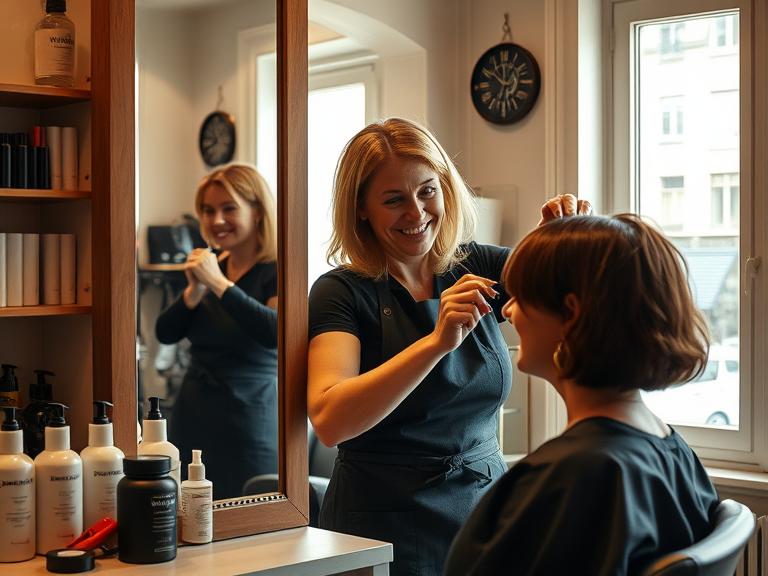
In the heart of France, a country renowned for its unparalleled contribution to fashion, beauty, and art de vivre, lies a crucial yet often unseen pillar of the hairstyling profession: the Centrale des Artisans Coiffeurs. More than just a name or an organization, it represents a profound philosophy—a commitment to preserving the soul of hairdressing as a skilled craft, a small business, and a community-centric service. For anyone looking to understand the French hairdressing landscape beyond the glamorous Parisian salons, comprehending the role of a “centrale” is essential.
This article delves into the concept, purpose, and benefits of such organizations, providing a clear, informational guide to what they are and why they matter.
What Exactly is a “Centrale des Artisans Coiffeurs”?
Translated literally, “Centrale des Artisans Coiffeurs” means “Central Organization for Artisan Hairstylists.” It is not a single, monolithic entity but rather a common term for a type of cooperative or collective purchasing group specifically designed for independent hairdressers.
In France, a vast number of hair salons are not part of large international chains. Instead, they are small, independent businesses often run by a single owner-stylist or a small team—the very definition of “artisans.” While this independence allows for creativity and a personal touch, it places them at a disadvantage against larger chains when it comes to purchasing power, negotiating with suppliers, and accessing business support services.
The Centrale des Artisans Coiffeurs was created to solve this problem. By banding thousands of these independent artisans together under one umbrella, they create collective strength. This allows individual salon owners to access the benefits typically reserved for large corporations.
The Core Functions and Services Offered
A centrale operates as a strategic partner for the artisan hairdresser. Its services are multifaceted, designed to handle the business side of things so the stylist can focus on their craft.
-
Collective Purchasing Power: This is the foundational service. The centrale negotiates bulk contracts with major suppliers of professional hair products (color, bleach, shampoo, styling products), equipment (dryers, chairs, washbasins), and disposable items (gloves, towels, foils). This allows the independent artisan to buy these necessities at significantly reduced prices, improving their profit margins.
-
Business and Administrative Support: Running a salon involves complex paperwork: accounting, taxation, social security contributions for employees, and adhering to specific French business regulations. Centrales often provide expert advice, software, and resources to help artisans manage these daunting tasks efficiently.
-
Continuing Education and Training: The beauty industry evolves rapidly. Centrales organize and provide access to technical training workshops, seminars on new coloring techniques, cutting styles, and product knowledge. This ensures that even the smallest salon in a rural village can stay current with trends emerging from Paris and Milan.
-
Marketing and Promotion Tools: To compete with the marketing budgets of big chains, centrales offer their members ready-to-use marketing kits, designs for promotional flyers, support with digital marketing (website templates, SEO for salons), and ideas for local advertising to help artisans attract and retain clients.
-
A Community and Network: Perhaps one of the most intangible yet valuable benefits is the sense of community. Being an independent hairdresser can be isolating. Centrales foster a network where artisans can share experiences, advice, and best practices, creating a supportive ecosystem that upholds the standards and values of the trade.
The Philosophy: Why “Artisan” Matters
The term “artisan” (artisan) is protected and respected in France. It denotes a professional who has mastered a specific skill through training and experience, often holding a diploma like the CAP Coiffure (Certificat d’Aptitude Professionnelle). An artisan coiffeur is not just a service provider; they are a creator and a custodian of a craft.
The Centrale des Artisans Coiffeurs is built on this philosophy. Its goal isn’t to homogenize salons but to empower their individuality. It helps the artisan preserve their unique identity and direct relationship with their clientele while surviving in an increasingly competitive economic landscape. It is a system that champions the human-scale business model, ensuring that high-quality, personalized hairdressing remains accessible in communities throughout France.
Who Can Benefit from a Centrale?
The primary beneficiaries are clearly the independent salon owners themselves. However, the model creates a ripple effect of benefits:
-
For the Client: Clients get the best of both worlds: the personalized service, expertise, and relationship of a local artisan combined with access to top-quality products and techniques at fair prices.
-
For the Supplier: Beauty brands get efficient access to a vast, fragmented market of highly qualified professionals they would otherwise struggle to reach individually.
-
For the Industry: By supporting the economic viability of independent salons, centrales help maintain a diverse, innovative, and healthy hairdressing industry overall, preventing a market dominated only by large franchises.
Conclusion
The Centrale des Artisans Coiffeurs is far more than a simple buying group. It is a testament to the French spirit of solidarity and community (esprit de corps). It is a strategic response that allows the artistry and passion of individual hairdressers to thrive in the modern economy. By providing the tools, resources, and collective power needed to compete, these organizations ensure that the heart of French hairdressing—the skilled artisan—continues to pulse strongly in cities and towns across the country, preserving a cherished aspect of daily life and culture.
Informational FAQ
Q1: Is “Centrale des Artisans Coiffeurs” one specific company?
A: No, it is a generic term for a type of organization. Several different centrales operate across France, such as those affiliated with major professional associations or independent cooperatives. Each may have its own specific name and membership structure.
Q2: Can a hairdresser outside of France join a French Centrale?
A: Typically, no. These organizations are designed specifically for hairdressers operating in France, as they are deeply integrated with French business law, taxation, social security systems, and supplier networks. Similar types of purchasing groups exist in other countries.
Q3: How does a hairdresser become a member?
A: An independent salon owner usually applies for membership. There may be membership fees or agreements to purchase a certain volume of products through the centrale’s negotiated contracts.
Q4: Do centrales dictate what products a member salon must use?
A: Not typically. While they negotiate excellent rates with specific brands, most centrales offer a choice between several partnered brands. The artisan remains free to choose the products that best fit their technical style and clientele.
Q5: What’s the difference between a Centrale and a hairdressing franchise?
A: This is a key distinction. A franchise (like Jean-Louis David or Jacques Dessange) requires a salon to adopt a unified brand name, décor, pricing, and product range. A centrale protects the salon’s independence—the owner keeps their own salon’s name, identity, and complete operational freedom while simply accessing support services and group purchasing power.