In the sprawling, interconnected realms of digital culture and artistic discourse, certain terms emerge that resist easy definition. They are not branded products or characters from a popular franchise; instead, they are conceptual phantoms, evocative phrases that capture a specific aesthetic or emotional resonance. “Dark Zadie” is one such term. It exists in the liminal space between a name and a descriptor, a concept that invites interpretation and demands exploration beyond a superficial glance. This article seeks to unravel the threads of meaning woven into the phrase “Dark Zadie,” examining its potential origins, its aesthetic and thematic connotations, and its place in our contemporary creative landscape.
Deconstructing the Name: Who or What is “Zadie”?
To understand “Dark Zadie,” we must first consider the name “Zadie” itself. Historically, Zadie is a feminine given name, often a diminutive of Sarah or a derivative of the Hebrew name Sadie, meaning “princess.” However, in a modern context, the most prominent bearer of the name is the celebrated British author Zadie Smith. Smith is renowned for her vibrant, multi-voiced novels like White Teeth and NW, which brilliantly dissect themes of race, identity, cultural hybridity, and modern life in London. Her work is known for its intellectual rigor, sharp wit, and deep humanity—traits not typically associated with the word “dark.”
This is where the transformation begins. The concept of “Dark Zadie” likely does not refer to the author herself but appropriates her name as a vessel for a specific idea. It signifies a shadow version, an alternate take, or a descent into the grittier, more melancholic, and unresolved undercurrents that might lurk beneath the surface of complex, character-driven narratives.
The Aesthetic of “Dark Zadie”: A Tapestry of Shadows and Nuance
The “Dark Zadie” aesthetic is not one of pure gothic horror or overt menace. It is a more subtle and sophisticated darkness, characterized by several interwoven elements:
1. Psychological Realism and Moral Ambiguity:
At its core, “Dark Zadie” suggests a narrative or artistic style that leans into the complexities of the human psyche. It embraces flawed, unreliable, and deeply conflicted characters. Unlike traditional stories with clear heroes and villains, a “Dark Zadie” narrative would revel in moral gray areas. The darkness comes from within—from jealousy, intellectual arrogance, secret shame, and the quiet compromises that erode the soul. It’s the darkness of a character’s unspoken thoughts and the consequences of their inaction.
2. The Melancholy of Modernity:
Drawing from the thematic concerns of Zadie Smith’s work, a “Dark Zadie” lens would focus on the more somber aspects of contemporary life. This includes:
-
Alienation in a Connected World: The profound loneliness that persists despite hyper-connectivity.
-
The Weight of Identity: The struggle with racial, cultural, and personal identity not as a source of vibrant celebration, but as a burdensome, inescapable construct.
-
Academic and Intellectual Gloom: A setting within universities or intellectual circles where ideas are not liberating but are weapons for manipulation and social stratification, leading to a sense of existential futility.
3. An Aesthetic of Grit and Faded Grandeur:
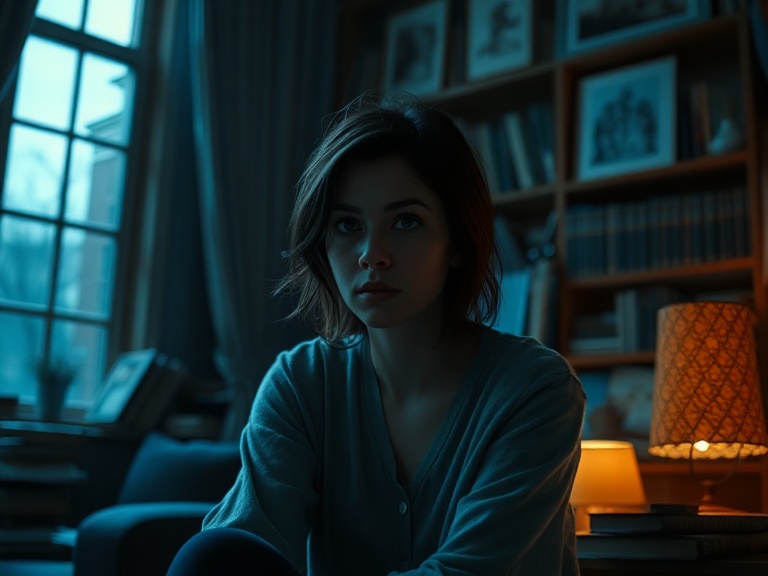
Visually, “Dark Zadie” evokes a specific palette and mood. Think of a rain-slicked London street at dusk, the interior of a dusty, book-filled apartment, or the muted, faded colors of an old photograph. It’s a aesthetic that finds beauty in decay and elegance in disarray. The lighting is often low, casting long shadows that hide as much as they reveal. It is the opposite of a glossy, high-contrast image; it is soft-focused, textured, and immersive.
“Dark Zadie” as a Creative Archetype
Beyond a mere aesthetic, “Dark Zadie” can be understood as a modern archetype—a character model that appears across various stories.
The “Dark Zadie” Archetype:
She is often highly intelligent, perceptive, and artistically inclined. However, her intelligence is a double-edged sword, leading her to overanalyze, become cynical, or feel disconnected from those around her. She is not a villain, but she may make questionable ethical choices. She is often grappling with a deep-seated sense of melancholy or a past trauma that she intellectualizes rather than emotionally processes. She is the brilliant PhD student plagued by imposter syndrome, the writer who mines her personal relationships for material, or the artist who sees the world with such painful clarity that she retreats from it.
This archetype is compelling because she is deeply human. Her darkness is not supernatural; it is the darkness of thought, of memory, and of the constant, quiet negotiation between the self and the world.
The Cultural Resonance: Why “Dark Zadie” Now?
The emergence of a concept like “Dark Zadie” speaks to a broader cultural moment. We are saturated with content that is either overtly optimistic or simplistically dark. “Dark Zadie” offers a third path: a nuanced, intellectual, and emotionally resonant darkness that feels more authentic to the modern experience.
It appeals to an audience that craves complexity over closure, ambiguity over answers, and character depth over plot-driven action. It is the literary equivalent of “slow TV” or ambient music—an experience that values mood, atmosphere, and introspection over frantic pacing and easy resolutions. In a world that often feels polarized, the gray areas where “Dark Zadie” resides feel like a more honest reflection of reality.
Crafting a “Dark Zadie” Narrative
For writers and creators, the concept serves as a powerful creative prompt. To inject a “Dark Zadie” sensibility into a work, one might:
-
Focus on Internal Conflict: Prioritize the character’s internal monologue and moral dilemmas over external action sequences.
-
Embrace Unresolved Endings: Allow stories to end on a note of contemplation rather than neat resolution.
-
Use Setting as a Character: Let the environment—a cluttered flat, a sprawling city, a silent library—reflect the psychological state of the characters.
-
Dialogue with Subtext: Craft conversations where the most important things are left unsaid, lingering in the silence between words.
Informational FAQs about “Dark Zadie”
Q1: Is “Dark Zadie” a real person or a specific character from a book or movie?
A1: No, “Dark Zadie” is not a specific, established person or character from a known commercial work. It is an emergent aesthetic concept and archetype that borrows its evocative power from the name of author Zadie Smith to represent a style of nuanced, psychological, and melancholic storytelling.
Q2: How is “Dark Zadie” different from other “dark” aesthetics like Dark Academia?
A2: While there is overlap, Dark Academia is primarily focused on a romanticized vision of classic education, Greek life, and a very specific visual style (tweed, libraries, ancient buildings). “Dark Zadie” is less about the aesthetic of academia itself and more about the psychological and moral complexities of intelligent, modern individuals. It’s more internal, contemporary, and less tied to a specific visual canon.
Q3: Can I use the term “Dark Zadie” to describe my own work?
A3: As a conceptual and descriptive term within critical or creative discussion, it can be a useful shorthand. However, it’s important to clarify that it is your interpretation of the concept, as it does not have a single, authoritative definition.
Q4: Does the term have any connection to the real author Zadie Smith?
A4: The connection is purely evocative and conceptual. It uses her name to imply a certain level of literary quality and thematic depth, while the “dark” prefix signifies a shift in tone towards the more melancholic and psychologically complex elements that can exist within similar thematic landscapes.
Q5: Where can I find examples of the “Dark Zadie” style?
A5: You won’t find anything officially labeled as such. However, you can look for works that embody its spirit. Consider novels by Sally Rooney (for their intense focus on flawed intellectual relationships), certain films by directors like Joanna Hogg or Andrew Haigh (for their quiet, painful realism), or the photography of artists like Francesca Woodman (for its haunting, introspective quality).