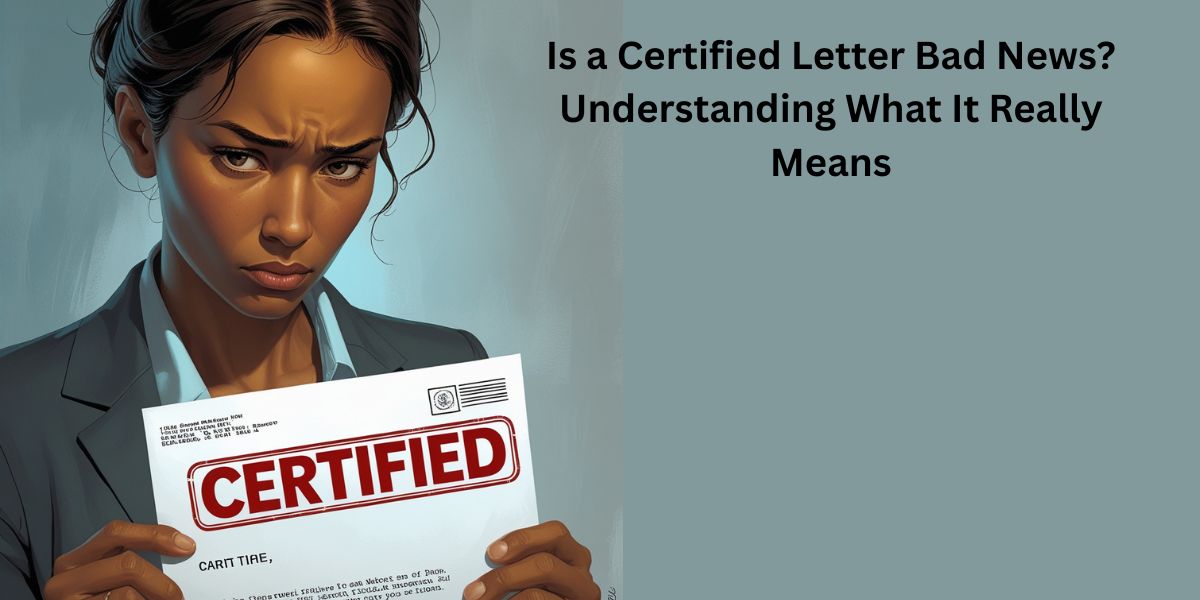
In a world dominated by emails, instant messaging, and digital alerts, receiving a certified letter in the mail can feel like a throwback—and sometimes, a nerve-wracking one. The moment that green and white slip arrives or the mail carrier asks for your signature, many people feel anxious and wonder:
“Is a certified letter bad news?”
Let’s break down what a certified letter really is, why it’s used, and whether it’s always something to worry about.
What Is a Certified Letter?
A certified letter is a type of mail that provides the sender with proof of delivery. When you receive a certified letter:
-
You (or someone at your address) must sign to accept it.
-
The sender receives confirmation that the letter was delivered and received.
-
It may come with tracking information.
This process adds an extra layer of seriousness and official record-keeping, which is why it’s commonly used for legal or business purposes.
Why Do People Think Certified Letters Are Bad News?
There’s a common perception that certified mail equals bad news, and it’s not entirely without reason. Certified letters are often used when the sender wants to formally notify someone of a serious or time-sensitive issue.
Here are some common examples where certified letters might carry bad news:
-
Legal notices (e.g., court summons, lawsuits)
-
Eviction notices
-
Debt collection or default alerts
-
IRS letters or tax issues
-
Insurance claim denials
-
Termination letters
Because of these associations, many people instinctively assume the worst when they receive one.
Common Reasons You Might Receive a Certified Letter
Let’s take a more detailed look at both negative and neutral (or even positive) reasons for receiving certified mail:
✅ Neutral or Positive Reasons
-
Government communication (e.g., Social Security, immigration updates)
-
Delivery of important documents (passports, licenses)
-
Real estate paperwork
-
Business agreements
-
Medical or insurance information
⚠️ Negative or Serious Reasons
-
Lawsuit notifications or court documents (called “service of process”)
-
Tax audits or penalties
-
Debt warnings or collection notices
-
Lease violations or eviction threats
-
Job termination confirmation
It’s important to note that not all certified letters are bad news—some are simply sent that way to ensure the recipient gets them on time and acknowledges receipt.
Should You Be Worried If You Get a Certified Letter?
The short answer is: Not always.
While it’s natural to feel concerned, don’t panic right away. A certified letter simply means the sender wants proof you received the information. That could be for their records, for compliance, or for legal protection.
Before jumping to conclusions:
-
Check the sender’s name or return address.
-
Sign for it and read it carefully.
-
Respond appropriately, especially if action is required.
Remember, ignoring a certified letter is never a good idea, especially if it contains time-sensitive information.
Can You Refuse a Certified Letter?
Yes, you can refuse to sign for or accept a certified letter—but that doesn’t make it go away.
In some legal cases, if you refuse the letter or fail to pick it up from the post office, the sender can still legally claim that you were notified. This is known as “constructive notice.”
So, refusing the letter won’t protect you and could actually make things worse if it’s about legal or financial matters.
How to Handle Receiving a Certified Letter
If you receive a certified letter, here’s how to handle it calmly and responsibly:
-
Don’t delay. Pick it up from the post office if needed.
-
Open it promptly. Waiting will only increase your stress.
-
Read it carefully. Note any deadlines or instructions.
-
Stay calm. Even if the news is serious, panicking won’t help.
-
Seek help if needed. If it’s a legal or financial issue, consult a lawyer or advisor.
In many cases, responding quickly and responsibly can actually help resolve the issue with less trouble.
Why Do Some Senders Use Certified Mail Instead of Email?
In legal or professional settings, email is not always sufficient. Certified mail provides:
-
A legal record that the recipient received the notice.
-
A paper trail for court or regulatory purposes.
-
Greater security when sending sensitive or personal information.
For instance, if a landlord wants to document that a tenant was notified of lease violations, certified mail helps build a legal case if things escalate.
Final Thoughts: Certified Doesn’t Always Mean “Bad”
So, is a certified letter bad news? Not necessarily. While it can sometimes signal legal or financial issues, it can also be used for completely normal, neutral, or even helpful reasons.
The important thing is to:
-
Stay calm
-
Read the letter thoroughly
-
Take appropriate action if needed
In a world full of scams and digital clutter, certified mail remains one of the most secure and trackable forms of communication. Whether it brings good news, bad news, or something in between, it’s always best to face it head-on.