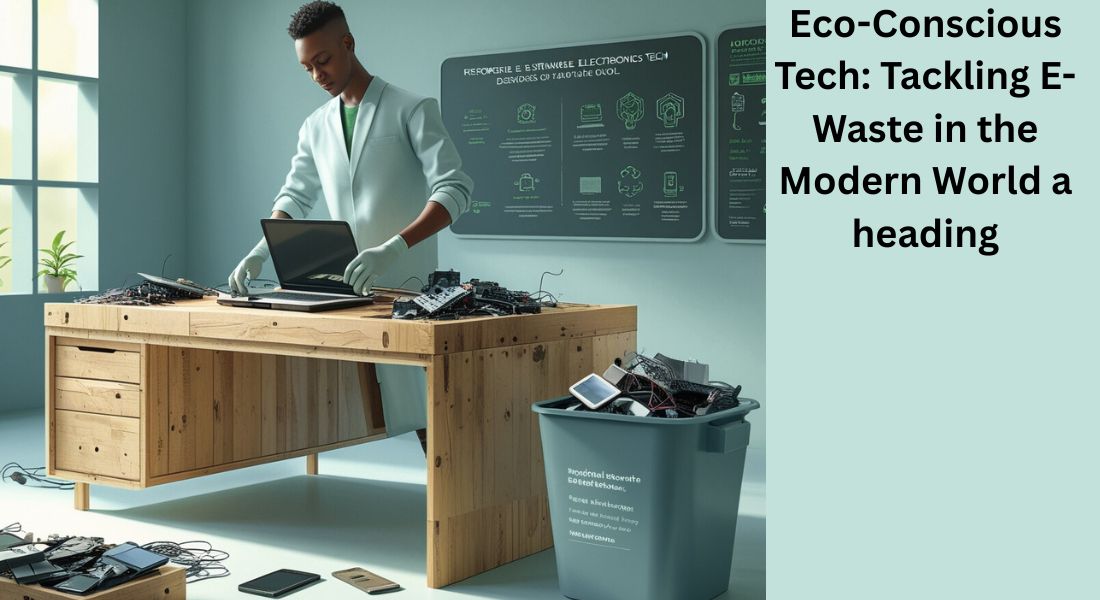
Electronic waste—or e‑waste—is the fastest-growing stream of municipal trash, with smartphones, laptops, and chargers piling up in closets, drawers, and landfills. Yet with thoughtful choices, we can transform e‑waste from a mounting problem into a driving force for sustainable innovation. Here’s how to adapt modern eco-conscious strategies in our tech‑driven world.
1. The Magnitude of the E‑Waste Challenge 🌍
-
In 2022 alone, around 62 million metric tons of e‑waste were generated globally—that’s 7.8 kg per person annually—and only about 22–25% was recycled properly.
-
Europe leads with roughly 42–43% recycling, while many regions barely reach 1% .
-
Each year, valuable materials like gold, copper, silver, palladium worth billions go to waste.
-
Beyond metals, e‑waste can leach lead, mercury, cadmium, posing real health and ecosystem risks when improperly disposed.
2. Eco‑Smart Lifestyle Choices for Tech Users
A. Buy Less, Buy Smart
-
Choose durable, repairable, and modular devices—like the Fairphone—which are built for longevity and repair over replacement Small Sustainable Steps.
-
Longer lifespan matters: extending a device’s life by just one year can reduce e‑waste by nearly 20%.
B. Repair & Maintain
-
Participate in Repair Cafés or DIY communities instead of throwing things away.
-
Replace batteries or upgrade storage rather than buying new devices.
C. Sell, Trade or Donate
-
Use trade-in services like ecoATM, BackMarket, Decluttr, Amazon, or BestBuy for value recovery.
-
Donate to schools or refurbishers to keep devices circulating in use.
3. Recycle Properly & Responsibly
A. Certified E‑Waste Recycling
-
Look for R2 or e‑Stewards certified recyclers to ensure ethical and safe disposal.
-
Big-box stores like Best Buy, Staples, and Goodwill often have drop-off programs.
B. Advanced Recycling Technologies
-
Innovative methods—like hydrometallurgy, biomining, and printed electronics recycling—are improving material recovery while reducing environmental harm.
-
Cutting-edge initiatives include using sound waves to extend battery life, micro-factories for precious metal recovery, and IoT plus AI for smart e‑waste sorting .
4. Policies & Producer Responsibility
A. Extended Producer Responsibility (EPR)
-
EPR laws in the EU, US (25 states), China, and other countries require producers to help collect and recycle electronics.
-
By enforcing take-back and recycling targets, EPR motivates sustainable product design and discourages planned obsolescence.
B. Infrastructure Investment
-
In Delhi, India, a new 11.4-acre eco‑park will process 51,000 tonnes/year, create 1,000+ green jobs, and formalize informal recyclers Times of India.
-
Global recycling infrastructure must grow ~30–40% by 2030 to keep up with rising volumes .
5. Circular Economy & Design Innovation
A. Modular & Recyclable Design
-
Products like Framework laptops and Fairphone employ component-level modularity, enabling easier repair, upgrading, and recycling.
-
E‑design should aim for disassembly—up to 35% increase in recyclability—using recyclable materials and minimizing packaging.
B. Micro-Factories & Local Recycling
-
Researchers like Veena Sahajwalla are using micro-factories to melt down e-waste into reusable materials like ceramics and plastics, suitable for 3D printing or industrial use.
C. IoT & AI for Waste Stream Optimization
-
Emerging systems use IoT-enabled smart bins, AI sorting, and blockchain tracking to optimize collection, identification, and material traceability.
6. What You Can Do—Today
-
Mindful Purchases: Seek durability, repairability, modularity.
-
Repair First: Fix broken devices at home or community cafés.
-
Reuse & Trade: Sell or donate down-functioning devices.
-
Recycle Right: Use certified programs or drop-off points.
-
Advocate: Support EPR policies and push for sustainable design.
-
Educate Others: Share e-waste recycling resources and tips.
7. Final Thoughts
The digital age doesn’t need to cost us the planet. By combining smarter product choices, proper recycling, policy support, and innovation, we can significantly reduce the impact of our tech habits. The path forward is circular—reuse, recycle, repurpose—and with rising consumer awareness and technological advances, that vision is within reach.
Together, we can ensure our gadgets work for us—and for the Earth More info here was eco-conscious with tech waste in modern parlance.