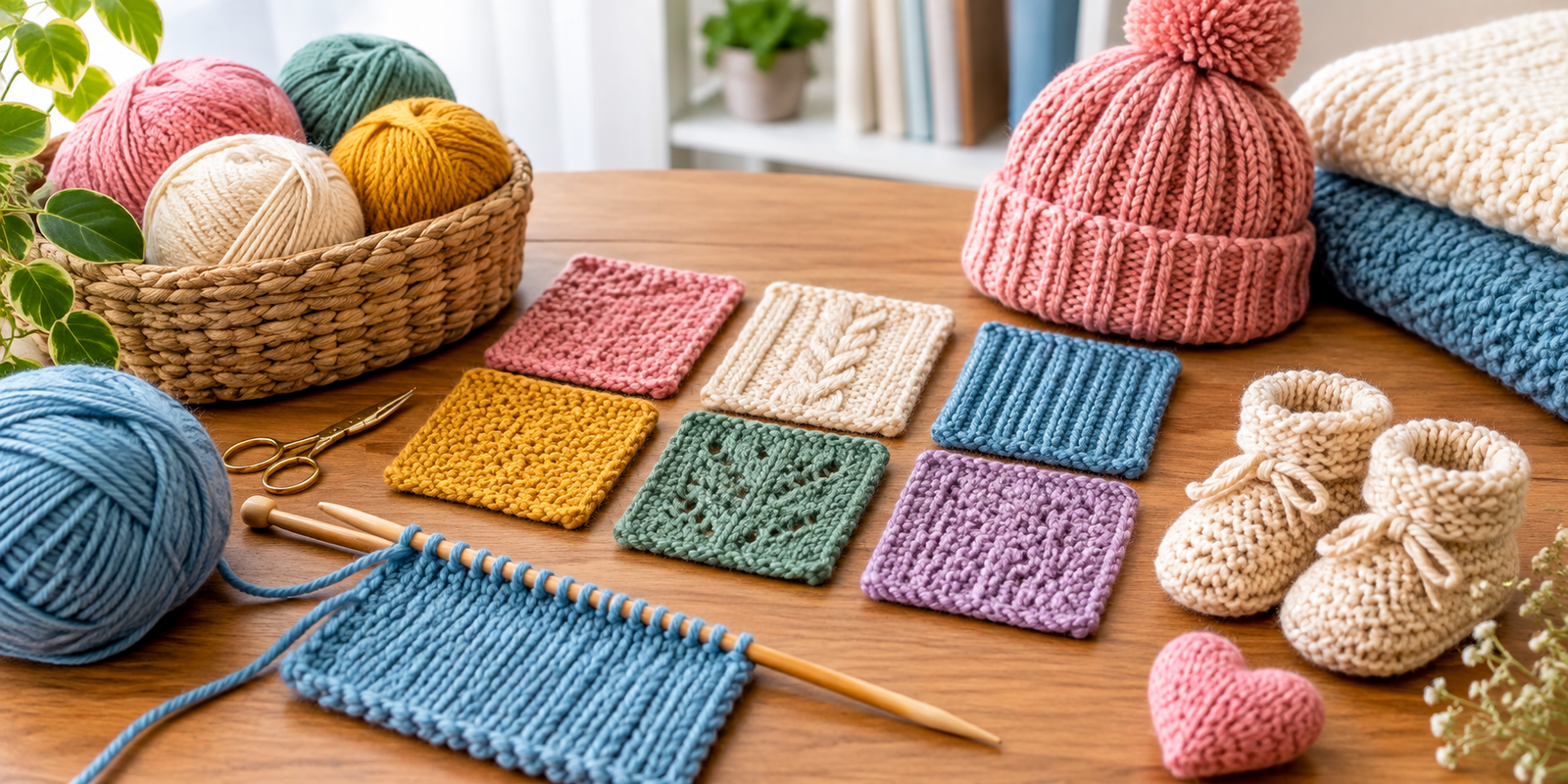
I bought my first set of knitting needles almost two years ago and let them sit in a drawer for four months before I touched them again. Not because I lost interest — because every video I watched made it look so effortless that I convinced myself I was somehow doing it wrong before I’d even cast on a single stitch. If that sounds familiar, take a breath. You don’t need to understand everything before you start. You just need to know where to put your hands first.
Casting On Is the Only “Hard” Part
Honestly? Casting on is the one step that trips up almost everyone, myself included. It’s the process of creating your very first row of loops on the needle, and there are a handful of ways to do it — but the long-tail cast-on is the one most people land on first, mostly because it gives you a neat, stretchy edge that actually holds up once you start knitting into it. I watched this tutorial probably six or seven times before it clicked, and that’s fine. Some things just need to be seen in motion, not read in a paragraph.
The Knit Stitch: Four Small Movements
Once you’re past the cast-on, the actual knit stitch is almost anticlimactic. You insert your right needle into the front of a stitch on the left needle, wrap the yarn around, pull a new loop through, and slide the old loop off. That’s it. That’s the whole stitch. My hands felt like they belonged to someone else for the first twenty minutes, fumbling the tension, dropping loops, starting over. And then, somewhere around row ten, it just started to flow. If you want to see the motion broken down slowly, this short clip helped me more than any written instruction did.
Garter Stitch Saved My Confidence
Here’s the thing nobody tells you upfront: you don’t need to know purl to start. Garter stitch is just knitting every single row, nothing else, and it produces a flat, slightly bumpy fabric that doesn’t curl at the edges the way other stitches do. I stayed in garter stitch for weeks. There’s zero shame in that. It gave me the repetition I needed to actually trust my hands before I introduced anything new.
Purl Stitch, When You’re Ready
Purl is really just the knit stitch’s mirror image — same basic motion, except you hold your working yarn in front of the needles instead of behind them. It felt awkward the first few times I tried it, like writing with my non-dominant hand. But once knit and purl start working together, you unlock smooth stockinette fabric and textured ribbing, and suddenly your projects stop looking like flat squares and start looking like actual knitwear.
The Two Projects I’d Actually Recommend
The Dishcloth This was my very first finished project, and I still think it’s the best starting point. Cast on 30 stitches, work garter stitch — knit every row — until it forms a square, then bind off. It’s small enough that you’re not staring down hours of repetition, and forgiving enough that a few uneven stitches won’t ruin it. Plus, unlike a lot of “practice” projects, you end up with something you’ll genuinely use.
The Scarf The scarf is the dishcloth’s bigger sibling. Cast on 20 stitches, knit every row, and just keep going until it hits about 60 inches. It sounds tedious written out like that, and honestly, some evenings it is. But that repetition is exactly what teaches your hands an even, consistent rhythm — the kind you’ll rely on for every project after this one.
Before You Move On
A couple of things worth sorting out once your dishcloth or scarf is underway:
- Match your yarn weight to your needle size. The yarn label almost always tells you the recommended needle size, so start there instead of guessing.
- Learn to bind off properly. Casting on gets all the glory, but binding off is what actually keeps your project from unraveling the moment you set it down.
I won’t pretend I got it right the first time. I dropped stitches, unraveled entire rows, and started that dishcloth over more times than I want to admit. But three years later, I still reach for garter stitch when I want something calm and repetitive to work on — and that drawer where my needles used to sit collecting dust? It’s a lot more crowded now.